
S 90 Re-checks Congress.gov for new actions and updates the bill's status, and fills in any sponsors, committees, or related bills that are missing. It does not re-pull sponsors/cosponsors/committees/related — those rarely change — and it skips all work if nothing has changed upstream, so it's cheap to click.
Historic Roadways Protection Act
S. 90 To prohibit the use of funds by the Secretary of the Interior to finalize and implement certain travel management plans in the State of Utah.
Legislative subjects (3)
Summary
- Prohibits the Secretary of the Interior, acting through the Bureau of Land Management, from using federal funds to finalize or implement a new travel management plan for any of ten listed travel management areas in Utah.
- Prohibits the use of federal funds to implement four named existing travel management plans in Utah: the Indian Creek (Canyon Rims), San Rafael Desert, San Rafael Swell, and Labyrinth/Gemini Bridges plans.
- Applies these funding prohibitions from enactment until the Secretary certifies to Congress that each of 22 listed R.S. 2477 road-rights lawsuits between Utah counties or the State and the United States has been adjudicated.
AI-generated plain-language summary of the bill text — neutral, and may be imperfect. See the full text below for the exact wording.
Sponsor (1)
-
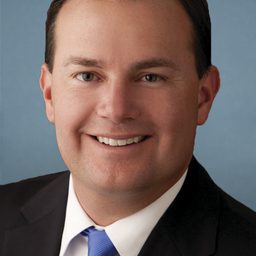 Sen. Lee, Mike (R-UT)
1 cosponsor
-
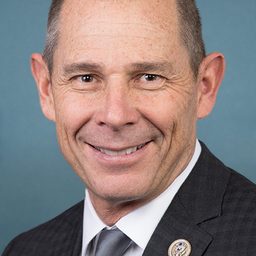 Sen. Curtis, John R. (R-UT)
Actions (6)
- Nov 12, 2026 Placed on Senate Legislative Calendar under General Orders. Calendar No. 696. · senate
- Nov 12, 2026 Committee on Energy and Natural Resources. Reported by Senator Lee with an amendment in the nature of a substitute. Without written report. · senate
- Feb 4, 2026 Committee on Energy and Natural Resources. Ordered to be reported with an amendment in the nature of a substitute favorably. · senate
- Dec 2, 2025 Committee on Energy and Natural Resources Subcommittee on Public Lands, Forests, and Mining. Hearings held. With printed Hearing: S.Hrg. 119-237. · senate
- Jan 14, 2025 Read twice and referred to the Committee on Energy and Natural Resources. · senate
- Jan 14, 2025 Introduced in Senate
Committee action (2)
What happened to this bill in committee — the meetings where it was considered and every recorded vote taken on it.
Meetings where this bill was on the agenda
- Business meeting to consider S.90, to prohibit the use of funds by the Secretary of the Interior to finalize and implement certain travel management plans in the State of Utah, S.91, to improve Federal activities relating to wildfires, S.290, to direct the Secretary of the Interior to upgrade existing emergency communications centers in units of the National Park System to Next Generation 9-1-1 systems, S.291, to establish an interest-bearing account for the non-Federal contributions to the Lower Colorado River Multi-Species Conservation Program, S.365, to amend the John D. Dingell, Jr. Conservation, Management, and Recreation Act to allow for additional entities to be eligible to complete the maintenance work on Bolts Ditch and the Bolts Ditch Headgate within the Holy Cross Wilderness, Colorado, S.446, to prohibit Big Cypress National Preserve from being designated as wilderness or as a component of the National Wilderness Preservation System, S.700 and H.R.837, bills to require the Secretary of Agriculture to convey the Pleasant Valley Ranger District Administrative Site to Gila County, Arizona, S.730, to direct the Secretary of the Interior to conduct a study to assess the suitability and feasibility of establishing the African Burial Ground International Memorial Museum and Educational Center at the African Burial Ground National Monument, S.790, to redesignate the National Historic Trails Interpretive Center in Casper, Wyoming, as the "Barbara L. Cubin National Historic Trails Interpretive Center", S.791, to establish the Justice Thurgood Marshall National Historic Site in the State of Maryland as an affiliated area of the National Park System, S.815, to designate the outdoor amphitheater at the Blue Ridge Music Center in Galax, Virginia, as the "Rick Boucher Amphitheater", S.1319, to withdraw certain Federal land in the Pecos Watershed area of the State of New Mexico from mineral entry, S.1321, to amend the Strom Thurmond National Defense Authorization Act for Fiscal Year 1999 to provide for the transfer of the Moab site to Grand County, Utah, S.1341, to amend the Colorado Wilderness Act of 1993 to add certain land to the Sarvis Creek Wilderness, S.1353, to extend the authority for modifications to the Second Division Memorial in the District of Columbia, S.1413, to authorize additional funding for the San Joaquin River Restoration Settlement Act, S.1476, to amend the Wild and Scenic Rivers Act to designate certain segments of the Gila River system in the State of New Mexico as components of the National Wild and Scenic Rivers System, to provide for the transfer of administrative jurisdiction over certain Federal land in the State of New Mexico, S.1516, to authorize the Secretary of the Interior to conduct a special resource study of the Cahokia Mounds, Emerald Mounds, and Pulcher Mounds in the State of Illinois, S.1518 and H.R.1550, bills to redesignate Saratoga National Historical Park as Saratoga National Battlefield Park, S.1777, to amend the California Desert Protection Act of 1994 to expand the boundary of Joshua Tree National Park, to redesignate the Cottonwood Visitor Center at Joshua Tree National Park as the "Dianne Feinstein Visitor Center", S.1870, to adjust the boundary of the Santa Monica Mountains National Recreation Area to include the Rim of the Valley Corridor, S.2102, to establish the Ralph David Abernathy, Sr., National Historic Site, and S.2881, to provide for the transfer of administrative jurisdiction over certain Federal land in the State of California.
- Hearings to examine S.90, to prohibit the use of funds by the Secretary of the Interior to finalize and implement certain travel management plans in the State of Utah, S.91, to improve Federal activities relating to wildfires, S.140, to address the forest health crisis on the National Forest System and public lands, S.451, to amend the Mineral Leasing Act to eliminate an administrative fee, S.764, to provide for the designation of certain wilderness areas, recreation management areas, and conservation areas in the State of Colorado, S.790, to redesignate the National Historic Trails Interpretive Center in Casper, Wyoming, as the "Barbara L. Cubin National Historic Trails Interpretive Center", S.888, to designate certain land administered by the Bureau of Land Management and the Forest Service in the State of Oregon as wilderness and national recreation areas, to withdraw certain land located in Curry County and Josephine County, Oregon, from all forms of entry, appropriation, or disposal under the public land laws, location, entry, and patent under the mining laws, and operation under the mineral leasing and geothermal leasing laws, S.902, to require the Secretary of Agriculture and the Secretary of the Interior to establish a standard for the response time to wildfire incidents, S.945, to amend the Smith River National Recreation Area Act to include certain additions to the Smith River National Recreation Area, to amend the Wild and Scenic Rivers Act to designate certain wild rivers in the State of Oregon, S.1005, to provide for conservation and economic development in the State of Nevada, S.1175, to amend section 6903 of title 31, United States Code, to provide for additional population tiers, S.1195, to promote conservation, improve public land management, and provide for sensible development in Pershing County, Nevada, S.1228, to amend the Public Lands Corps Act of 1993 to modify the cost-sharing requirement for conservation projects carried out by a qualified youth or conservation corps, S.1319, to withdraw certain Federal land in the Pecos Watershed area of the State of New Mexico from mineral entry, S.1341, to amend the Colorado Wilderness Act of 1993 to add certain land to the Sarvis Creek Wilderness, S.1321, to amend the Strom Thurmond National Defense Authorization Act for Fiscal Year 1999 to provide for the transfer of the Moab site to Grand County, Utah, S.1363, to provide for greater cooperation and coordination between the Federal Government and the governing bodies and community users of land grant-mercedes in New Mexico relating to historical or traditional uses of certain land grant-mercedes on Federal public land, S.1468, to amend the Alaska Native Claims Settlement Act to provide that Alexander Creek, Incorporated, is recognized as a Village Corporation under that Act, S.1476, to amend the Wild and Scenic Rivers Act to designate certain segments of the Gila River system in the State of New Mexico as components of the National Wild and Scenic Rivers System, to provide for the transfer of administrative jurisdiction over certain Federal land in the State of New Mexico, S.1737, to designate and expand wilderness areas in Olympic National Forest in the State of Washington, and to designate certain rivers in Olympic National Forest and Olympic National Park as wild and scenic rivers, S.1860, to direct the Secretary of Agriculture to convey to Brian Head Town, Utah, certain National Forest System land, S.2016, to exchange non-Federal land held by the Chugach Alaska Corporation for certain Federal Land in the Chugach Region, S.2033, to direct the Comptroller General of the United States to conduct a study on existing programs, rules, and authorities that enable or inhibit wildfire mitigation across land ownership boundaries on Federal and non-Federal land, S.2042, to provide lasting protection for inventoried roadless areas within the National Forest System, S.2262, to amend the Federal Land Policy and Management Act of 1976 to clarify the nature of public investment for purposes of certain rulemaking, and S.2273, to amend the Act of July 10, 1890, to modify certain provisions relating to the disposal of public land in the State of Wyoming for educational purposes.
Full text
IN THE SENATE OF THE UNITED STATES
January 14, 2025
Mr. Lee (for himself and Mr. Curtis) introduced the following bill; which was read twice and referred to the Committee on Energy and Natural Resources
November 12, 2026
Reported by Mr. Lee, with an amendment [Strike out all after the enacting clause and insert the part printed in italic]
A BILL
To prohibit the use of funds by the Secretary of the Interior to finalize and implement certain travel management plans in the State of Utah.
Be it enacted by the Senate and House of Representatives of the United States of America in Congress assembled,
SECTION 1. SHORT TITLE.
This Act may be cited as the “Historic Roadways Protection Act”.
SEC. 2. PROHIBITION ON USE OF USE OF FUNDS TO FINALIZE AND IMPLEMENT CERTAIN TRAVEL MANAGEMENT PLANS IN THE STATE OF UTAH.
(a) Definitions.—In this section: (1) Applicable period.—The term “applicable period” means the period that begins on the date of enactment of this Act and ends on the date on which the Secretary certifies to Congress that each of the R.S. 2477 cases has been adjudicated. (2) Covered travel management area.—The term “covered travel management area” means any of the following travel management areas in the State of Utah: (A) The Henry Mountains and Fremont Gorge Travel Management Area. (B) The Dinosaur (North) Travel Management Area. (C) The Book Cliffs Travel Management Area (Vernal Field Office). (D) The Nine Mile Canyon Travel Management Area (Vernal Field Office). (E) The San Rafael Swell Travel Management Area. (F) The Nine Mile Canyon Travel Management Area (Price Field Office). (G) The Book Cliffs Travel Management Area (Moab Field Office). (H) The Dolores River Travel Management Area. (I) The Trail Canyon Travel Management Area. (J) The Paunsaugunt Travel Management Area. (3) R.S. 2477 case.—The term “R.S. 2477 case” means each of— (A) Beaver County and State of Utah v. United States (Case No. 2:12-cv-423-CW); (B) Box Elder County and State of Utah v. United States (Case No. 1:12-cv-105-DB); (C) Carbon County and State of Utah v. United States (Case No. 2:12-cv-427-DB); (D) Daggett County and State of Utah v. United States (Case No. 2:12-cv-447-RJS); (E) Duchesne County and State of Utah v. United States (Case No. 2:12-cv-425-CW); (F) Emery County and State of Utah v. United States (Case No. 2:12-cv-429-CW); (G) Garfield County and State of Utah v. United States (Case No. 2:12-cv-478-TC); (H) Grand County and State of Utah v. United States (Case No. 2:12-cv-466-DN); (I) Iron County and State of Utah v. United States (Case No. 2:12-cv-472-BSJ); (J) Juab County and State of Utah v. United States (Case No. 2:12-cv-462-DB); (K) Kane County and State of Utah v. United States (Case No. 2:12-cv-1073-CW) (consolidated with Case No. 2:11-cv-1031-CW; Case No. 2:12-cv-476- CW). (L) Millard County and State of Utah v. United States (Case No. 2:12-cv-451-DB); (M) Piute County and State of Utah v. United States (Case No. 2:12-cv-428-CW); (N) Rich County and State of Utah v. United States (Case No. 2:12-cv-424-DN); (O) San Juan County and State of Utah v. United States (Case No. 2:12-cv-467-DAK); (P) Sanpete County and State of Utah v. United States (Case No. 2:12-cv-430-DB); (Q) Sevier County and State of Utah v. United States (Case No. 2:12-cv-452-DN); (R) Tooele County and State of Utah v. United States (Case No. 2:12-cv-477-CW); (S) Uintah County and State of Utah v. United States (Case No. 2:12-cv-461-DAK); (T) Utah County and State of Utah v. United States (Case No. 2:12-cv-426-CW); (U) Washington County and State of Utah v. United States (Case No. 2:12-cv-471-RJS); and (V) Wayne County and State of Utah v. United States (Case No. 2:12-cv-434-DN). (4) Secretary.—The term “Secretary” means the Secretary of the Interior, acting through the Director of the Bureau of Land Management. (b) Prohibition on Use of Funds by the Secretary of the Interior to Finalize and Implement Certain Travel Management Plans.— During the applicable period, notwithstanding any other provision of law, the Secretary may not obligate or expend Federal funds— (1) to finalize or implement, with respect to land within the boundary of the State of Utah, a new travel management plan for a covered travel management area; or (2) to implement, with respect to land within the boundary of the State of Utah— (A) the Indian Creek (Canyon Rims) Travel Management Plan; (B) the San Rafael Desert Travel Management Plan; (C) the San Rafael Swell Travel Management Plan; or (D) the Labyrinth/Gemini Bridges Travel Management Plan.
SECTION 1. SHORT TITLE.
This Act may be cited as the “Historic Roadways Protection Act”.
SEC. 2. PROHIBITION ON USE OF FUNDS TO FINALIZE AND IMPLEMENT CERTAIN TRAVEL MANAGEMENT PLANS IN THE STATE OF UTAH.
(a) Definitions.—In this section:
(1) Applicable period.—The term “applicable period” means the period that begins on the date of enactment of this Act and ends on the date on which the Secretary certifies to Congress that each of the R.S. 2477 cases has been adjudicated or otherwise resolved.
(2) Covered travel management area.—The term “covered travel management area” means any of the following travel management areas in the State of Utah referenced in the Settlement Agreement:
(A) The Henry Mountains and Fremont Gorge Travel Management Area.
(B) The Dinosaur (North) Travel Management Area.
(C) The Book Cliffs Travel Management Area (Vernal and Moab Field Offices).
(D) The Nine Mile Canyon Travel Management Area (Vernal and Price Field Offices).
(E) The San Rafael Swell Travel Management Area (Price and Richfield Field Offices).
(F) The Dolores River Travel Management Area.
(G) The Trail Canyon Travel Management Area.
(H) The Paunsaugunt Travel Management Area.
(I) The Indian Creek (Canyon Rims) Travel Management Area.
(J) The San Rafael Desert Travel Management Area.
(K) The Labyrinth/Gemini Bridges Travel Management Area.
(3) R.S. 2477 case.—The term “R.S. 2477 case” means each of—
(A) Beaver County and State of Utah v. United States (Case No. 2:12-cv-423-CW);
(B) Box Elder County and State of Utah v. United States (Case No. 1:12-cv-105-DB);
(C) Carbon County and State of Utah v. United States (Case No. 2:12-cv-427-DB);
(D) Daggett County and State of Utah v. United States (Case No. 2:12-cv-447-RJS);
(E) Duchesne County and State of Utah v. United States (Case No. 2:12-cv-425-CW);
(F) Emery County and State of Utah v. United States (Case No. 2:12-cv-429-CW);
(G) Garfield County and State of Utah v. United States (Case No. 2:12-cv-478-TC);
(H) Grand County and State of Utah v. United States (Case No. 2:12-cv-466-DN);
(I) Iron County and State of Utah v. United States (Case No. 2:12-cv-472-BSJ);
(J) Juab County and State of Utah v. United States (Case No. 2:12-cv-462-DB);
(K) Kane County and State of Utah v. United States (Case No. 2:12-cv-1073-CW) (consolidated with Case No. 2:11-cv-1031-CW; Case No. 2:12-cv-476-CW);
(L) Millard County and State of Utah v. United States (Case No. 2:12-cv-451-DB);
(M) Piute County and State of Utah v. United States (Case No. 2:12-cv-428-CW);
(N) Rich County and State of Utah v. United States (Case No. 2:12-cv-424-DN);
(O) San Juan County and State of Utah v. United States (Case No. 2:12-cv-467-DAK);
(P) Sanpete County and State of Utah v. United States (Case No. 2:12-cv-430-DB);
(Q) Sevier County and State of Utah v. United States (Case No. 2:12-cv-452-DN);
(R) Tooele County and State of Utah v. United States (Case No. 2:12-cv-477-CW);
(S) Uintah County and State of Utah v. United States (Case No. 2:12-cv-461-DAK);
(T) Utah County and State of Utah v. United States (Case No. 2:12-cv-426-CW);
(U) Washington County and State of Utah v. United States (Case No. 2:12-cv-471-RJS);
(V) Wayne County and State of Utah v. United States (Case No. 2:12-cv-434-DN);
(W) Carbon County (1) and State of Utah v. United States (Case No. 2:11-cv-1043);
(X) Garfield County and State of Utah v. United States (Case No. 2:11-cv-1045);
(Y) Juab County and State of Utah v. United States (Case No. 2:12-cv-584);
(Z) Kane County (1) and State of Utah v. United States (Case No. 2:08-cv-315); and (AA) Washington County and State of Utah v. United States (Case No. 2:12-cv-478).
(4) Secretary.—The term “Secretary” means the Secretary of the Interior, acting through the Director of the Bureau of Land Management.
(5) Settlement agreement.—The term “Settlement Agreement” means the settlement agreement in Southern Utah Wilderness Alliance, et al. v. U.S. Department of the Interior, et al. (Consolidated Case No. 2:12-cv-257 DAK) that was entered into on January 13, 2017.
(b) Prohibition on Use of Funds by the Secretary of the Interior to Finalize and Implement Certain Travel Management Plans.—During the applicable period, notwithstanding any other provision of law—
(1) the Secretary may not obligate or expend Federal funds—
(A) to implement, with respect to land within the boundary of the State of Utah, a travel management plan for a covered travel management area finalized after the effective date of the Settlement Agreement; or
(B) to finalize, with respect to land within the boundary of the State of Utah, a travel management plan for—
(i) the Dinosaur (North) Travel Management Area;
(ii) the Book Cliffs Travel Management Area;
(iii) the Nine Mile Canyon Travel Management Area;
(iv) the Dolores River Travel Management Area;
(v) the Trail Canyon Travel Management Area; or
(vi) the Paunsaugunt Travel Management Area; and
(2) a travel management area referred to in paragraph
(1)(B) shall be subject to the travel management plan for the applicable travel management area in effect on the day before the effective date of the Settlement Agreement. Calendar No. 696
119th CONGRESS
2d Session
S. 90
A BILL
To prohibit the use of funds by the Secretary of the Interior to finalize and implement certain travel management plans in the State of Utah.
November 12, 2026
Reported with an amendment
Text versions (2)
Bills are re-published as they move (Introduced → Reported → Engrossed → Enrolled …). Each stage below is a separate text; pick two to see what changed. Data from Congress.gov.
More bills on these subjects (8)
Other bills that carry the most legislative subjects in common with this one (topical discovery — distinct from the procedural related bills above).
Similar bills (6)
Bills with similar text or summary — includes reintroductions across Congresses. Ranked by semantic similarity of the bill text (computed locally); a neutral discovery aid, not a claim the bills are duplicates.
Comments