
HR 8096 Re-checks Congress.gov for new actions and updates the bill's status, and fills in any sponsors, committees, or related bills that are missing. It does not re-pull sponsors/cosponsors/committees/related — those rarely change — and it skips all work if nothing has changed upstream, so it's cheap to click.
Duplication Scoring Act of 2026
To require the Comptroller General of the United States to analyze certain legislation in order to prevent duplication of and overlap with existing Federal programs, offices, and initiatives.
Summary
- Directs the Comptroller General (head of the Government Accountability Office) to assess reported bills, including those from the Appropriations and Budget Committees, for any risk that they create new federal programs, offices, or initiatives that duplicate or overlap existing ones.
- Requires that, where such a risk is found, the assessment identify the new program or office's name, the bill section that creates it, and the GAO duplication and overlap report that flagged the existing overlapping area.
- Requires the Government Accountability Office to send each assessment to the Congressional Budget Office and the reporting committee, and to publish it on the agency's website.
- Allows the Congressional Budget Office to include the assessment as a supplement to its cost estimate for the bill, and to send it to committees on its own if the assessment arrives late.
- Takes effect on the earlier of 60 days after the Office of Management and Budget's next scheduled update to its federal programs website, or the start of a new Congress more than one year after enactment.
AI-generated plain-language summary of the bill text — neutral, and may be imperfect. See the full text below for the exact wording.
Sponsor (1)
-
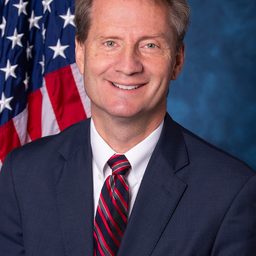 Rep. Burchett, Tim (R-TN) [#2]
4 cosponsors
-
 Rep. Crockett, Jasmine (D-TX) [#30]
-
 Rep. Gosar, Paul A. (R-AZ) [#9]
-
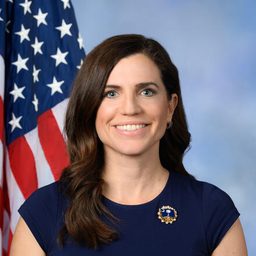 Rep. Mace, Nancy (R-SC) [#1]
-
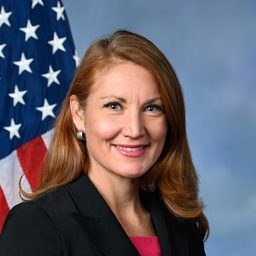 Rep. Stansbury, Melanie A. (D-NM) [#1]
Actions (4)
- May 20, 2026 Ordered to be Reported (Amended) by the Yeas and Nays: 39 - 1. · house
- May 20, 2026 Committee Consideration and Mark-up Session Held · house
- Mar 26, 2026 Referred to the Committee on Oversight and Government Reform, and in addition to the Committees on the Budget, and Rules, for a period to be subsequently determined by the Speaker, in each case for consideration of such provisions as fall within the jurisdiction of the committee concerned. · house
- Mar 26, 2026 Introduced in House
Full text
IN THE HOUSE OF REPRESENTATIVES
March 26, 2026
Mr. Burchett (for himself, Ms. Stansbury, Mr. Gosar, Ms. Crockett, and Ms. Mace) introduced the following bill; which was referred to the Committee on Oversight and Government Reform, and in addition to the Committees on the Budget, and Rules, for a period to be subsequently determined by the Speaker, in each case for consideration of such provisions as fall within the jurisdiction of the committee concerned
A BILL
To require the Comptroller General of the United States to analyze certain legislation in order to prevent duplication of and overlap with existing Federal programs, offices, and initiatives.
Be it enacted by the Senate and House of Representatives of the United States of America in Congress assembled,
SECTION 1. SHORT TITLE.
This Act may be cited as the “Duplication Scoring Act of 2026”.
SEC. 2. ASSESSMENTS OF REPORTED BILLS BY GAO.
Section 719 of title 31, United States Code, is amended by adding at the end the following:
“(i)(1) In this subsection—
“(A) the term ‘covered bill or joint resolution’ means a bill or joint resolution of a public character reported by any committee of Congress (including the Committee on Appropriations and the Committee on the Budget of either House);
“(B) the term ‘Director’ means the Director of the Congressional Budget Office;
“(C) the term ‘existing duplicative or overlapping feature’ means an element of the Federal Government previously identified as an area of duplication, overlap, or fragmentation in a GAO duplication and overlap report;
“(D) the term ‘GAO duplication and overlap report’ means each annual report prepared by the Comptroller General under section 21 of the Joint Resolution entitled ‘Joint Resolution increasing the statutory limit on the public debt’, approved February 12, 2010 (31 U.S.C. 712 note); and
“(E) the term ‘new duplicative or overlapping feature’ means a new Federal program, office, or initiative created under a covered bill or joint resolution that would duplicate or overlap with an existing duplicative or overlapping feature.
“(2) For each covered bill or joint resolution—
“(A) the Comptroller General shall, to the extent practicable—
“(i) determine the extent to which the covered bill or joint resolution creates a risk of a new duplicative or overlapping feature and, if the risk so warrants, identify—
“(I) the name of the new Federal program, office, or initiative;
“(II) the section of the covered bill or joint resolution at which the new duplicative or overlapping feature is established; and
“(III) the GAO duplication and overlap report in which the existing duplicative or overlapping feature is identified; and
“(ii) submit the information described in clause
(i) to the Director and the committee that reported the covered bill or joint resolution; and
“(iii) publish the information prepared under clause (i) on the website of the Government Accountability Office; and
“(B) subject to paragraph (3), the Director may include the information submitted by the Comptroller General under subparagraph (A)(ii) as a supplement to the estimate for the covered bill or joint resolution to which the information pertains submitted by the Director under section 402 of the Congressional Budget Act of 1974 (2 U.S.C. 653).
“(3) If the Comptroller General has not submitted to the Director the information for a covered bill or joint resolution under paragraph
(2)(A)(ii) on the date on which the Director submits the estimate for the covered bill or joint resolution to which the information pertains under section 402 of the Congressional Budget Act of 1974 (2 U.S.C.
653), the Director may, on the date on which the Comptroller General submits the information to the Director, prepare and submit to each applicable committee the information as a supplement to the estimate for the covered bill or joint resolution.”.
SEC. 3. EFFECTIVE DATE.
The amendment made by this Act shall take effect on the earlier of—
(1) the date that is 60 days after the date on which the Director of the Office of Management and Budget next, in accordance with section 1122(a) of title 31, United States Code, updates the information made available on the website required under that section; or
(2) the date on which a new Congress begins after the date that is 1 year after the date of enactment of this Act. <all>
Text versions (1)
Bills are re-published as they move (Introduced → Reported → Engrossed → Enrolled …). Each stage below is a separate text; pick two to see what changed. Data from Congress.gov.
More bills on these subjects (8)
Other bills that carry the most legislative subjects in common with this one (topical discovery — distinct from the procedural related bills above).
Similar bills (6)
Bills with similar text or summary — includes reintroductions across Congresses. Ranked by semantic similarity of the bill text (computed locally); a neutral discovery aid, not a claim the bills are duplicates.
Comments