
HR 5661 Re-checks Congress.gov for new actions and updates the bill's status, and fills in any sponsors, committees, or related bills that are missing. It does not re-pull sponsors/cosponsors/committees/related — those rarely change — and it skips all work if nothing has changed upstream, so it's cheap to click.
Water Preservation and Affordability Act of 2025
To amend the Federal Water Pollution Control Act to consider the use of resource preservation techniques in certain programs, and for other purposes.
Summary
- Adds a definition of "resource preservation technique" to the Federal Water Pollution Control Act, covering water efficiency and reuse, energy efficiency, stormwater runoff mitigation, sustainable project design, and environmentally innovative methods.
- Changes the water efficiency language in the capitalization grant agreement requirements to refer to the use of resource preservation techniques.
- Requires loan recipients under the Water Pollution Control Revolving Loan Fund to evaluate and, to the maximum extent practicable, use resource preservation techniques for repair, replacement, or expansion of treatment works.
- Authorizes $40 million per fiscal year for fiscal years 2026 through 2031 for the Wastewater Efficiency Grant Pilot Program.
- Increases the authorized funding for the Clean Water Infrastructure Resiliency and Sustainability Program from $25 million to $50 million per fiscal year.
AI-generated plain-language summary of the bill text — neutral, and may be imperfect. See the full text below for the exact wording.
Sponsor (1)
-
 Rep. Sykes, Emilia Strong (D-OH) [#13]
6 cosponsors
-
 Del. Norton, Eleanor Holmes (D-DC) [At-large]
-
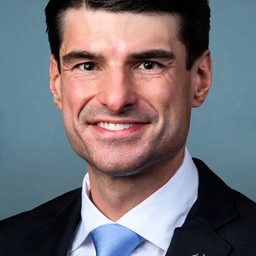 Rep. Bresnahan, Robert P. (R-PA) [#8]
-
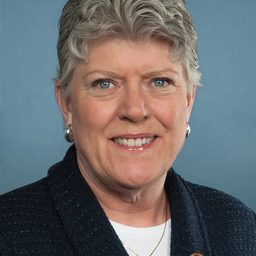 Rep. Brownley, Julia (D-CA) [#26]
-
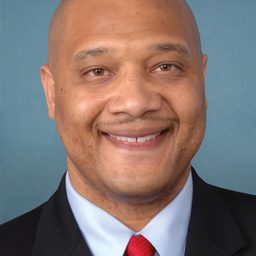 Rep. Carson, André (D-IN) [#7]
-
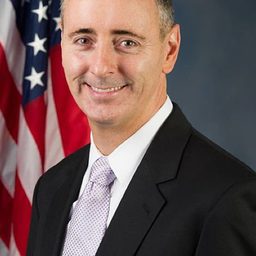 Rep. Fitzpatrick, Brian K. (R-PA) [#1]
-
 Rep. Pou, Nellie (D-NJ) [#9]
Money behind the sponsor
Top reported contributors to Emilia Strong Sykes’s campaign committee (2024 cycle) — who funds the bill’s sponsor, not a claim about this bill. Data from FEC.
- CHARLES AND LYNN SCHUSTERMAN FAMILY PH $13,200
- Employer not reported $10,901
- WALNUT RIDGE $10,900
- INSIGHT PARTNERS $9,900
- GOOGLE LLC $9,401
Organizations whose employees gave the most — itemized individual contributions grouped by the donor’s reported employer (FEC Schedule A). Full finance for Emilia Strong Sykes → · Outside spending →
Actions (3)
- Dec 1, 2025 Referred to the Subcommittee on Water Resources and Environment. · house
- Sep 30, 2025 Referred to the House Committee on Transportation and Infrastructure. · house
- Sep 30, 2025 Introduced in House
Full text
IN THE HOUSE OF REPRESENTATIVES
September 30, 2025
Mrs. Sykes (for herself and Mr. Bresnahan) introduced the following bill; which was referred to the Committee on Transportation and Infrastructure
A BILL
To amend the Federal Water Pollution Control Act to consider the use of resource preservation techniques in certain programs, and for other purposes.
Be it enacted by the Senate and House of Representatives of the United States of America in Congress assembled,
SECTION 1. SHORT TITLE.
This Act may be cited as the “Water Preservation and Affordability Act of 2025”.
SEC. 2. RESOURCE PRESERVATION TECHNIQUES.
(a) Definition of Resource Preservation Technique.—Section 502 of the Federal Water Pollution Control Act (33 U.S.C. 1362) is amended by adding at the end the following:
“(28) Resource preservation technique.—The term ‘resource preservation technique’ means any process, material, technique, or technology that—
“(A) addresses water efficiency, including water reuse, recapture, and conservation;
“(B) addresses energy efficiency;
“(C) mitigates stormwater runoff;
“(D) encourages sustainable project planning, design, and construction; or
“(E) is environmentally innovative.”.
(b) Capitalization Grant Agreement.—Section 602(b)(13)(B) of the Federal Water Pollution Control Act (33 U.S.C. 1382(b)(13)(B)) is amended by striking “the potential for efficient water use, reuse, recapture, and conservation, and energy conservation” and inserting “the use of resource preservation techniques”.
(c) Water Pollution Control Revolving Loan Funds.—Section 603 of the Federal Water Pollution Control Act (33 U.S.C. 1383) is amended—
(1) in subsection (d)(1), by striking subparagraph (E) and inserting the following:
“(E) for a treatment works proposed for repair, replacement, or expansion, and eligible for assistance under subsection (c)(1), the recipient of a loan shall evaluate, and will use, to the maximum extent practicable, resource preservation techniques for purposes of carrying out the repair, replacement, or expansion;”; and
(2) in subsection (i)(1), by striking subparagraph (B) and inserting the following:
“(B) to use resource preservation techniques.”.
(d) Wastewater Efficiency Grant Pilot Program.—Section 222(e) of the Federal Water Pollution Control Act (33 U.S.C. 1302(e)) is amended by striking paragraph (1) and inserting the following:
“(1) In general.—There is authorized to be appropriated to carry out this section $40,000,000 for each of fiscal years 2026 through 2031, to remain available until expended.”.
(e) Clean Water Infrastructure Resiliency and Sustainability Program.—Section 223(g)(1) of the Federal Water Pollution Control Act (33 U.S.C. 1302a(g)(1)) by striking “$25,000,000 for each of fiscal years 2022 through 2026” and inserting “$50,000,000 for each of fiscal years 2026 through 3031”. <all>
Text versions (1)
Bills are re-published as they move (Introduced → Reported → Engrossed → Enrolled …). Each stage below is a separate text; pick two to see what changed. Data from Congress.gov.
Similar bills (6)
Bills with similar text or summary — includes reintroductions across Congresses. Ranked by semantic similarity of the bill text (computed locally); a neutral discovery aid, not a claim the bills are duplicates.
Comments