
S 743 Re-checks Congress.gov for new actions and updates the bill's status, and fills in any sponsors, committees, or related bills that are missing. It does not re-pull sponsors/cosponsors/committees/related — those rarely change — and it skips all work if nothing has changed upstream, so it's cheap to click.
Prioritizing Offensive Agricultural Disputes and Enforcement Act
To require the establishment of a joint task force to identify and eliminate barriers to agriculture exports of the United States.
Legislative subjects (6)
Summary
- Sets out a short title, the "Prioritizing Offensive Agricultural Disputes and Enforcement Act" (also cited as the "Ag Disputes Act").
- States congressional findings and a sense of Congress about barriers to U.S. agricultural exports, including India's price support programs under World Trade Organization commitments.
- Directs the President to establish an interagency "Agricultural Trade Enforcement Task Force" within 30 days of enactment, with members from the Foreign Agricultural Service, the Office of the U.S. Trade Representative, and other federal agencies as determined.
- Tasks the Task Force with identifying agricultural trade barriers vulnerable to dispute settlement, developing enforcement strategies, identifying like-minded trading partners, and consulting with private-sector stakeholders and other agencies.
- Requires the Task Force to submit a report to Congress within 90 days of enactment and at least quarterly afterward, with confidential information removed and briefed separately to members of Congress and staff.
- Requires the first report to include a plan and timeline for requesting World Trade Organization consultations with India over its agricultural price supports, including potential co-complainants and a panel request if India does not provide a satisfactory path to compliance within 60 days of the consultation request.
AI-generated plain-language summary of the bill text — neutral, and may be imperfect. See the full text below for the exact wording.
Sponsor (1)
-
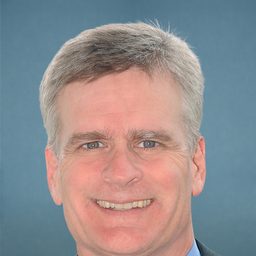 Sen. Cassidy, Bill (R-LA)
5 cosponsors
-
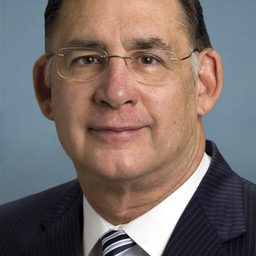 Sen. Boozman, John (R-AR)
-
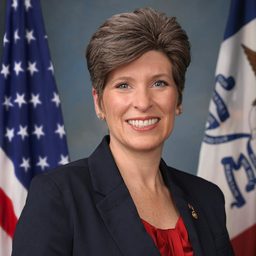 Sen. Ernst, Joni (R-IA)
-
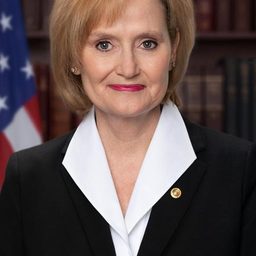 Sen. Hyde-Smith, Cindy (R-MS)
-
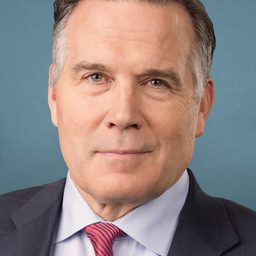 Sen. McCormick, David (R-PA)
-
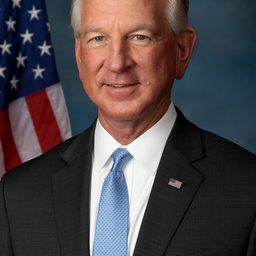 Sen. Tuberville, Tommy (R-AL)
Money behind the sponsor
Top reported contributors to Bill Cassidy’s campaign committee (2024 cycle) — who funds the bill’s sponsor, not a claim about this bill. Data from FEC.
- ANDREESSEN HOROWITZ $59,100
- GENERAL ATLANTIC $37,700
- WELSH CARSON ANDERSON & STOWE $33,870
- OCHSNER HEALTH SYSTEM $33,250
- RA CAPITAL MANAGEMENT $30,200
Organizations whose employees gave the most — itemized individual contributions grouped by the donor’s reported employer (FEC Schedule A). Full finance for Bill Cassidy → · Outside spending →
Actions (2)
- Feb 26, 2025 Read twice and referred to the Committee on Finance. · senate
- Feb 26, 2025 Introduced in Senate
Full text
IN THE SENATE OF THE UNITED STATES
February 26, 2025
Mr. Cassidy (for himself, Mrs. Hyde-Smith, Mr. Boozman, Ms. Ernst, and Mr. Tuberville) introduced the following bill; which was read twice and referred to the Committee on Finance
A BILL
To require the establishment of a joint task force to identify and eliminate barriers to agriculture exports of the United States.
Be it enacted by the Senate and House of Representatives of the United States of America in Congress assembled,
SECTION 1. SHORT TITLE.
This Act may be cited as the “Prioritizing Offensive Agricultural Disputes and Enforcement Act” or the “Ag Disputes Act”.
SEC. 2. FINDINGS.
Congress finds the following:
(1) Agricultural competitiveness through access to international markets is a vital part of the economy of the United States.
(2) A healthy, well-functioning, rules-based trading system is the basis for the success of agriculture exports of the United States.
(3) When foreign governments erect trade barriers, that makes it difficult for agricultural exporters in the United States to compete in the global marketplace and undermines the rules-based trading system.
(4) Those trade barriers can harm farmers, ranchers, workers, and businesses in the United States and can also lead to higher prices for consumers and a less resilient international trading system.
(5) Dispute settlement is available to the President through trade agreements with 163 countries, and there are protectionist trade barriers to agriculture exports of the United States in many of those countries.
(6) Many of those barriers are systemically important. For example, the use by the Government of India of unrestrained price support programs violates the commitments by that government under the World Trade Organization.
(7) The Government of India recognizes that its price support programs violate its commitments under the World Trade Organization, so instead of reforming its programs, it has repeatedly demanded an exemption from disputes for those programs. Moreover, the Government of India has tried to prevent discussions at the World Trade Organization of any other significant agricultural trade issue unless it gets a permanent exemption from disputes for those programs.
(8) The Government of India has repeatedly raised its minimum price supports, which has had negative effects on several commodity markets and most notably has led to its dominance of the global rice trade, with a 40-percent share of the global market since marketing year 2020 through 2021. India is also the world’s largest producer of pulses and second largest producer of wheat, peanuts, and cotton.
(9) The United States Trade Representative submitted a counter notification at the World Trade Organization in 2023 showing that price supports by the Government of India for rice increased from 78.6 percent of the value of production in marketing year 2014 through 2015 to 93.9 percent of the value of production in marketing year 2020 through 2021, compared to the limit at the World Trade Organization on increased price supports of 10 percent of the value of production. That counter notification also showed price supports by the Government of India for wheat increasing from 77.7 percent to 81.3 percent during the same period. Previous counter notifications have shown similar violations by the Government of India for other commodities. For example, in the marketing year 2016 through 2017, price supports by the Government of Indian were 67.9 percent for cotton, 31.7 percent for chickpeas, 41 percent for lentils, and 47.4 percent for pulses overall.
(10) Minor attempts to reform the agriculture subsidy system in India in marketing year 2020 through 2021 failed to produce results. Reforms enacted as a result of those attempts would not have changed the policies that violate commitments under the World Trade Organization, but would have merely provided farmers in India with opportunities to sell their products outside of the government-run mandi system, but those reforms were ultimately repealed.
(11) Dispute settlement is an effective way to provide a neutral assessment of compliance with terms of trade agreements and empower internal reformers who recognize a problem but have not been able to overcome entrenched resistance.
(12) Global agriculture is uniquely susceptible to trade barriers and requires special attention to resolve myriad systemic and economically significant trade violations that impede the development of a resilient, sustainable, and rules- based agricultural trading system.
SEC. 3. SENSE OF CONGRESS.
It is the sense of Congress that—
(1) the President should accelerate efforts to address foreign trade barriers that harm agriculture exports of the United States;
(2) the United States Trade Representative and the Secretary of Agriculture both have a critical role in developing agricultural trade disputes;
(3) Congress and the private sector have key roles to play in the development of disputes and agricultural trade enforcement strategy;
(4) in the case of price supports by the Government of India, the President has exhausted other options available through the World Trade Organization short of requesting consultations under the Dispute Settlement Understanding of the World Trade Organization;
(5) there should be a plan and definitive deadlines in place for a request for consultations and establishment of a panel under the Dispute Settlement Understanding;
(6) the United States Trade Representative and the Secretary of Agriculture, in consultation with Congress and the private sector, should jointly develop a proactive enforcement strategy for addressing systemic and economically significant trade barriers in the agriculture sector; and
(7) the Office of the United States Trade Representative is the lead agency for trade policy of the United States.
SEC. 4. AGRICULTURAL TRADE ENFORCEMENT TASK FORCE.
(a) Establishment.—Not later than 30 days after the date of the enactment of this Act, the President shall establish a joint task force to be known as the “Agricultural Trade Enforcement Task Force” (in this section referred to as the “Task Force”).
(b) Membership.—The Task Force shall be comprised of the following members:
(1) Employees of the Foreign Agricultural Service of the Department of Agriculture, who shall be appointed by the Under Secretary of Agriculture for Trade and Foreign Agricultural Affairs.
(2) Employees of the Office of the United States Trade Representative, who shall—
(A) be appointed by the General Counsel and the Chief Agricultural Negotiator; and
(B) have appropriate expertise in agricultural trade policy and trade enforcement.
(3) Employees from other Federal agencies as determined by the United States Trade Representative or the Secretary of Agriculture.
(c) Duties.—
(1) In general.—The Task Force shall—
(A) identify trade barriers to agriculture exports of the United States that are vulnerable to dispute settlement under the World Trade Organization or other trade agreements to which the United States is a party;
(B) develop and implement a strategy for enforcing violations of trade agreements related to those trade barriers;
(C) identify like-minded trading partners that could act as co-complainants or primary complainants on disputes relating to specific trade barriers that are systemically or economically important to the United States; and
(D) report to Congress pursuant to subsection (d).
(2) Consultation.—In carrying out the duties under paragraph (1), the Task Force shall regularly consult, to the extent necessary and appropriate, with the following:
(A) Relevant stakeholders in the private sector, including the agricultural trade advisory committees.
(B) Federal agencies that are not represented on the Task Force.
(C) Like-minded trading partners that are similarly concerned with trade barriers and are potential participants in a dispute settlement process.
(d) Reports.—
(1) In general.—Not later than 90 days after the date of the enactment of this Act, and not less frequently than quarterly thereafter, the Task Force shall submit to Congress a report on the progress of the Task Force in identifying and addressing trade barriers to agriculture exports of the United States.
(2) Elements.—Each report submitted under paragraph (1) shall include the following:
(A) The systemic and economically significant trade barriers that have been identified by the Task Force.
(B) A justification for including those trade barriers in the report.
(C) The progress that has been made in developing dispute settlement cases and an assessment of whether further information is required.
(D) The current status of ongoing disputes and the implementation of panel decisions, arbitration decisions, or decisions by the Appellate Body of the World Trade Organization.
(3) Confidential information.—
(A) In general.—The Task Force shall remove from each report submitted under paragraph (1) any information determined by the Task Force to be confidential.
(B) Briefing.—For each report required to be submitted under paragraph (1), the United States Trade Representative and the Secretary of Agriculture shall provide to members of Congress, congressional staff, and cleared advisors a briefing on the information determined by the Task Force to be confidential and removed from the report pursuant to subparagraph (A).
(e) Consultations With India.—
(1) In general.—The Task Force shall include as part of the first report required under subsection (d)(1) a plan for filing a request for consultations under the World Trade Organization with respect to the price supports implemented by the Government of India with respect to agricultural products, which shall include other members of the World Trade Organization that have been identified and approached as potential co-complainants.
(2) Elements.—The plan required under paragraph (1) shall include—
(A) specific claims that the United States Trade Representative intends to make during the consultations requested pursuant to the plan; and
(B) a timeline for—
(i) requesting those consultations; and
(ii) requesting the establishment of a panel under the World Trade Organization in the event that the Government of India fails to provide a satisfactory path to compliance by the date that is 60 days after the date of receipt of the request for consultations. <all>
Text versions (1)
Bills are re-published as they move (Introduced → Reported → Engrossed → Enrolled …). Each stage below is a separate text; pick two to see what changed. Data from Congress.gov.
More bills on these subjects (8)
Other bills that carry the most legislative subjects in common with this one (topical discovery — distinct from the procedural related bills above).
Similar bills (6)
Bills with similar text or summary — includes reintroductions across Congresses. Ranked by semantic similarity of the bill text (computed locally); a neutral discovery aid, not a claim the bills are duplicates.
Comments