
S 4941 Re-checks Congress.gov for new actions and updates the bill's status, and fills in any sponsors, committees, or related bills that are missing. It does not re-pull sponsors/cosponsors/committees/related — those rarely change — and it skips all work if nothing has changed upstream, so it's cheap to click.
Modernizing Opioid Treatment Access Act 2.0 of 2026
To expand access to methadone through alternative care models using pharmacies.
Summary
- Waives the usual registration requirements for methadone prescribed for opioid use disorder and allows the Attorney General to separately register qualified practitioners to prescribe it.
- Limits eligible prescribers to licensed practitioners who are addiction medicine physicians or addiction psychiatrists with specified board certifications, or others the Secretary of Health and Human Services determines are qualified.
- Requires these prescriptions to be sent electronically and dispensed through a pharmacy in liquid or dispersible tablet form, with informed consent that explains differences in confidentiality protections from opioid treatment programs.
- Allows a state to request that the Attorney General stop registering prescribers there, revoke existing registrations, and deny pending applications, and allows telemedicine for this treatment.
- Requires pharmacies to dispense this methadone without a separate registration, and requires the Drug Enforcement Administration to report annually to Congress on registrations, state requests, revocations, and pharmacy orders.
- Takes effect 180 days after enactment.
AI-generated plain-language summary of the bill text — neutral, and may be imperfect. See the full text below for the exact wording.
Sponsor (1)
-
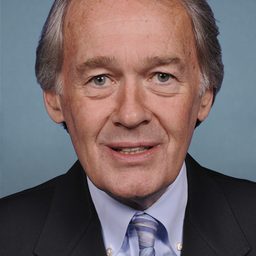 Sen. Markey, Edward J. (D-MA)
7 cosponsors
-
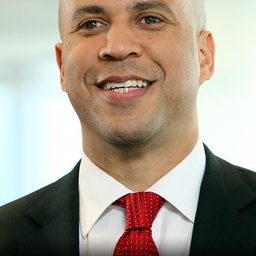 Sen. Booker, Cory A. (D-NJ)
-
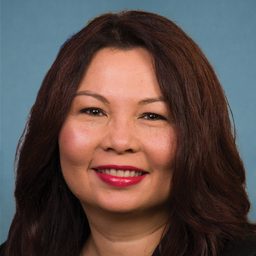 Sen. Duckworth, Tammy (D-IL)
-
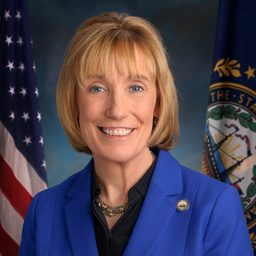 Sen. Hassan, Margaret Wood (D-NH)
-
 Sen. Paul, Rand (R-KY)
-
 Sen. Sanders, Bernard (I-VT)
-
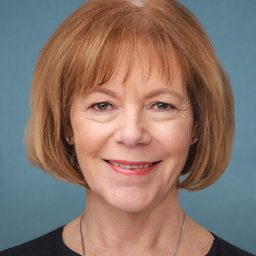 Sen. Smith, Tina (D-MN)
-
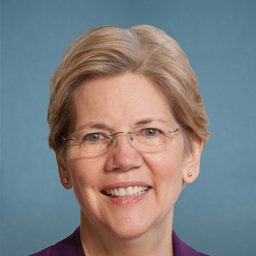 Sen. Warren, Elizabeth (D-MA)
Money behind the sponsor
Top reported contributors to Edward J. Markey’s campaign committee (2024 cycle) — who funds the bill’s sponsor, not a claim about this bill. Data from FEC.
- WILMERHALE $29,800
- STANFORD UNIVERSITY $13,200
- THE WONDERFUL COMPANY $13,200
- BAD ROBOT $13,200
- GOOGLE $12,850
Organizations whose employees gave the most — itemized individual contributions grouped by the donor’s reported employer (FEC Schedule A). Full finance for Edward J. Markey → · Outside spending →
Actions (2)
- Jun 24, 2026 Read twice and referred to the Committee on Health, Education, Labor, and Pensions. · senate
- Jun 24, 2026 Introduced in Senate
Full text
IN THE SENATE OF THE UNITED STATES
June 24, 2026
Mr. Markey (for himself, Mr. Paul, Ms. Warren, Ms. Hassan, Ms. Duckworth, and Mr. Booker) introduced the following bill; which was read twice and referred to the Committee on Health, Education, Labor, and Pensions
A BILL
To expand access to methadone through alternative care models using pharmacies.
Be it enacted by the Senate and House of Representatives of the United States of America in Congress assembled,
SECTION 1. SHORT TITLE.
This Act may be cited as the “Modernizing Opioid Treatment Access Act 2.0 of 2026”.
SEC. 2. EXPANSION OF METHADONE FOR OPIOID USE DISORDER THROUGH PRESCRIBING AND PHARMACIES.
Section 303(h) of the Controlled Substances Act (21 U.S.C. 823(h)) is amended—
(1) in paragraph (2)—
(A) by striking “(A)” and inserting “(i)”; and
(B) by striking “(B)” and inserting “(ii)”;
(2) by redesignating paragraphs (1), (2), and (3) as subparagraphs (A), (B), and (C), respectively;
(3) by striking “(h) Practitioners” and inserting
“(h)(1) Practitioners”; and
(4) by adding at the end the following:
“(2)(A) The requirements of paragraph (1) applicable to methadone medication for opioid use disorder are waived, and the Attorney General, in consultation with the Secretary, shall separately register practitioners described in subparagraph (B) of this paragraph to prescribe methadone for opioid use disorder to be dispensed through a pharmacy to individuals for their own supervised or unsupervised use.
“(B) Practitioners described in this subparagraph are persons who—
“(i) are licensed, registered, or otherwise permitted, by the United States or the jurisdiction in which they practice, to prescribe controlled substances in the course of professional practice; and
“(ii) are—
“(I) addiction medicine physicians or addiction psychiatrists who hold a subspecialty board certification in addiction medicine from the American Board of Preventive Medicine, a board certification in addiction medicine from the American Board of Addiction Medicine, a subspecialty board certification in addiction psychiatry from the American Board of Psychiatry and Neurology, or a subspecialty board certification in addiction medicine from the American Osteopathic Association; or
“(II) otherwise determined by the Secretary, under standards established by the Secretary, to be qualified to prescribe methadone for opioid use disorder.
“(C) The prescribing of methadone pursuant to subparagraph (A) shall be—
“(i) exclusively by electronic prescribing and dispensed to the individual treated pursuant to subparagraph (A);
“(ii) in compliance with applicable Federal and State law respecting the quantities of methadone for opioid use disorder that may be dispensed to individuals pursuant to subparagraph
(A); and
“(iii) for a liquid or dispersible tablet formulation.
“(D) The dispensing of methadone to an individual pursuant to subparagraph (A) shall be in addition to the other care that the individual continues to have access to through an opioid use disorder treatment program.
“(E) Practitioners registered pursuant to subparagraph (A) shall—
“(i) ensure and document, with respect to each individual treated pursuant to subparagraph (A), informed consent to treatment; and
“(ii) include in such informed consent, specific informed consent regarding differences in confidentiality protections applicable when dispensing through an opioid treatment program versus dispensing through a pharmacy pursuant to subparagraph
(A).
“(F) At the request of a State, the Attorney General shall—
“(i) cease registering persons in the State pursuant to subparagraph (A);
“(ii) revoke any such registration in effect for a person in the State pursuant to section 304; and
“(iii) deny any pending application for such registration from a practitioner in the State pursuant to section 304.
“(G) Maintenance treatment or detoxification treatment provided pursuant to subparagraph (A) may be provided through the practice of telemedicine.
“(H) A pharmacy shall not be required to obtain a separate registration to dispense methadone medication for opioid use disorder to an individual who has been prescribed that medication by a practitioner registered pursuant to subparagraph (A).
“(3) Not later than 180 days after the date of enactment of this paragraph, and annually thereafter, the Administrator of the Drug Enforcement Administration shall submit to Congress a report that includes, for the reporting period—
“(A) the number of practitioners registered pursuant to paragraph (2)(A) in each State;
“(B) a list of States for which the Attorney General received a request pursuant to paragraph (2)(F);
“(C) the number of revocations or suspensions of registration issued pursuant to section 304, based on violations related to the prescribing of methadone for opioid use disorder by practitioners who are registered pursuant to paragraph (2)(A); and
“(D) the number of pharmacies that ordered methadone in liquid or dispersible tablet formulations.”.
SEC. 3. EFFECTIVE DATE.
This Act and the amendments made by this Act shall take effect on the date that is 180 days after the date of enactment of this Act. <all>
Text versions (1)
Bills are re-published as they move (Introduced → Reported → Engrossed → Enrolled …). Each stage below is a separate text; pick two to see what changed. Data from Congress.gov.
Similar bills (6)
Bills with similar text or summary — includes reintroductions across Congresses. Ranked by semantic similarity of the bill text (computed locally); a neutral discovery aid, not a claim the bills are duplicates.
Comments