
S 465 Re-checks Congress.gov for new actions and updates the bill's status, and fills in any sponsors, committees, or related bills that are missing. It does not re-pull sponsors/cosponsors/committees/related — those rarely change — and it skips all work if nothing has changed upstream, so it's cheap to click.
Guaranteeing Reliability through the Interconnection of Dispatchable Power Act
S. 465 To require the Federal Energy Regulatory Commission to reform the interconnection queue process for the prioritization and approval of certain projects, and for other purposes.
Summary
- Directs the Federal Energy Regulatory Commission to start a rulemaking within 90 days of enactment to reform the process for interconnecting new electric generation projects to the grid.
- Authorizes transmission providers to propose adjusting interconnection queues to give higher priority to new dispatchable power projects that improve grid reliability and resource adequacy.
- Requires any such proposal to include a demonstration of need, a description of how prioritization improves grid reliability or resilience, and a public comment process before submission.
- Requires the Commission to approve or deny each submitted proposal within 60 days and to issue final regulations within 180 days of enactment.
- Requires transmission providers to report regularly to the Commission on grid reliability and resilience, and requires the Commission to review and update the regulations at least once every 5 years.
AI-generated plain-language summary of the bill text — neutral, and may be imperfect. See the full text below for the exact wording.
Sponsor (1)
-
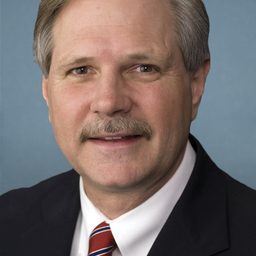 Sen. Hoeven, John (R-ND)
3 cosponsors
-
 Sen. Marshall, Roger (R-KS)
-
 Sen. Moreno, Bernie (R-OH)
-
 Sen. Young, Todd (R-IN)
Actions (6)
- Nov 12, 2026 Placed on Senate Legislative Calendar under General Orders. Calendar No. 698. · senate
- Nov 12, 2026 Committee on Energy and Natural Resources. Reported by Senator Lee without amendment. Without written report. · senate
- Sep 30, 2026 Committee on Energy and Natural Resources. Ordered to be reported without amendment favorably. · senate
- Apr 15, 2026 Committee on Energy and Natural Resources Subcommittee on Energy. Hearings held. With printed Hearing: S.Hrg. 119-366. · senate
- Feb 6, 2025 Read twice and referred to the Committee on Energy and Natural Resources. · senate
- Feb 6, 2025 Introduced in Senate
Full text
IN THE SENATE OF THE UNITED STATES
February 6 (legislative day, February 5), 2025
Mr. Hoeven (for himself, Mr. Young, Mr. Marshall, Mr. Moreno, and Mr. McCormick) introduced the following bill; which was read twice and referred to the Committee on Energy and Natural Resources
November 12, 2026
Reported by Mr. Lee, without amendment
A BILL
To require the Federal Energy Regulatory Commission to reform the interconnection queue process for the prioritization and approval of certain projects, and for other purposes.
Be it enacted by the Senate and House of Representatives of the United States of America in Congress assembled,
SECTION 1. SHORT TITLE.
This Act may be cited as the “Guaranteeing Reliability through the Interconnection of Dispatchable Power Act” or the “GRID Power Act”.
SEC. 2. DEFINITIONS.
In this Act:
(1) Bulk-power system.—The term “bulk-power system” has the meaning given the term in section 215(a) of the Federal Power Act (16 U.S.C. 824o(a)).
(2) Commission.—The term “Commission” means the Federal Energy Regulatory Commission.
(3) Dispatchable power.—The term “dispatchable power” means an electric energy generation resource capable of providing known and forecastable electric supply in time intervals necessary to ensure grid reliability.
(4) Grid reliability.—The term “grid reliability” means the ability of the electric grid to deliver an adequate, secure, and stable flow of electricity in the quantity and with the quality demanded by users, taking into account the ability of the bulk-power system to withstand sudden disturbances.
(5) Grid resilience.—The term “grid resilience” means the ability of the electric grid to adapt to changing physical conditions and withstand and rapidly recover from significant disturbances, including natural disasters, cyber-attacks, and other unforeseen events.
(6) Independent system operator.—The term “Independent System Operator” has the meaning given the term in section 3 of the Federal Power Act (16 U.S.C. 796).
(7) Regional transmission organization.—The term “Regional Transmission Organization” has the meaning given the term in section 3 of the Federal Power Act (16 U.S.C. 796).
(8) Resource adequacy.—The term “resource adequacy” means the ability of the electric system to meet the aggregate electrical demand and energy requirements of end-use customers at all times, accounting for scheduled and reasonably expected unscheduled outages of bulk-power system components.
(9) Transmission provider.—The term “transmission provider” means—
(A) a public utility (as defined in section 201(e) of the Federal Power Act (16 U.S.C. 824(e))) that owns, operates, or controls 1 or more transmission facilities;
(B) an Independent System Operator; and
(C) a Regional Transmission Organization.
SEC. 3. RULEMAKING TO IMPROVE INTERCONNECTION QUEUE FLEXIBILITY.
(a) In General.—Not later than 90 days after the date of enactment of this Act, the Commission shall initiate a rulemaking—
(1) to address the inefficiencies and ineffectiveness of existing procedures for processing interconnection requests to ensure that new dispatchable power projects that improve grid reliability and resource adequacy can interconnect to the electric grid quickly, cost-effectively, and reliably; and
(2) to amend the pro forma Large Generator Interconnection Procedures and, as appropriate, the pro forma Large Generator Interconnection Agreement, promulgated pursuant to section 35.28(f) of title 18, Code of Federal Regulations (or successor regulations)—
(A) to authorize transmission providers to submit proposals to the Commission to adjust the interconnection queue of the transmission provider to prioritize new dispatchable power projects that will improve grid reliability and resource adequacy by assigning those projects higher positions in the interconnection queue; and
(B) to require transmission providers—
(i) to provide in any proposal described in subparagraph (A)—
(I) a demonstration of need for prioritization of the relevant projects; and
(II) a description of how the prioritization of those projects will improve grid reliability or grid resilience;
(ii) to provide a process for public comment and stakeholder engagement before a proposal described in subparagraph (A) is submitted to the Commission; and
(iii) to provide regular reporting to the Commission on the state of grid reliability and grid resilience, including reporting on any actions taken pursuant to this Act.
(b) Commission Approval.—To ensure timely responses to grid reliability concerns, not later than 60 days after a proposal is submitted pursuant to subsection (a)(2), the Commission shall—
(1) review the proposal; and
(2) approve or deny the proposal.
(c) Deadline for Final Rule.—Not later than 180 days after the date of enactment of this Act, the Commission shall promulgate final regulations to complete the rulemaking initiated under subsection (a).
(d) Periodic Review.—Not less frequently than once every 5 years, the Commission shall review and, if necessary, update the regulations promulgated under this section to ensure that those regulations remain effective and relevant to evolving grid reliability and grid resilience challenges. Calendar No. 698
119th CONGRESS
2d Session
S. 465
A BILL
To require the Federal Energy Regulatory Commission to reform the interconnection queue process for the prioritization and approval of certain projects, and for other purposes.
November 12, 2026
Reported without amendment
Text versions (2)
Bills are re-published as they move (Introduced → Reported → Engrossed → Enrolled …). Each stage below is a separate text; pick two to see what changed. Data from Congress.gov.
More bills on these subjects (8)
Other bills that carry the most legislative subjects in common with this one (topical discovery — distinct from the procedural related bills above).
Comments