
S 423 Re-checks Congress.gov for new actions and updates the bill's status, and fills in any sponsors, committees, or related bills that are missing. It does not re-pull sponsors/cosponsors/committees/related — those rarely change — and it skips all work if nothing has changed upstream, so it's cheap to click.
Protecting Regular Order for Veterans Act of 2025
Summary
- Requires the Secretary of Veterans Affairs to give Congress an in-person quarterly briefing on the Department's budget and any shortfall for three years, and to present plans to address any shortfall.
- Restricts critical skill incentives for certain Senior Executive Service employees at the Department's Central Office, and limits incentives for other senior employees to individual awards approved by specified senior officials.
- Requires the Secretary to submit an annual report to the Veterans' Affairs committees on senior employees who received critical skill incentives.
- Establishes a Veterans Experience Office within the Department, headed by a Chief Veterans Experience Officer, to oversee customer experience initiatives, collect veteran feedback data, and advise the Secretary on websites and services, with the office set to end on September 30, 2028.
- Requires the Secretary to submit an annual report to Congress on veteran satisfaction and service usage data, including reasons veterans do not use benefits, and directs the Comptroller General to review the office's methods and customer-feedback tools, including "trust-scores" and VSignals, within 540 days.
AI-generated plain-language summary of the bill text — neutral, and may be imperfect. See the full text below for the exact wording.
Sponsor (1)
-
 Sen. Sullivan, Dan (R-AK)
13 cosponsors
-
 Sen. Blackburn, Marsha (R-TN)
-
 Sen. Budd, Ted (R-NC)
-
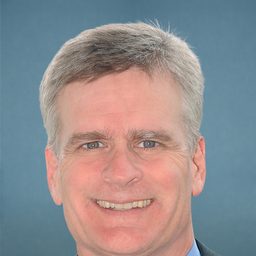 Sen. Cassidy, Bill (R-LA)
-
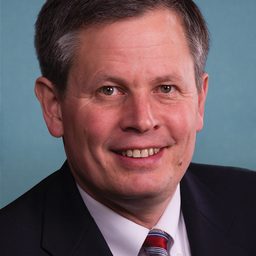 Sen. Daines, Steve (R-MT)
-
 Sen. Ernst, Joni (R-IA)
-
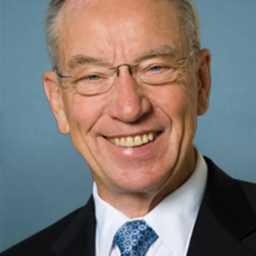 Sen. Grassley, Chuck (R-IA)
-
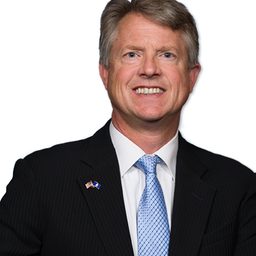 Sen. Marshall, Roger (R-KS)
-
 Sen. Murkowski, Lisa (R-AK)
-
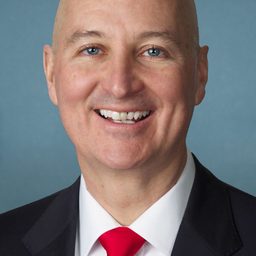 Sen. Ricketts, Pete (R-NE)
-
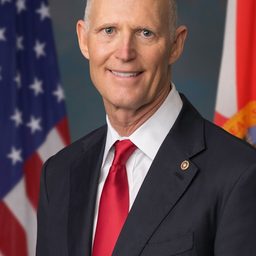 Sen. Scott, Rick (R-FL)
-
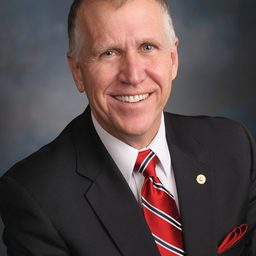 Sen. Tillis, Thomas (R-NC)
-
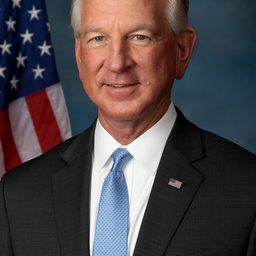 Sen. Tuberville, Tommy (R-AL)
-
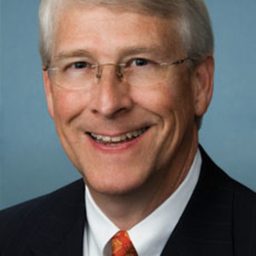 Sen. Wicker, Roger F. (R-MS)
Money behind the sponsor
Top reported contributors to Dan Sullivan’s campaign committee (2024 cycle) — who funds the bill’s sponsor, not a claim about this bill. Data from FEC.
- APOLLO $16,600
- CONOCOPHILLIPS $15,746
- GOOGLE $14,700
- TRIDENT SEAFOODS CORP. $14,700
- Employer not reported $14,100
Organizations whose employees gave the most — itemized individual contributions grouped by the donor’s reported employer (FEC Schedule A). Full finance for Dan Sullivan → · Outside spending →
Actions (18)
- Aug 14, 2025 Became Public Law No: 119-33.
- Aug 14, 2025 Signed by President.
- Aug 12, 2025 Presented to President. · house
- Jul 21, 2025 Motion to reconsider laid on the table Agreed to without objection. · house
- Jul 21, 2025 On motion to suspend the rules and pass the bill Agreed to by voice vote. (text: CR H3484-3485) · house
- Jul 21, 2025 Passed/agreed to in House: On motion to suspend the rules and pass the bill Agreed to by voice vote. (text: CR H3484-3485)
- Jul 21, 2025 DEBATE - The House proceeded with forty minutes of debate on S. 423. · house
- Jul 21, 2025 Considered under suspension of the rules. (consideration: CR H3484-3487) · house
- Jul 21, 2025 Mr. Bost moved to suspend the rules and pass the bill. · house
- Apr 9, 2025 Held at the desk. · house
- Apr 9, 2025 Received in the House. · house
- Apr 9, 2025 Message on Senate action sent to the House. · senate
- Apr 8, 2025 Passed Senate with an amendment by Unanimous Consent. (text of amendment in the nature of a substitute: CR S2478-2479) · senate
- Apr 8, 2025 Passed/agreed to in Senate: Passed Senate with an amendment by Unanimous Consent.
- Apr 8, 2025 Measure laid before Senate by unanimous consent. (consideration: CR S2480) · senate
- Apr 8, 2025 Senate Committee on Veterans' Affairs discharged by Unanimous Consent. · senate
- Feb 5, 2025 Read twice and referred to the Committee on Veterans' Affairs. · senate
- Feb 5, 2025 Introduced in Senate
Full text
An Act
To protect regular order for budgeting for the Department of Veterans Affairs, and for other purposes.
Be it enacted by the Senate and House of Representatives of the United States of America in Congress assembled,
SECTION 1. PROTECTING REGULAR ORDER FOR VETERANS.
(a) Short Title.—This section may be cited as the “Protecting Regular Order for Veterans Act of 2025” or the “PRO Veterans Act of 2025”.
(b) Quarterly Briefings on Department of Veterans Affairs Budgetary Shortfalls.—
(1) Quarterly briefings.—
(A) Quarterly briefings required.—During the first quarter beginning after the date of the enactment of this Act and in each quarter thereafter until the date that is three years after the date of the enactment of this Act, the Secretary of Veterans Affairs shall provide to the appropriate committees of Congress a quarterly briefing, in person, on the budget of the Department of Veterans Affairs and any shortfall the Department may be experiencing.
(B) Plans.—In any case in which the Secretary informs Congress during a briefing under paragraph (1) that the Department is experiencing a shortfall, the Secretary shall, during such briefing, present the plans of the Secretary to address or mitigate the shortfall.
(2) Definitions.—In this subsection:
(A) Appropriate committees of congress.—The term “appropriate committees of Congress” means—
(i) the Committee on Veterans’ Affairs and the Committee on Appropriations of the Senate; and
(ii) the Committee on Veterans’ Affairs and the Committee on Appropriations of the House of Representatives.
(B) Shortfall.—The term “shortfall”, with respect to a fiscal year, means that the amount of appropriations required by the Department of Veterans Affairs for such fiscal year to meet all of the statutory obligations of the Department during that fiscal year exceeds the amount of appropriations requested for the Department for that fiscal year in the budget of the President submitted pursuant to section 1105(a) of title 31, United States Code, for that fiscal year.
(c) Limitations on Provision of Incentives for Critical Skills to Senior Executive Service Employees of Department of Veterans Affairs.— Section 706(d) of title 38, United States Code, is amended by adding at the end the following:
“(7)(A) Subject to subparagraph (B)(ii), a critical skill incentive may not be provided under paragraph (1) to an employee of the Department employed in a Senior Executive Service position, or a position in another comparable system for senior-level Government employees, as defined by the Secretary, whose position is at the Central Office of the Department, including the Veterans Health Administration, the Veterans Benefits Administration, and the National Cemetery Administration, regardless of the actual location where the employee performs the functions of the position.
“(B)(i) A critical skill incentive provided under paragraph (1) to an employee of the Department employed in a Senior Executive Service position, or a position in another comparable system for senior-level Government employees, as defined by the Secretary, not described in subparagraph (A) of this paragraph may only be provided—
“(I) on an individual basis and may not be provided to a group of such employees; and
“(II) upon approval of the following officers or those serving in an acting capacity: “(aa) The Under Secretary for Benefits, the Under Secretary for Health, or the Under Secretary for Memorial Affairs. “(bb) The Assistant Secretary for Human Resources and Administration.
“(cc) The Director of the Office of Management or the Chief Financial Officer.
“(dd) The Assistant Secretary for Accountability and Whistleblower Protection. “(ee) The General Counsel. “(ff) Such other officers as the Secretary determines appropriate.
“(ii) In the case of an employee of the Department employed in a Senior Executive Service position, or a position in another comparable system for senior-level Government employees, as defined by the Secretary, whose position is primarily at the Central Office of the Department, but who performs some portion of the employee’s job function at other facilities of the Department, as defined by the Secretary, not at Central Office—
“(I) the employee shall not be considered described in subparagraph (A) with respect to the portion of the employee’s job function that is based out of non-Central Office facilities of the Department; and
“(II) any critical skill incentive provided under paragraph
(1) to the employee for the portion of the employee’s job function that is based out of facilities of the Department other than the Central Office shall be proportionate to the time spent at those Department facilities.
“(C)(i) Not later than one year after the date of the enactment of the Protecting Regular Order for Veterans Act of 2025, and not less frequently than once each year thereafter, the Secretary shall submit to the Committee on Veterans’ Affairs of the Senate and the Committee on Veterans’ Affairs of the House of Representatives an annual report on the employees of the Department employed in a Senior Executive Service position, or a position in another comparable system for senior-level Government employees, as defined by the Secretary, who were provided a critical skill incentive under paragraph (1).
“(ii) Reports submitted pursuant to clause (i) may be submitted by incorporating their contents into other congressionally mandated reports to the committees described in such clause.
“(D) In this paragraph, the term ‘Senior Executive Service position’ has the meaning given such term in section 3132(a) of title 5.”.
SEC. 2. ESTABLISHMENT OF VETERANS EXPERIENCE OFFICE.
(a) Short Title.—This section may be cited as the “Improving Veterans’ Experience Act of 2025”.
(b) Establishment.—
(1) In general.—Chapter 3 of title 38, United States Code, is amended by adding at the end the following new section: “Sec. 325. Veterans experience office
“(a) Establishment.—There is established in the Department within the Office of the Secretary an office to be known as the ‘Veterans Experience Office’ (in this section referred to as the ‘Office’).
“(b) Head of Office.—(1) The head of the Office shall be the Chief Veterans Experience Officer.
“(2) The Chief Veterans Experience Officer shall—
“(A) be appointed by the Secretary from among individuals the Secretary considers qualified to perform the duties of the position;
“(B) report directly to the Secretary; and
“(C) be responsible for carrying out the functions of the Office set forth under subsection (c).
“(c) Function.—The functions of the Office are as follows:
“(1) Carrying out the key customer experience initiatives of the Department relating to veterans’ and other beneficiaries’ satisfaction with and usage of benefits and services furnished under laws administered by the Secretary for which they are eligible, including setting the strategy, framework, policy, and other guidance for the Department relating to customer experience, including ensuring the activities of the Office and those of other organizations and offices within the Department are coordinated and not duplicative.
“(2) Requiring the heads of other organizations and offices within the Department to report regularly on customer experience metrics, action plans, and other customer experience improvement efforts to the Chief Veterans Experience Officer.
“(3) Collecting veteran-derived data—
“(A) to determine veteran and beneficiary satisfaction with and usage of the benefits and services furnished under laws administered by the Secretary for which they are eligible; and
“(B) to be considered during policymaking.
“(4) Providing strategic guidance and strategies to Department entities for engaging with veterans and beneficiaries regarding benefits and services furnished under laws administered by the Secretary, including those not using such benefits and services.
“(5) Assessing and advising the Secretary on the accuracy and helpfulness of the websites and other customer-facing information of the Department, be it available electronically or in any other format.
“(6) Assessing and advising the Secretary on the status and opportunities for improvement of the customer service efforts of the Department.
“(d) Reports.—(1) Each year, the Chief Veterans Experience Officer shall submit to the Secretary a summary of the data received by the Chief Veterans Experience Officer under subsection (c)(2).
“(2) Each year, not later than 180 days after the date on which the Secretary receives the summary under paragraph (1), the Secretary shall submit to Congress an annual summary and analysis of the matters summarized pursuant to such paragraph.
“(3) Each annual summary submitted pursuant to paragraph (2) shall include the following:
“(A) Data regarding customer service and experience feedback, disaggregated by benefit or service furnished under laws administered by the Secretary, and relevant demographic data of the veterans and beneficiaries providing the feedback.
“(B) Data regarding veteran and beneficiary satisfaction with and usage of benefits or services, disaggregated by benefit or service furnished under laws administered by the Secretary, and relevant demographic data of the veterans and beneficiaries providing the feedback, including—
“(i) potential reasons for not using the benefits or services, such as—
“(I) eligibility;
“(II) lack of knowledge or awareness of existence of benefit or service;
“(III) barriers of technology, information, or time; and
“(IV) other related reasons; and
“(ii) an analysis of how such reasons may be addressed.
“(e) Staff and Resources.—(1) The Secretary shall ensure that—
“(A) the Office has such staff, resources, and access to customer service and experience information as may be necessary to carry out the functions of the Office; and
“(B) any information provided to the Office does not include personally identifiable information of an individual veteran, survivor, dependent, or other beneficiary unless such individual provides appropriate consent to allow such information to be shared with the Office.
“(2) Funds available for basic pay and other administrative expenses of other Department organizations and offices may be available to reimburse the Office for all services provided at rates which will recover actual costs for services provided to such organizations if the Secretary determines that contributing to such costs will not undermine the ability of any such organization or office to provide services required by such office.
“(3) Nothing in this subsection shall be construed to authorize an increase in the number of full-time employees otherwise authorized for the Department.
“(f) Privacy.—Nothing in this section shall be construed to authorize the Chief Veterans Experience Officer to disclose any record in contravention of section 552a of title 5 (commonly referred to as the ‘Privacy Act of 1974’).
“(g) Sunset.—The requirements and authorities of this section shall terminate on September 30, 2028.”.
(2) Clerical amendment.—The table of sections at the beginning of chapter 3 of such title is amended by adding at the end the following new item: “325. Veterans Experience Office.”.
(c) Comptroller General of the United States Review of Veterans Experience Office and Customer Service Improvement Efforts.—Not later than 540 days after the date of the enactment of this Act, the Comptroller General of the United States shall—
(1) complete an analysis of the methodology, effectiveness, and implementation of findings and feedback of veterans and beneficiaries used by the Department of Veterans Affairs, including the Veterans Experience Office, to improve veteran and beneficiary customer experience and satisfaction, including through the use of what are known as “trust-scores”, Veteran Signals also known as “VSignals”, and related survey and data collection activities, processes, and initiatives; and
(2) submit to the Committee on Veterans’ Affairs of the Senate and the Committee on Veterans’ Affairs of the House of Representatives a report setting forth the findings of the Comptroller General with respect to the analysis completed pursuant to paragraph (1).
Speaker of the House of Representatives.
Vice President of the United States and President of the Senate.
Text versions (3)
Bills are re-published as they move (Introduced → Reported → Engrossed → Enrolled …). Each stage below is a separate text; pick two to see what changed. Data from Congress.gov.
More bills on these subjects (8)
Other bills that carry the most legislative subjects in common with this one (topical discovery — distinct from the procedural related bills above).
Similar bills (6)
Bills with similar text or summary — includes reintroductions across Congresses. Ranked by semantic similarity of the bill text (computed locally); a neutral discovery aid, not a claim the bills are duplicates.
Comments