
HRES 981 Re-checks Congress.gov for new actions and updates the bill's status, and fills in any sponsors, committees, or related bills that are missing. It does not re-pull sponsors/cosponsors/committees/related — those rarely change — and it skips all work if nothing has changed upstream, so it's cheap to click.
Expressing the sense of the House of Representatives that the United States should reduce and maintain the Federal unified budget deficit at or below 3 percent of gross domestic product.
Expressing the sense of the House of Representatives that the United States should reduce and maintain the Federal unified budget deficit at or below 3 percent of gross domestic product.
Summary
- Expresses the sense of the House that Congress should adopt a target of reducing the federal budget deficit to 3 percent of GDP or less no later than the end of fiscal year 2030, and then pursue a balanced budget.
- Expresses the sense of the House that the President should submit budgets designed to meet and sustain that target, and that the congressional budget resolution should set allocations consistent with it.
- Expresses the sense of the House that the House Budget Committee and the House Rules Committee should each recommend options within 180 days, including budget enforcement mechanisms and House rule changes.
- Expresses the sense of the House that the Congressional Budget Office should show how major legislation affects progress toward the target, and that the Joint Committee on Taxation is encouraged to provide supplemental analysis.
- As a simple resolution, does not have the force of law and does not itself change any federal spending, revenue, or deficit levels.
AI-generated plain-language summary of the bill text — neutral, and may be imperfect. See the full text below for the exact wording.
Sponsor (1)
-
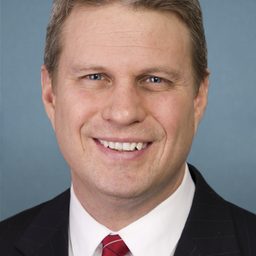 Rep. Huizenga, Bill (R-MI) [#4]
20 cosponsors
-
 Rep. Arrington, Jodey C. (R-TX) [#19]
-
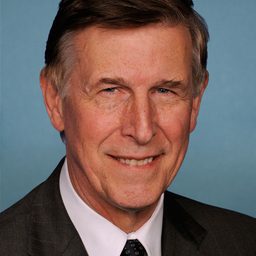 Rep. Beyer, Donald S. (D-VA) [#8]
-
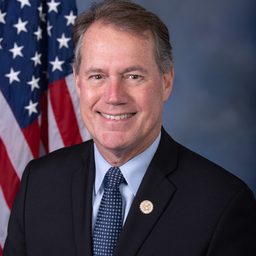 Rep. Case, Ed (D-HI) [#1]
-
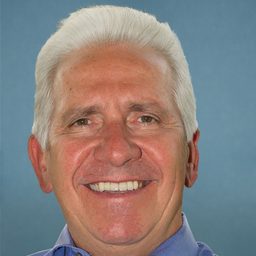 Rep. Costa, Jim (D-CA) [#21]
-
 Rep. Edwards, Chuck (R-NC) [#11]
-
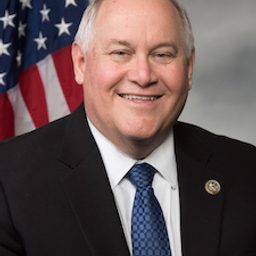 Rep. Estes, Ron (R-KS) [#4]
-
 Rep. Feenstra, Randy (R-IA) [#4]
-
 Rep. Golden, Jared F. (D-ME) [#2]
-
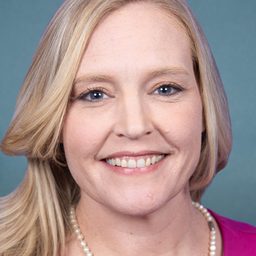 Rep. Houchin, Erin (R-IN) [#9]
-
 Rep. Houlahan, Chrissy (D-PA) [#6]
-
 Rep. Johnson, Dusty (R-SD) [At-large]
-
 Rep. Moore, Blake D. (R-UT) [#1]
-
 Rep. Panetta, Jimmy (D-CA) [#19]
-
 Rep. Perez, Marie Gluesenkamp (D-WA) [#3]
-
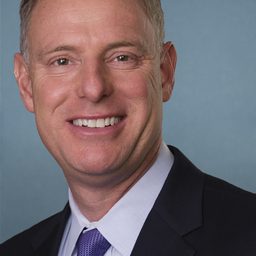 Rep. Peters, Scott H. (D-CA) [#50]
-
 Rep. Quigley, Mike (D-IL) [#5]
-
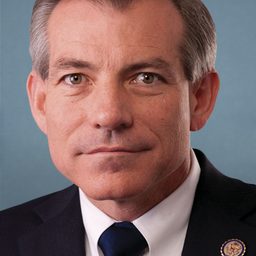 Rep. Schweikert, David (R-AZ) [#1]
-
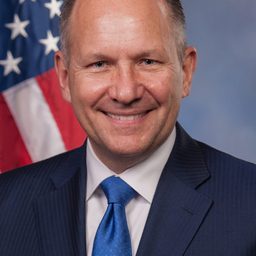 Rep. Smucker, Lloyd (R-PA) [#11]
-
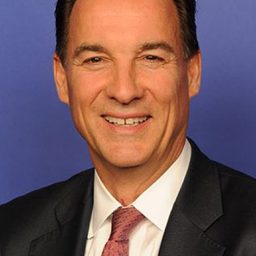 Rep. Suozzi, Thomas R. (D-NY) [#3]
-
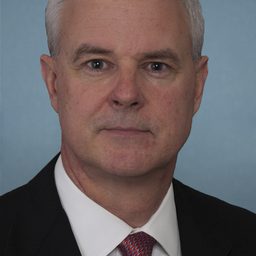 Rep. Womack, Steve (R-AR) [#3]
Money behind the sponsor
Top reported contributors to Bill Huizenga’s campaign committee (2024 cycle) — who funds the bill’s sponsor, not a claim about this bill. Data from FEC.
- Employer not reported $115,320
- ANDREESSEN HOROWITZ $19,800
- APOLLO MANAGEMENT $15,000
- EDW. C. LEVY CO. $13,350
- HAWORTH INCORPORATED $13,200
Organizations whose employees gave the most — itemized individual contributions grouped by the donor’s reported employer (FEC Schedule A). Full finance for Bill Huizenga → · Outside spending →
Actions (2)
- Jan 7, 2026 Referred to the Committee on the Budget, and in addition to the Committees on Ways and Means, and Rules, for a period to be subsequently determined by the Speaker, in each case for consideration of such provisions as fall within the jurisdiction of the committee concerned. · house
- Jan 7, 2026 Submitted in House
Full text
IN THE HOUSE OF REPRESENTATIVES
January 7, 2026
Mr. Huizenga (for himself, Mr. Peters, Mr. Smucker, Mr. Quigley, Mr. Arrington, Mr. Case, Mr. Womack, Mr. Panetta, Mrs. Houchin, Ms. Perez, Mr. Moore of Utah, Ms. Houlahan, Mr. Johnson of South Dakota, Mr. Golden of Maine, and Mr. Estes) submitted the following resolution; which was referred to the Committee on the Budget, and in addition to the Committees on Ways and Means, and Rules, for a period to be subsequently determined by the Speaker, in each case for consideration of such provisions as fall within the jurisdiction of the committee concerned
RESOLUTION
Expressing the sense of the House of Representatives that the United States should reduce and maintain the Federal unified budget deficit at or below 3 percent of gross domestic product.
Whereas reducing annual deficits to 3 percent of gross domestic product has attracted bipartisan support as a target to stabilize the national debt; Whereas the budget deficit was $1,800,000,000,000 for fiscal year 2025, or roughly 6 percent of gross domestic product (GDP), even in the absence of major new emergency spending; Whereas the national debt held by the public now stands at nearly $31,000,000,000,000; Whereas interest payments on the national debt are now projected to total more than $1,000,000,000,000, the highest level in American history and more than total defense spending; Whereas the rising deficits and debt represent a threat to national security, economic growth, and future generations; Whereas rising deficits also threaten to increase interest rates and the cost of living, reduce the government’s flexibility to respond to fiscal emergencies, and create risks of a fiscal crisis; Whereas the Federal budget ran a sub-3 percent deficit-to-GDP in 1989, 1994, 1995, 1996, 1997, 2002, 2005, 2006, 2007, 2014, and 2015; Whereas the Federal Government ran a surplus in 1998, 1999, 2000, and 2001; Whereas deficit reduction is best achieved when aiming toward a manageable, meaningful target; and Whereas Congress has a bipartisan responsibility to enact fiscal policies that promote long-term economic growth and to safeguard future generations, and to be ready for future emergencies: Now, therefore, be it Resolved, That it is the sense of the House of Representatives that—
(1) Congress should adopt a fiscal target to reduce the Federal budget deficit to 3 percent of gross domestic product (in this resolution referred to as “the target”) or less as soon as possible and no later than the end of fiscal year 2030;
(2) following the achievement of the target, Congress should continue to pursue further deficit reduction with the goal of achieving a balanced Federal budget;
(3) the President should submit budgets designed to create a path to meet and sustain the target;
(4) the congressional budget resolution should set allocations consistent with meeting the target on schedule;
(5) the House Committee on the Budget should, within 180 days, recommend enforcement options for consideration, which may include points of order and a backstop mechanism for when the target is not projected to be met;
(6) the House Committee on Rules should, within 180 days, recommend changes to the House rules to ensure that the target can be met, including ensuring that House rules for budget enforcement are difficult to waive, and that enforcement of the Statutory Pay-As-You-Go Act of 2010 is difficult to waive;
(7) the Congressional Budget Office should include statements within its cost estimates for major legislation that demonstrate how the legislation affects consistency toward the target under a current law baseline;
(8) the Joint Committee on Taxation is encouraged to provide supplemental analysis of whether major legislation advances or impedes progress toward the target; and
(9) efforts to meet the target should examine changes to address current levels and the growth of discretionary appropriations, direct spending, and revenues and the gap between current revenues and expenditures of the Federal Government that avoid timing shifts, reclassifications, or other budgetary gimmicks. <all>
Text versions (1)
Bills are re-published as they move (Introduced → Reported → Engrossed → Enrolled …). Each stage below is a separate text; pick two to see what changed. Data from Congress.gov.
Similar bills (6)
Bills with similar text or summary — includes reintroductions across Congresses. Ranked by semantic similarity of the bill text (computed locally); a neutral discovery aid, not a claim the bills are duplicates.
Comments