
HR 7941 Re-checks Congress.gov for new actions and updates the bill's status, and fills in any sponsors, committees, or related bills that are missing. It does not re-pull sponsors/cosponsors/committees/related — those rarely change — and it skips all work if nothing has changed upstream, so it's cheap to click.
To ensure the passenger security fee paid by airline passengers is used exclusively for aviation security, establish a Transportation Security Trust Fund to support the operations and personnel of the Transportation Security Administration, and ensure continuity of aviation security operations during a lapse in appropriations, and for other purposes.
Summary
- Strikes subsections (f) and (i) of 49 U.S.C. 44940, the provisions that currently allow passenger security fees to be diverted to other uses.
- Establishes a Transportation Security Trust Fund in the Department of Homeland Security, into which fees collected under the 9/11 Security Fee (49 U.S.C. 44940) are deposited and made available without further appropriation or fiscal year limitation.
- Limits Fund amounts to aviation security purposes, including TSA personnel compensation and training, passenger and baggage screening, screening technology, airport security infrastructure, and security research, and bars transfers to the general fund of the Treasury.
- Makes Fund amounts available to the TSA Administrator for continued aviation security operations during a lapse in appropriations for TSA, with first priority for TSA personnel pay and staffing and authority to use Aviation Security Capital Fund amounts during such a lapse.
- Creates an Aviation Security Technology and Infrastructure Account within the Fund, available until expended for checkpoint technology, computed tomography screening, credential authentication, airport screening infrastructure, exit lane and perimeter security, and grants to airports, after personnel and operational funding requirements are met.
AI-generated plain-language summary of the bill text — neutral, and may be imperfect. See the full text below for the exact wording.
Sponsor (1)
-
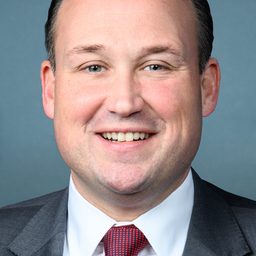 Rep. Langworthy, Nicholas A. (R-NY) [#23]
11 cosponsors
-
 Rep. Barrett, Tom (R-MI) [#7]
-
 Rep. Flood, Mike (R-NE) [#1]
-
 Rep. Houchin, Erin (R-IN) [#9]
-
 Rep. Kiggans, Jennifer A. (R-VA) [#2]
-
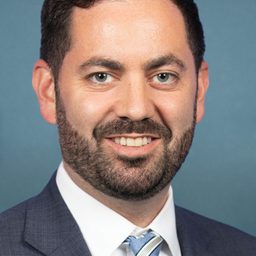 Rep. Lawler, Michael (R-NY) [#17]
-
 Rep. Luna, Anna Paulina (R-FL) [#13]
-
 Rep. Mackenzie, Ryan (R-PA) [#7]
-
 Rep. Malliotakis, Nicole (R-NY) [#11]
-
 Rep. Nunn, Zachary (R-IA) [#3]
-
 Rep. Stefanik, Elise M. (R-NY) [#21]
-
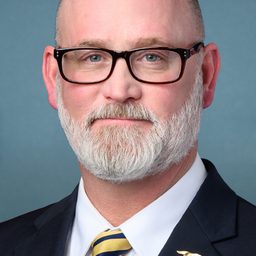 Rep. Van Orden, Derrick (R-WI) [#3]
Money behind the sponsor
Top reported contributors to Nicholas A. Langworthy’s campaign committee (2024 cycle) — who funds the bill’s sponsor, not a claim about this bill. Data from FEC.
- BLACKSTONE $25,217
- CORNING $15,255
- FREY ELECTRIC CONSTRUCTION CO. $13,800
- ST. PAULY TEXTILE $13,200
- CRYSTAL WINDOW AND DOOR SYSTEMS, LTD $13,200
Organizations whose employees gave the most — itemized individual contributions grouped by the donor’s reported employer (FEC Schedule A). Full finance for Nicholas A. Langworthy → · Outside spending →
Actions (3)
- Mar 17, 2026 Referred to the Subcommittee on Transportation and Maritime Security. · house
- Mar 16, 2026 Referred to the House Committee on Homeland Security. · house
- Mar 16, 2026 Introduced in House
Full text
IN THE HOUSE OF REPRESENTATIVES
March 16, 2026
Mr. Langworthy (for himself, Mr. Lawler, and Ms. Malliotakis) introduced the following bill; which was referred to the Committee on Homeland Security
A BILL
To ensure the passenger security fee paid by airline passengers is used exclusively for aviation security, establish a Transportation Security Trust Fund to support the operations and personnel of the Transportation Security Administration, and ensure continuity of aviation security operations during a lapse in appropriations, and for other purposes.
Be it enacted by the Senate and House of Representatives of the United States of America in Congress assembled,
SECTION 1. SHORT TITLE.
This Act may be cited as the “Pay TSA Act of 2026”.
SEC. 2. TRANSPORTATION SECURITY FUNDING.
(a) Repeal of Diversion of Passenger Security Fees.—Section 44940 of title 49, United States Code, is amended—
(1) by striking subsection (f); and
(2) by striking subsection (i).
(b) Transportation Security Trust Fund.—
(1) Establishment.—There is established in the Department of Homeland Security a fund to be known as the “Transportation Security Trust Fund” (referred to in this Act as the “Fund”).
(2) Deposits.—Amounts collected from fees imposed under section 44940 of title 49, United States Code (commonly known as the “9/11 Security Fee”), shall be deposited into the Fund and available without further appropriation and without fiscal year limitation.
(3) Use of funds.—Amounts in the Fund shall be available to the Administrator of the Transportation Security Administration for activities to strengthen aviation security, including relating to the following:
(A) Salaries, benefits, training, and workforce support for Administration personnel.
(B) Passenger and baggage screening operations.
(C) Aviation security checkpoint and screening technology.
(D) Airport security infrastructure and equipment.
(E) Research, development, and deployment of advanced aviation security systems.
(4) Restriction on diversion of funds.—Amounts deposited in the Fund—
(A) shall be used only for the aviation security purposes specified in paragraph (3); and
(B) may not be transferred to the general fund of the Treasury or used for deficit reduction or other non-aviation security purposes.
(c) Availability of Funds During a Lapse in Appropriations.—
(1) Availability.—
(A) In general.—If during any period during any fiscal year the discretionary appropriations Act providing funding for the Transportation Security Administration, or continuing appropriations for the Transportation Security Administration, are not enacted into law, amounts in the Fund shall be available without further appropriation or fiscal year limitation to the Administrator of the Transportation Security Administration for the continuation of programs, projects, and activities necessary to maintain aviation security operations.
(B) Aviation security capital fund.— Notwithstanding section 44923(h) of title 49, United States Code, during any period described in subparagraph (A), amounts available in the Aviation Security Capital Fund established under such section 44923(h) shall be available to the Administrator of the Transportation Security Administration to carry out the activities described in such subparagraph, subject to the priorities described in this subsection.
(2) Priority for tsa personnel.—
(A) In general.—In carrying out paragraph (1), the Administrator of the Transportation Security Administration shall prioritize the use of funds made available pursuant to paragraph (1) for the following:
(i) Salaries, benefits, and overtime compensation of Transportation Security Officers and other personnel necessary to conduct passenger and baggage screening and aviation security operations.
(ii) Staffing levels required to maintain the safe and efficient operation of aviation security screening checkpoints and related security functions.
(iii) Other operational expenses directly supporting frontline aviation security personnel.
(B) Application.—Amounts made available under this paragraph shall first be applied to carry out subparagraph (A)(i).
(3) Secondary uses for security infrastructure and technology.—After the funding requirements described in paragraph (2) have been satisfied, remaining amounts made available pursuant to paragraph (1) may be used for the following:
(A) The procurement, deployment, and sustainment of aviation security checkpoint technology.
(B) Baggage screening equipment and related aviation security infrastructure.
(C) Maintenance and modernization of airport security systems.
(D) Grants to airports for aviation security technology improvements.
(4) Rate for operations.—Funds made available under this subsection shall be provided at a rate for operations not greater than the rate for operations provided for the Transportation Security Administration programs, projects, and activities described in this subsection during the immediately preceding fiscal year.
(5) Duration of authority.—The authority provided under this subsection shall remain in effect for the period beginning on the first day of a lapse in appropriations and ending on the date on which—
(A) the applicable regular appropriation Act providing funding for the Transportation Security Administration is enacted into law; or
(B) continuing appropriations for the Transportation Security Administration are enacted into law.
(6) Terms and conditions.—Funds made available under this subsection shall be subject to the terms, conditions, and limitations applicable to the Transportation Security Administration programs, projects, and activities on the date immediately preceding the date on which the applicable lapse of appropriations occurs for the immediately preceding fiscal year.
(d) Aviation Security Technology and Infrastructure Account.—
(1) Establishment.—There is established in the Fund an account to be known as the “Aviation Security Technology and Infrastructure Account” (referred to in this subsection as the “Account”).
(2) Purpose.—The purpose of the Account is to support the modernization, procurement, deployment, and sustainment of aviation security technology and infrastructure necessary to enhance the safety and efficiency of passenger and baggage screening operations.
(3) Availability of funds.—Amounts in the Account shall be available until expended to the Administrator of the Transportation Security Administration for aviation security technology and infrastructure investments only after the funding requirements necessary to support Transportation Security Administration personnel and operational aviation security activities have been satisfied, including the compensation and staffing requirements described in subsection
(c)(2).
(4) Authorized uses.—Amounts made available under this subsection may be used for the following:
(A) Procurement, deployment, and sustainment of aviation security checkpoint technology.
(B) Computed tomography screening systems and related screening equipment.
(C) Credential authentication technology and related passenger screening systems.
(D) Airport security screening infrastructure and associated equipment.
(E) Exit lane and perimeter security technology.
(F) Grants to airports for aviation security technology deployment and modernization. <all>
Text versions (1)
Bills are re-published as they move (Introduced → Reported → Engrossed → Enrolled …). Each stage below is a separate text; pick two to see what changed. Data from Congress.gov.
Similar bills (6)
Bills with similar text or summary — includes reintroductions across Congresses. Ranked by semantic similarity of the bill text (computed locally); a neutral discovery aid, not a claim the bills are duplicates.
Comments