
HR 3121 Re-checks Congress.gov for new actions and updates the bill's status, and fills in any sponsors, committees, or related bills that are missing. It does not re-pull sponsors/cosponsors/committees/related — those rarely change — and it skips all work if nothing has changed upstream, so it's cheap to click.
To amend the Public Health Service Act to expand trauma-informed training for law enforcement personnel and emergency medical technicians related to sexual assault, domestic violence, dating violence, and stalking cases, and for other purposes.
Summary
- Establishes a grant program to fund trauma-informed training for law enforcement and emergency medical technicians on sexual assault, domestic violence, dating violence, and stalking cases
- Requires grant recipients to provide at least 8 hours of training for new law enforcement and emergency medical services personnel and at least 4 hours of training annually for existing personnel
- Requires training to be trauma-informed, evidence-based, and victim-centered, covering trauma's impact on the brain and how to avoid retraumatization of survivors
- Requires the Secretary to maintain an online searchable listing of trainers by geographic area and professional background
- Requires grant recipients to ensure trainer diversity across professional backgrounds and racial, ethnic, and gender representation
- Requires the Secretary to collect data and submit annual reports to Congress on grant effectiveness, including prosecution outcomes and survivor feedback
AI-generated plain-language summary of the bill text — neutral, and may be imperfect. See the full text below for the exact wording.
Sponsor (1)
-
 Rep. Schakowsky, Janice D. (D-IL) [#9]
13 cosponsors
-
 Del. Norton, Eleanor Holmes (D-DC) [At-large]
-
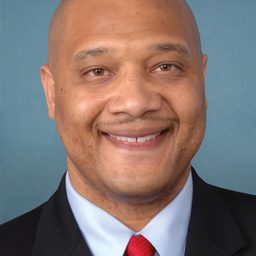 Rep. Carson, André (D-IN) [#7]
-
 Rep. Dingell, Debbie (D-MI) [#6]
-
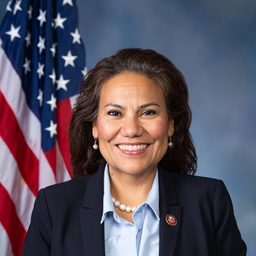 Rep. Escobar, Veronica (D-TX) [#16]
-
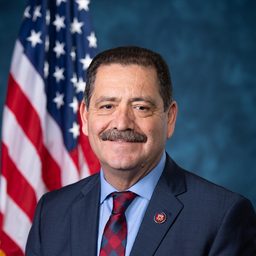 Rep. García, Jesús G. "Chuy" (D-IL) [#4]
-
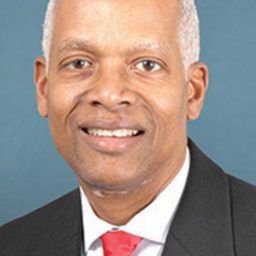 Rep. Johnson, Henry C. "Hank" (D-GA) [#4]
-
 Rep. Kamlager-Dove, Sydney (D-CA) [#37]
-
 Rep. Krishnamoorthi, Raja (D-IL) [#8]
-
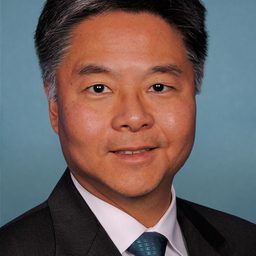 Rep. Lieu, Ted (D-CA) [#36]
-
 Rep. Moore, Gwen (D-WI) [#4]
-
 Rep. Ross, Deborah K. (D-NC) [#2]
-
 Rep. Thanedar, Shri (D-MI) [#13]
-
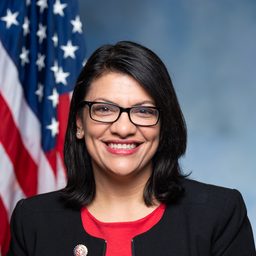 Rep. Tlaib, Rashida (D-MI) [#12]
Money behind the sponsor
Top reported contributors to Janice D. Schakowsky’s campaign committee (2024 cycle) — who funds the bill’s sponsor, not a claim about this bill. Data from FEC.
- Employer not reported $22,470
- STATE OF ILLINOIS $21,200
- STATE OF IL $13,250
- COONEY AND CONWAY $7,100
- JENNER & BLOCK $6,800
Organizations whose employees gave the most — itemized individual contributions grouped by the donor’s reported employer (FEC Schedule A). Full finance for Janice D. Schakowsky → · Outside spending →
Actions (2)
- Apr 30, 2025 Referred to the House Committee on Energy and Commerce. · house
- Apr 30, 2025 Introduced in House
Full text
IN THE HOUSE OF REPRESENTATIVES
April 30, 2025
Ms. Schakowsky (for herself, Ms. Kamlager-Dove, Mr. Johnson of Georgia, Mrs. Dingell, and Ms. Ross) introduced the following bill; which was referred to the Committee on Energy and Commerce
A BILL
To amend the Public Health Service Act to expand trauma-informed training for law enforcement personnel and emergency medical technicians related to sexual assault, domestic violence, dating violence, and stalking cases, and for other purposes.
Be it enacted by the Senate and House of Representatives of the United States of America in Congress assembled,
SECTION 1. SHORT TITLE.
This Act may be cited as the “Anna’s Law of 2025”.
SEC. 2. EXPANDING TRAUMA-INFORMED TRAINING FOR LAW ENFORCEMENT PERSONNEL AND EMERGENCY MEDICAL TECHNICIANS RELATED TO SEXUAL ASSAULT CASES.
Part D of title V of the Public Health Service Act (42 U.S.C. 290dd et seq.) is amended by adding at the end the following:
“SEC. 553. EXPANDING TRAUMA-INFORMED TRAINING FOR LAW ENFORCEMENT PERSONNEL AND EMERGENCY MEDICAL TECHNICIANS RELATED TO SEXUAL ASSAULT CASES.
“(a) In General.—The Secretary may award grants to eligible entities to establish and expand training for law enforcement personnel and emergency medical technicians—
“(1) to increase understanding and awareness of the impact of trauma in sexual assault cases; and
“(2) to develop and implement strategies for trauma- informed responses and policies in such cases.
“(b) Period of Grants.—The period of a grant under this section shall be 1 year.
“(c) Training Described.—The training funded pursuant to subsection (a) shall—
“(1) be trauma-informed, evidence-based or demonstrate promising practices and policies, and victim-centered;
“(2) focus on the circumstances of individuals who—
“(A) have experienced sexual assault or other sexual violence, domestic violence, dating violence, or stalking; and
“(B) have dealt with related trauma in interacting with law enforcement personnel and emergency medical technicians; and
“(3) include training on—
“(A) identifying the impact of trauma on the brain and behavior
“(B) how contact with law enforcement personnel and emergency medical technicians can cause or lead to retraumatization of sexual assault victims;
“(C) recognizing how the impact of trauma can influence interactions with law enforcement personnel and emergency medical technicians;
“(D) identifying tools and strategies to navigate trauma challenges when interacting with survivors of sexual assault, domestic violence, dating violence, and stalking;
“(E) communicating with survivors in a trauma- informed manner; and
“(F) how law enforcement personnel and emergency medical technicians can best support victims of sexual assault or other sexual violence during their interactions with law enforcement.
“(d) Trainer Listing.—The Secretary shall maintain and make available online—
“(1) a listing of trainers who provide training described in subsection (c); and
“(2) make such listing searchable according to the trainer’s—
“(A) geographic area; and
“(B) professional background.
“(e) Diversity Among Trainers.—As a condition on receipt of a grant under this section, an eligible entity shall strive to provide the training funded through the grant by trainers with—
“(1) diverse professional backgrounds; and
“(2) inclusive racial, ethnic, and gender representation.
“(f) Required Number of Training Hours.—As a condition on receipt of a grant under this section, an eligible entity shall agree to require—
“(1) individuals enrolled in a law enforcement academy (or other initial training for law enforcement personnel) fire academy (or other initial training for fire fighters), and emergency medical services (or other initial training for emergency medical technicians) of such agencies to receive training described in subsection (c) for at least eight hours; and
“(2) all other law enforcement personnel and emergency medical technicians of such agencies to receive training described in subsection (c) for at least four hours annually.
“(g) Reports to Congress.—The Secretary shall collect data and submit annual reports to the Congress on the grant program under this section. Each such report shall include—
“(1) the number of eligible entities receiving grants under this section;
“(2) an evaluation of the effectiveness of such grants in improving trauma-informed training for law enforcement personnel and emergency medical technicians for sexual assault cases;
“(3) the prosecution of such cases and outcomes of such prosecution; and
“(4) survivor feedback on their experiences with law enforcement personnel and emergency medical technicians.
“(h) Definitions.—In this section:
“(1) The term ‘eligible entity’ means—
“(A) a State, Tribal, or local law enforcement agency; and
“(B) a State or local agency overseeing emergency medical services.
“(2) The term ‘trauma-informed’ means—
“(A) an understanding of the neurological, biological, psychological, and social effects of trauma and violence on an individual; and
“(B) an understanding of the environment, practices, policies, and infrastructure that may need to be modified to address the prevalence of trauma and its impacts.”. <all>
Text versions (1)
Bills are re-published as they move (Introduced → Reported → Engrossed → Enrolled …). Each stage below is a separate text; pick two to see what changed. Data from Congress.gov.
Similar bills (6)
Bills with similar text or summary — includes reintroductions across Congresses. Ranked by semantic similarity of the bill text (computed locally); a neutral discovery aid, not a claim the bills are duplicates.
Comments