
HR 1149 Re-checks Congress.gov for new actions and updates the bill's status, and fills in any sponsors, committees, or related bills that are missing. It does not re-pull sponsors/cosponsors/committees/related — those rarely change — and it skips all work if nothing has changed upstream, so it's cheap to click.
Protecting Our Wallets from Excessive Rates Act
To require retail electric utilities to notify electric consumers of rate increases, and for other purposes.
Summary
- Requires retail electric utilities to notify consumers at least 30 days before implementing any rate increase, using multiple communication channels including direct mail, email, websites, and local media.
- Requires rate increase notifications to include the percentage of the increase, detailed reasons and justifications, the impact on average consumer bills, and information on how consumers can provide feedback or file complaints.
- Imposes civil penalties of up to $10,000 on utilities that fail to notify consumers and prohibits utilities from implementing a rate increase until proper notification is provided.
- Requires utilities to notify the Department of Energy at least 60 days before implementing any rate increase of 5 percent or more, including comprehensive justifications and assessments of impacts on consumers.
- Requires the Department of Energy to review rate increase justifications and publish findings within 30 days with recommendations for adjustments, mitigation measures such as phased-in increases and financial assistance, and efficiency improvements; DOE must also monitor impacts after implementation.
AI-generated plain-language summary of the bill text — neutral, and may be imperfect. See the full text below for the exact wording.
Sponsor (1)
-
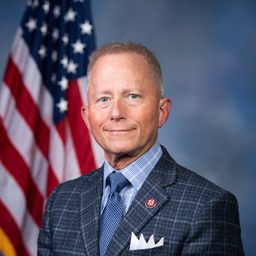 Rep. Van Drew, Jefferson (R-NJ) [#2]
Money behind the sponsor
Top reported contributors to Jefferson Van Drew’s campaign committee (2024 cycle) — who funds the bill’s sponsor, not a claim about this bill. Data from FEC.
- Employer not reported $176,557
- ENTREPRENEUR $70,972
- PULSE VASCULAR $9,900
- ICONA RESORTS $9,900
- MONZO CATANESE HILLEGASS $9,000
Organizations whose employees gave the most — itemized individual contributions grouped by the donor’s reported employer (FEC Schedule A). Full finance for Jefferson Van Drew → · Outside spending →
Actions (2)
- Feb 7, 2025 Referred to the House Committee on Energy and Commerce. · house
- Feb 7, 2025 Introduced in House
Full text
IN THE HOUSE OF REPRESENTATIVES
February 7, 2025
Mr. Van Drew introduced the following bill; which was referred to the Committee on Energy and Commerce
A BILL
To require retail electric utilities to notify electric consumers of rate increases, and for other purposes.
Be it enacted by the Senate and House of Representatives of the United States of America in Congress assembled,
SECTION 1. SHORT TITLE.
This Act may be cited as the “Protecting Our Wallets from Excessive Rates Act” or the “POWER Act”.
SEC. 2. NOTIFICATION REQUIREMENTS FOR PLANNED RATE INCREASES.
(a) Public Notification and Justification Requirement.—
(1) Notification to electric consumers.—A retail electric utility that intends to increase any rate applicable to electric consumers shall, in accordance with this subsection, provide notification to electric consumers that will be impacted by the rate increase at least 30 days prior to implementing the rate increase.
(2) Content of notification.—A notification provided under paragraph (1) shall include the following:
(A) A clear statement of the percentage of the rate increase.
(B) A detailed breakdown of the reasons and justifications for the rate increase.
(C) An explanation of how the increased rate will impact the average electric consumer’s bill.
(D) Information on how electric consumers can provide feedback or file a complaint regarding the rate increase.
(3) Methods of notification.—A retail electric utility shall provide notification under paragraph (1) using multiple communication channels to ensure, to the extent feasible, that all impacted electric consumers are provided such notification, including by providing notification by direct mail or email to such electric consumers, posting the notification on the retail electric utility’s official website, and publishing the notification in local newspapers and other local media outlets.
(4) Penalties for non-compliance.—
(A) In general.—A retail electric utility that violates or fails or refuses to comply with the notification requirement under paragraph (1)—
(i) shall be subject to a civil penalty in an amount not to exceed $10,000; and
(ii) may not implement the applicable rate increase until such notification requirement is met.
(B) Assessment.—A penalty under subparagraph (A) shall be assessed by the Federal Energy Regulatory Commission after notice and opportunity for public hearing. In determining the amount of such a penalty, the Commission shall take into consideration the nature and seriousness of the violation, failure, or refusal and the efforts of the retail electric utility to remedy the violation, failure, or refusal in a timely manner.
(b) Department of Energy Notification Requirement.—
(1) Notification.—A retail electric utility shall submit to the Secretary of Energy a notification of any planned rate increase of 5 percent or more for any rate applicable to electric consumers, at least 60 days prior to the implementation of such rate increase.
(2) Content of notification.—A notification submitted under paragraph (1) shall include—
(A) identification of the percentage by which the rate will be increased;
(B) a comprehensive justification for such rate increase, including cost drivers and financial impact;
(C) an assessment of the potential impacts on electric consumers; and
(D) any proposed mitigation measures to be taken by the retail electric utility.
(3) Pre-implementation review by doe.—The Secretary of Energy shall—
(A) upon receiving a notification under this subsection, review the justification described in paragraph (2)(B); and
(B) not later than 30 days after receiving a notification under this subsection, publish a report on the Secretary’s findings regarding the applicable planned rate increase, including—
(i) an assessment of the potential impacts on electric consumers; and
(ii) any recommendations—
(I) for adjustments to the planned rate increase;
(II) on ways to mitigate the impacts of the rate increase on electric consumers, including— (aa) phasing in price increases; and (bb) financial aid options for electric consumers; and
(III) for how the retail electric utility can improve or increase efficiency to avoid future rate increases.
(4) Monitoring by doe.—The Secretary of Energy shall, after a rate increase described in paragraph (1) is implemented, monitor the impacts of such rate increase on the market and on electric consumers to evaluate if the rate increase has had the impacts described in paragraph (3)(B) and if further action is needed.
(c) Definitions.—In this section:
(1) Electric consumer.—The term “electric consumer” has the meaning given such term in section 3(5) of the Public Utility Regulatory Policies Act of 1978 (16 U.S.C. 2602(5)).
(2) Electric utility.—The term “electric utility” has the meaning given such term in section 3(4) of the Public Utility Regulatory Policies Act of 1978 (16 U.S.C. 2602(4)).
(3) Retail electric utility.—The term “retail electric utility” means an electric utility that sells electric energy for purposes other than resale. <all>
Text versions (1)
Bills are re-published as they move (Introduced → Reported → Engrossed → Enrolled …). Each stage below is a separate text; pick two to see what changed. Data from Congress.gov.
Similar bills (6)
Bills with similar text or summary — includes reintroductions across Congresses. Ranked by semantic similarity of the bill text (computed locally); a neutral discovery aid, not a claim the bills are duplicates.
Comments