
S 1240 SC
A state bill is a proposed law in a state legislature — separate from the U.S. Congress. Learn more →
Summary
This Senate resolution would formally recognize and honor the Boykin Spaniel Society for its efforts to preserve and promote the Boykin spaniel breed. It gives background on the breed, which was developed near Camden, South Carolina, and was made the state dog in 1985. It also notes that the society was founded in 1977, began a breed registry in 1979, and holds two annual national field trials. The resolution directs that a copy be presented to the society. It does not create any new law, funding, or regulation.
AI-generated plain-language summary of the bill text — neutral, and may be imperfect. See the full text below for the exact wording.
Official abstract
A SENATE RESOLUTION TO RECOGNIZE AND HONOR THE BOYKIN SPANIEL SOCIETY FOR ITS DEDICATED EFFORTS IN PRESERVING AND PROMOTING THE BOYKIN SPANIEL BREED.
Sponsor (1)
-
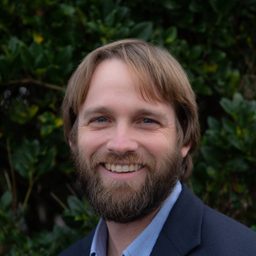 Graham Democratic · primary
Action history (1)
- Oct 28, 2026 Introduced and adopted · upper
Text versions (3)
Full text
Full text imported from www.scstatehouse.gov
South Carolina General Assembly 126th Session, 2025-2026 Bill 1240 Indicates Matter Stricken Indicates New Matter (Text matches printed bills. Document has been reformatted to meet World Wide Web specifications.)
A Senate RESOLUTION
TO RECOGNIZE AND HONOR The Boykin Spaniel Society for its dedicated efforts in preserving and promoting the boykin spaniel breed.
W hereas, the members of the South Carolina Senate hereby recognize the Boykin Spaniel Society for its efforts in preserving and promoting the Boykin spaniel breed; and
W hereas, L. W. "Whit" Boykin, a planter, land appraiser, and well-known sportsman of the Boykin community just outside Camden, along with his kinsmen, the Canteys, developed a small multipurpose retriever now known as the Boykin spaniel to assist in their dove and turkey hunting excursions in the Wateree River swamp; and
W hereas, the Boykin spaniel grew quickly in popularity due to its amiable nature and success in the field. Governor Richard W. Riley proclaimed September 1, 1984, the first day of dove hunting season, as Boykin Spaniel Day. On March 26, 1985, Governor Riley signed the act making the Boykin spaniel the official state dog; and
W hereas, the Boykin Spaniel Society was founded in the summer of 1977 in Camden, with the goal of preserving and promoting the Boykin spaniel breed through responsible breeding, health initiatives, and community building. Today, the society has over four thousand members hailing from every state in the nation, as well as Canada, Switzerland, Austria, France, England, Japan, Hong Kong, Korea, Africa, and Germany; and
W hereas, the society began an official registry for the breed in 1979. This Boykin spaniel registry serves as the main registry for all purebreds and helps the society maintain accurate and complete records of all Boykin spaniels registered; and
W hereas, the Boykin Spaniel Society hosts various hunting and field trials to showcase the breed's abilities. The first annual National Hunting Test was held on May 23, 1980, and since then, competitors have grown steadily in numbers and ability, attracting dog owners and handlers from all parts of the country. Today, the society holds two annual National Field Trials, Spring National (non-slip retriever field trial) in Camden, and Upland National Field Trial in Ayden, North Carolina; and
W hereas, the members of the South Carolina Senate greatly appreciate the dedication and commitment that the Boykin Spaniel Society has shown in serving the people and the State of South Carolina. Now, therefore,
B e it resolved by the Senate:
T hat the members of the South Carolina Senate, by this resolution, honor and recognize the Boykin Spaniel Society for its dedicated efforts in preserving and promoting the Boykin spaniel breed.
B e it further resolved that a copy of this resolution be presented to the Boykin Spaniel Society. ----XX----
This web page was last updated on October 28, 2026 at 02:30 PM
Comments
Data from OpenStates. View on OpenStates →
Comments