
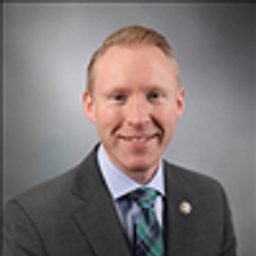
A state legislator serves in a state's own legislature — separate from the U.S. Congress. Learn more →
Contact
CivicGate will email Adam Schnelting on your behalf (replies go to your account email). Edit your message first — it goes in your own words.
Sponsored bills (104)
Bills this legislator primary-sponsored. Data from OpenStates.
- SB 1002 SS/SB 1002 - This act requires all elections for school board members of any school district in which a majority of the district is located in St. Charles County to be held at the November general election and makes all such terms four years. At the time of filing a declaration of candidacy, a candidate may optionally designate his or her party affiliation and consent to have such affiliation appear beside the candidate's name on the ballot. (Sections 162.082, 162.301, 162.341, 162.459, and 162.481) The act further requires all proposals submitted to the voters of any school district in which a majority of the district is located in St. Charles County for the purpose of levying a new tax or renewing or increasing the levy of an existing tax, including for the issuance of bonded indebtedness, to be submitted at the November general election. (Section 164.320) This act is similar to provisions in SB 839 (2026), SB 1185 (2026), SB 485 (2025), HB 1722 (2026), HB 539 (2025), HB 2536 (2024), SB 234 (2023), SB 740 (2022), HCS/HB 2306 (2022), HB 361 (2019), and HCS/HB 1424 (2018). OLIVIA SHANNON · Became Law · Jul 13, 2026
- SJR 95 SS/SCS/SJR 95 - This constitutional amendment, if approved by voters, establishes the "Show-Me Prosperity Fund", which is established as a permanent public endowment to provide long-term fiscal stability with the goal of eliminating state-imposed taxes without impairing the real value of the fund's principal. The fund shall consist of money appropriated to it by the General Assembly, and may also receive gifts, donations, grants, and bequests from any source. The State Treasurer shall invest the fund in exchange-traded funds tracking the stock performance of the Standard and Poor's 500 a manner consistent with fiduciary standards applicable to public trust funds. No money shall be appropriated from the fund until the notification is given by the State Treasurer that the net investment earnings of the fund, as defined in the amendment, are sufficient to eliminate state-imposed taxes, at which time net investment earnings from the fund shall be used to eliminate state taxes as provided in the amendment. The total amount of moneys that may be appropriated from the fund in a fiscal year shall not exceed three percent of the average market value of the fund over the preceding five fiscal years. Upon the elimination of all state-imposed taxes, no such taxes shall thereafter be enacted, provided, however, that in the event the fund is unable to meet its obligations due to insolvency, revenue shortfall, or program failure, the General Assembly shall retain full authority to appropriate funds from any lawful source and to enact legislation establishing or increasing taxes or other revenues as necessary to ensure continuity of state programs and fulfillment of state expenditures that were anticipated to be supported by the fund. Upon the elimination of all state-imposed taxes, the General Assembly may appropriate net investment earnings from the fund for the purpose of replacing federal moneys received by the state, for issuing dividend payments to residents of the state, or both. The principal of the fund shall not be appropriated, pledged, or borrowed against. The State Auditor shall conduct an audit of the fund to ensure compliance with the provisions of the amendment at such times that the Auditor deems necessary, but no less than once every three fiscal years. This amendment is substantially similar to HJR 189 (2026). JOSHUA NORBERG · Passed Legislature · May 28, 2026
- SB 1003 SS/SCS/SB 1003 - This act modifies provisions relating to military affairs. GRANTS FROM THE MISSOURI MILITARY FAMILY RELIEF FUND (SECTION 41.216) This act modifies the composition of the panel that recommends to the Adjutant General to make grants or provide other financial assistance or services from the Missouri Military Family Relief Fund. Instead of a sergeant major of the Missouri National Guard, the panel shall include a senior enlisted leader of the Missouri National Guard. This act also provides that the Adjutant General, rather than the panel, shall have the power to establish criteria for the grants. Furthermore, the grants may be made to members of the Missouri National Guard in addition to families of members and other reserve members of the Armed Forces of the United States. This provision is identical to a provision in HB 2593 (2026). MISSOURI NATIONAL GUARD RIBBONS (SECTION 41.475, 41.598 & 41.599) This act establishes a Missouri National Guard Counterdrug Program Ribbon, which the Adjutant General is authorized to present to any member of the Missouri National Guard who has participated in the Counterdrug Program after January 1, 1989. This act also establishes the Missouri National Guard Homeland Response Force Program Ribbon, which the Adjutant General is authorized to present to any member of the Missouri National Guard who has participated in the Homeland Response Force Program after January 1, 2012. This act establishes a Missouri National Guard Engineer Explosive Ordnance Clearance Agent Ribbon, which the Adjutant General is authorized to present to any member of the Missouri National Guard who has participated in an engineer explosive ordnance clearance agent course after January 1, 2012. These provisions are identical to provisions in HB 2593 (2026). FEDERAL ASSET FORFEITURE PROGRAM PARTICIPATION BY THE NATIONAL GUARD (SECTION 41.477) This act creates the Missouri National Guard Counterdrug Revolving Fund, which shall consist of all monies received by the Missouri National Guard through federal asset forfeiture programs for purposes authorized by such programs. Participation in federal asset forfeiture programs shall be at the discretion of the Adjutant General. Upon electing to participate, the Missouri National Guard shall comply with the terms of an equitable sharing agreement and certificate of the federal asset forfeiture program. CYBERSECURITY MISSION ACT (SECTIONS 41.1015 TO 41.1018) This act establishes the Cybersecurity Mission Act, which provides that upon the request of the Director of the Department of Public Safety, the Missouri National Guard may enter into agreements for aid related to cybersecurity, cyber-attack prevention, cyber-attack response, and cyber-attack support activities for this state and for political subdivisions, governing bodies, public colleges and universities, law enforcement agencies, utility companies, and critical infrastructure facilities of this state. The Adjutant General may activate members on state order to carry out such activities. The Missouri National Guard Cyber-Security Revolving Fund is created and shall consist of monies appropriated by the General Assembly and monies received as a charge and monies received as reimbursement for expenses incurred by the Missouri National Guard related to rendering aid under this act. These provisions are substantially similar to provisions in HB 2593 (2026). RECOGNITION MEDALS (SECTIONS 42.300 TO 42.316) The Missouri Veterans' Commission may use the Veterans Commission Capital Improvement Trust Fund for payment of expenses associated with providing medals, medallions, and certificates in recognition of service in the Armed Forces of the United States for any conflict, war, operation, and similar incident identified in law, rather than during World War II, the Korean Conflict, and the Vietnam War. Furthermore, this act provides that spouses or eldest living survivors of a deceased veteran, who was entitled to but died prior to applying, may apply for, on behalf of the deceased veteran, the following medallions, medals, and certificates: • Operation Iraqi Freedom and Operation New Dawn; • Operation Enduring Freedom, Operation Freedom's Sentinel, and Operation Allies Refuge Program; and • Operation Desert Shield and Operation Desert Storm. The Missouri Veterans' Commission shall design the form for such medallions, medals, and certificates. The Adjutant General shall determine as expeditiously as possible those persons who are entitled to such medallions, medals, and certificates and shall notify the General Assembly when such supply totals less than 100. These provisions are identical to provisions in HB 2593 (2026). STATE-SPONSORED LIFE INSURANCE PROGRAM (SECTION 105.265) This act provides that the Adjutant General shall be the official sponsor of the state-sponsored life insurance program, which is the life insurance program exclusively offered to all members of the Missouri National Guard through the Missouri National Guard Association in accordance with federal law. The Missouri National Guard Association shall select the insurer used to provide the program. Furthermore, the Adjutant General shall: (1) Allow, facilitate, and coordinate all efforts to make the program available to all Missouri National Guard members; (2) Provide an opportunity for Missouri National Guard members to purchase products of the program; (3) Allow, facilitate, and coordinate requested allotments with the appropriate United States Property and Fiscal Office; (4) Allow program representatives to provide Missouri National Guard members with program briefings during annual training and inactive duty training periods; and (5) Allow Missouri National Guard members to designate or change beneficiaries under the program. LEAVE FROM EMPLOYMENT FOR MILITARY SERVICE (SECTION 105.270) This act expands, from 120 to 160, the maximum number of hours in leave of absence per federal fiscal year that certain public employees are entitled to take to perform specified military duties without loss of time, pay, regular leave, impairment of efficiency rating, or of any other rights or benefits to which the employees are otherwise entitled. TUITION AND FEE WAIVERS FOR MISSOURI NATIONAL GUARD MEMBERS (SECTION 173.239) Currently, the tuition and fee waiver for undergraduate courses at Missouri higher education institutions to Missouri National Guard members apply after GI Bill educational entitlements. This act repeals this provision. This provision is identical to HB 2593 (2026). REPEAL OF THE MILITARY COUNSEL (SECTION 41.220) Finally, this act repeals the Military Council, which duties included acting in an advisory capacity on matters provided by the Governor and the Adjutant General and making recommendations of appropriations for the needs of the militia and expending such appropriations. This provision is identical to HB 2593 (2026). KATIE O'BRIEN · May 15, 2026
- SB 1784 SB 1784 - This act modifies provisions relating to taxation of property. TAX BALLOT MEASURE LANGUAGE This act requires an election authority to label property tax ballot measures numerically or alphabetically. (Section 115.240) This provision is substantially similar to a provision in SB 1517 (2026) and HCS/HB 1790 (2026). This act provides that any ballot measures proposing a new or increased real or personal property tax levy shall include certain information, as described in the act. (Section 115.706) ASSESSMENT OF SHORT-TERM RENTALS This act modifies the definition of "residential property" for the purposes of the taxation of real property by providing that such definition shall include single family homes that are owned by a sole proprietor, individual, partnership, or limited liability company and leased, in whole or in part, for a term of less than thirty consecutive days. (Section 137.016) This provision is identical to SCS/SBs 1066 & 1088 (2026) and SCS/HB 1086 (2025), and is substantially similar to SB 1303 (2026), SB 699 (2025), and SB 784 (2025), and to a provision in HB 660 (2025). REAL PROPERTY ASSESSMENTS Current law provides that the burden of proof to sustain a property valuation shall be on the assessor for any assessment of residential real property that is made by a computer, computer-assisted method, or a computer program. This act applies such provision to all non-agricultural real property. (Section 137.115.1(5)) Current law requires an assessor to conduct a physical inspection prior to increasing the assessed value of residential real property by more than 15%. This act applies such provision to all non-agricultural real property and requires such physical inspections to be conducted prior to July 1. The act also prohibits any increase in the assessed value of real property of more than 15% over a two-year reassessment cycle and requires any increases of 15% to be spread over the two-year cycle, as described in the act. (Section 137.115.10 to .12) Current law requires assessors to provide notice to taxpayers when the valuation of the taxpayer's real property has increased. This act requires an assessor to provide any third party documents, reports, or other data that was relied upon in the computation of assessed value. (Sections 137.180 and 137.355) These provisions are identical to SB 1521 (2026) and SB 787 (2025), and to provisions in SCS/SB 85 (2025) and HB 780 (2025), and are substantially similar to provisions in HB 1582 (2025). APPEALS OF PROPERTY ASSESSMENTS This act provides that any appeal of an assessment involving an increase of more than fifteen percent that is not disposed of by the board of equalization by September 30 shall be dismissed and the assessor's increased assessed valuation shall be void. (Section 138.010) Current law provides that a taxpayer shall prevail in any appeal of an assessed valuation for which an assessor fails to provide evidence of a required physical inspection. This act provides that, in such cases, the increased assessed valuation shall be void. This act also provides that if a taxpayer submits a written appraisal report certified by the Missouri Real Estate Appraisers Commission at least five days in advance of a board of equalization hearing, the value of the property as determined in the appraisal report shall presumptively determine the property's true value in money. (Section 138.060) This act provides that if a transfer of ownership of real property occurs after January 1 of a non-reassessment year, the new owner shall be entitled to appeal the assessed value of such property directly to the State Tax Commission by no later than December 31 of such year, regardless of whether the previous owner appealed the value of the property during the previous reassessment year. (Section 138.135) The act provides that if an assessor appeals a decision of the State Tax Commission on any grounds other than overvaluation and the taxpayer is the prevailing party, the taxpayer shall be awarded costs of appeal and attorney's fees. (Section 138.430) Current law authorizes any first class charter county or city not within a county to require, by ordinance or charter, the reimbursement of just and reasonable appraisal costs, attorney fees, and court costs resulting from hearings before the State Tax Commission for taxpayer appeals of property assessments. This act requires such reimbursements. This act also increases the maximum amount of fees to be reimbursed from $1,000 to $5,000 for residential property appeals, and from $4,000 to $5,000 for utility, industrial railroad, or other subclass three property appeals. (Section 138.434) STATE TAX COMMISSION This act provides that when the State Tax Commission equalizes the valuation of a class or subclass of property that results in an increase of more than fifteen percent, such increase shall be evenly divided between each of the successive reassessment cycles in a manner that does not cause an increase of more than fifteen percent for any two-year assessment cycle. (Section 138.390) PROTESTED PROPERTY TAXES Current law requires a taxpayer to file a written protest of property taxes with the collector at the same time such taxpayer makes full payment of such taxes. This act repeals such requirement. This act also provides that the interest due to a taxpayer whose protested taxes were distributed to a taxing authority shall be calculated from the date that the protested taxes were distributed to the taxing authority through the date of the refund. Any taxpayer determined by a circuit court or the State Tax Commission to be entitled to a refund of property taxes shall receive such refund from the collector within thirty days of the final determination of the refund amount by the circuit court or State Tax Commission. If such refund is not issued within thirty days, the taxpayer shall be entitled to interest on the refund as calculated under current law. (Section 139.031) These provisions are identical to provisions in SB 1522 (2026). This act is identical to HCS/HB 2178 (2026). JOSH NORBERG · May 7, 2026
- SB 1783 SB 1783 - This act requires the Division of Probation and Parole to forward the terms and conditions of an offender's probation or parole to the Missouri State Highway Patrol within five business days of an offender's release from custody of the Department of Corrections and entry into supervision by the Division. The terms and conditions of an offender's probation or parole shall be recorded in the Missouri Uniform Law Enforcement System (MULES). The act also allows a probation or parole officer or a law enforcement officer to arrest a probationer or parolee without a warrant if a condition of the person's probation or parole is violated in the presence of the arresting officer. The officer will have 24 hours following the arrest to notify the Board of Probation and Parole of the arrest. The probationer or parolee may be detained until they are brought before the court for a preliminary hearing on the violation. This act is identical to HB 3498 (2026) and HB 2859 (2024). TRISTAN BENSON, JR. · May 7, 2026
- SB 1782 SB 1782 - This act establishes "Justin's Law". The Director of the Department of Public Safety shall establish the Illicit Narcotics Canine Committee (INCC). The primary purpose of the INCC is to review applicants and award funds for illicit narcotics canine programs. This committee shall also create a list of approved kennels that programs can choose from when purchasing a canine. The INCC shall consist of nine members that shall be appointed by the Director. This act authorizes police or county sheriff departments to establish an illicit narcotics canine program within the department. A program established under this provision must use law enforcement dogs that have been trained to detect illicit narcotics. In addition, all law enforcement canine and handler teams must be accredited by certain entities. Further, all canine and handler teams shall train for at least sixteen hours per month with criteria established by the INCC. This act requires that each program submit statistics no less than quarterly into Packtrack or a similar record management software system. This act establishes the Illicit Narcotics Canine Fund which is administered by the Department of Public Safety. Under this act, the General Assembly shall appropriate five hundred thousand dollars to this fund every year. Police or county sheriff departments that establish or operate an illicit narcotics canine program may apply for a grant of no more than thirty five thousand dollars. These grants can be used to cover the cost of certain law enforcement canine-related expenses, except for the purchase of vehicles and salaries. TRISTAN BENSON, JR. · May 7, 2026
- SB 1001 SS/SCS/SB 1001 - This act modifies provisions relating to real estate. NUISANCE ACTIONS (Section 82.1025) This act applies certain current law provisions regarding nuisance actions to the City of Independence. Furthermore, in addition to any other penalties or costs associated with the abatement of a nuisance, any person or entity that is not a resident of this state and who is an owner of property found to have a code or ordinance violation shall be subject to a civil fine of $2,000 per violation. Any property found to have a code or ordinance violation that is structurally unsafe or poses a threat to persons or other property shall have such nuisance abated within one year of the code or ordinance violation. Any such property that is not abated within one year, and any property with unpaid civil fines within two years of the imposition of the fine shall be subject to sale by the taxing jurisdiction in which the property is located. The property shall be sold in an amount that will satisfy the costs incurred for abating the property as well as any outstanding civil fines. Such sale shall coincide with the sale of delinquent properties as provided in current law. This provision is identical to SCS/SB 943 (2026), a provision in the perfected SCS/SB 1468 (2026), and in SCS/HB 3000 (2026). CLASSIFICATION OF CERTAIN RESIDENTIAL REAL PROPERTY (Section 137.016) This act modifies the definition of "residential property" for the purposes of the taxation of real property by providing that such definition shall include single family homes that are owned by a sole proprietor, individual, partnership, or limited liability company and leased, in whole or in part, for a term of less than thirty consecutive days, provided that such provision may not apply to any such property in excess of fifteen such properties owned by the same individual or business. This provision is substantially similar to the perfected SS/SCS/SBs 1066 & 1088 (2026) and provisions in SB 1303 (2026), SB 1410 (2026), SB 1784 (2026), SS/SCS/HCS/HBs 1768 & 2060 (2026), SCS/HB 3000 (2026), SB 699 (2025), SB 784 (2025), SCS/HB 1086 (2025), and HB 660 (2025). LAND BANKS (Sections 140.010 to 141.1020 and 249.255) This act makes technical changes throughout state law relating to the sale of delinquent property to satisfy delinquent property taxes. (Multiple sections) Current law requires a parcel located in certain counties to have unpaid taxes for a period of at least two years prior to the county satisfying such delinquent taxes through judicial foreclosure rather than through sale at auction. This act repeals such two year requirement. (Section 140.010 and 141.230) Current law provides for the appointment of county land bank directors by various agencies. This act provides that the appointment of such directors shall be appointed by the county executive pursuant to the county charter. (Section 140.982) This provision is substantially similar to SB 845 (2026). Current law requires a land bank agency to verify that a buyer is not the original owner or relative owner of the property. This act repeals such requirement. (Section 140.987) Current law allows a land bank agency to purchase a parcel of real property only for the purpose of adding to a parcel already owned by the land bank agency. This act repeals such provision. (Section 141.984) These provisions are identical to provisions in the truly agreed to CCS/HCS/SS/SCS/SB 973 (2026), SCS/SB 843 (2026) and substantially similar to SB 1556 (2026) and HB 2898 (2026). CLASSIFICATION OF CERTAIN PLANTS (Section 262.975) This act provides that helianthus annuus shall not be considered an agricultural crop for the purposes of chapter 89 relating to local planning and zoning. This provision is identical to SB 1058 (2026) and substantially similar to HB 3087 (2026). LIMITED LIABILITY COMPANIES - OWNERSHIP OF REAL PROPERTY (Section 347.048) Currently, limited liability companies that own or rent real property in specified political subdivisions are required to designate, by affidavit, the name and street address of a natural person with management control or responsibility for the real property. This act adds any county with more than one million inhabitants to that list of political subdivisions. This provision is similar to a provision in the truly agreed to SS/SCS/HCS/HB 2508 (2026), HB 2346 (2026), and a provision in SCS/HB 3000 (2026). REAL ESTATE WHOLESALER DISCLOSURES (Section 407.3600) This provision requires a wholesaler, as defined in the act, acting as a grantee or a wholesaler's representative, to provide to the property owner a written disclosure not less than fourteen calendar days before entering into a contract that transfers an interest in residential real property. A wholesaler acting as a grantee shall not enter into a contract that transfers an interest in residential property until both the wholesaler and the property owner sign and date the disclosure. If the wholesaler acting as the grantee fails to make the disclosure before entering into the contract that transfers interest in the property, the owner of the property may cancel the contract before the close of the escrow without penalty and the escrow agent shall disburse any earnest money paid by the wholesaler to the owner within 30 days after the cancellation. These provisions may not be modified or waived by any agreement. Any portion of an agreement executed, modified, or extended after the effective date of this act that modifies or waives provisions of the act shall be null and void. Any violation of this provision shall be considered an unlawful practice under the Missouri Merchandising Practices Act. A party that enters into an agreement without receiving the required disclosure may bring a private action against a wholesaler. The Attorney General is given authority to enforce these provisions. For any violations, the Attorney General may commence a civil action. If the court finds that a violation occurred, the court may grant relief as described in the act. These provisions are identical to provisions in the truly agreed to CCS/HCS/SS/SCS/SB 973 (2026) and the truly agreed to SS/HB 2636 (2026) and substantially similar to provisions in the perfected HCS/HB 2517 (2026). MISSOURI RESIDENTIAL SALE LEASEBACK PROTECTION ACT (Section 442.920) The act creates the "Missouri Residential Sale Leaseback Protection" act, which regulates sale leasebacks. A sale leaseback is defined as a transaction or series of transactions in which a seller sells residential real estate that is or was the seller's residence to another party and, as a condition of the sale, or as part of the same or a related transaction, enters into a lease or rental agreement to remain in or re-occupy the property. In any sale leaseback transaction, a buyer is required to provide the seller with certain disclosures, described in detail in the act, alerting the seller of the nature of the transaction and advising them of certain actions they may wish to take. The disclosure must be provided to the seller not more than 10 days and not less than 3 business days before the execution of any sale leaseback agreement, and the disclosure shall be signed by both the seller and the buyer concurrently with the execution of the sale leaseback agreement. Violation of this act is subject to a fine of up to $10,000 per violation. The Attorney General is permitted to enforce this act by bringing a cause of action seeking injunctive relief, civil penalties, and restitution. A seller is also permitted to bring a civil action if harmed by a violation of this act. A seller may recover actual damages, statutory damages up to $10,000, attorneys' fees and costs, and any equitable or injunctive relief. This act may not be waived or modified by agreement of any party. These provisions are identical to provisions in the truly agreed to SS/SB 834 (2026), the truly agreed to CCS/HCS/SS/SCS/SB 973 (2026), and the truly agreed to SS/HB 2636 (2026) and substantially similar to SB 1684 (2026). AMERICAN DREAM ACT (Section 442.703) This act creates the "American Dream Act." Institutional buyers, as that term is defined in the act, shall not acquire a single-family residential property in this state unless such single-family residential property has been publicly listed for sale for more than 90 days and is not at such time subject to a binding sales agreement. This provision contains various exemptions. This act contains a severability clause. SCOTT SVAGERA · Passed Legislature · Apr 23, 2026
- SB 1677 SB 1677 - This act modifies provisions relating to child passengers on motorcycles and motortricycles. SAFETY REQUIREMENTS AND PENALTY PROVISIONS (Sections 302.020.2 to 302.020.3) No person shall be stopped, inspected, or detained solely to determine that the protective headgear worn by an operator or passenger of a motorcycle or motortricycle meets reasonable standards and specifications, unless there is a reasonable basis to suspect that a violation of this act involves a child passenger under ten years of age. The penalty for failure to wear protective headgear as required by this act is an infraction for which a fine not to exceed twenty-five dollars may be imposed unless the violation involves a child passenger under ten years of age, in which case the violation shall be punishable as an infraction for which a fine not to exceed one hundred dollars may be imposed. CALVIN'S LAW (Section 302.023) This act establishes "Calvin's Law". It shall be unlawful for the operator of a motorcycle or motortricycle to allow any person under ten years of age to ride as a passenger on a motorcycle or motortricycle on any highway in this state unless the motorcycle or motortricycle is equipped with a proper passenger seat and the child is able to place both feet on the passenger foot pegs, except when a licensed physician certifies a medical exemption. Any passenger under ten years of age shall wear protective headgear that meets the safety standards and specifications established by the director of revenue. This act shall be effective on January 1, 2027. This act is identical to HCS/HBs 2553, 1831, & 2328 (2026), HB 2328 (2026), and HB 3085 (2026), HB 1831 (2026). TAYLOR MIDDLETON · Apr 16, 2026
- SB 910 SCS/SB 910 - This act modifies the current offense of abuse of an elderly person, a person with a disability, or a vulnerable person. Under this act, a person shall commit the offense if he or she: (1) purposely engages in more than one incident in which purposeful and unreasonable conduct causes emotional distress and a reasonable person would know that such conduct would cause a reasonable elderly, disabled, or vulnerable person to suffer substantial emotion distress; (2) intentionally fails to provide reasonable care, goods, or services that would cause a reasonable elderly, disabled, or vulnerable person to suffer actual physical or emotional distress; or (3) knowingly acts or fails to act in a manner that results in a grave risk to the life, body, or health of an elderly, disabled, or vulnerable person. Under current law, this offense is a class A misdemeanor. Under this act, the offense of abuse of an elderly person, a person with a disability, or a vulnerable person is a class E felony. SARAH HASKINS · Apr 8, 2026
- SB 1078 SCS/SB 1078 - This act modifies provisions relating to weapons. This act adds the Attorney General and staff of the Attorney General to an exception to the offense of unlawful use of a weapon. (Section 571.030) This provision is identical SB 1205 (2026), to a provision in SS/SB 77 (2025), similar to HCS/HB 2266 (2026), and to a provision in the truly agreed to and finally passed CCS/SS/SB 1421 (2026), and SCS/HCS/HB 328 (2025). TRISTAN BENSON, JR. · Apr 8, 2026
- SB 1145 SB 1145 - Current law authorizes certain counties to levy a sales tax for funding a multi-county metropolitan park and recreation district, with fifty percent of such sales tax revenues to be returned to the home county for park purposes. This act provides that such park purposes may include certain storm water management projects, as described in the act. This act is identical to HB 1736 (2026) and HCS/HB 1271 (2025), and to a provision in SCS/HCS/HB 1790 (2026). JOSH NORBERG · Feb 23, 2026
- SB 1585 SB 1585 - This act provides that a labor organization or public body may not place a restriction on the time that a public employee of a school district may join or terminate membership in a labor organization. SCOTT SVAGERA · Feb 5, 2026
- SB 1460 SB 1460 - This act modifies provisions relating to towing. TOWING LIABILITY POLICY Current law requires motor vehicle liability policies to meet certain criteria. This act provides that any motor vehicle liability policy for a commercial motor vehicle with a gross vehicle rating of more than 26,000 pounds shall provide coverage for towing, winching, vehicle recovery, and emergency roadside labor in an amount of at least $100,000. (Section 303.190) RECOVERY OF TOWING COSTS Current law provides a mechanism for the owner of abandoned property that has been towed to file a petition in associate circuit court to determine if the abandoned property was wrongfully taken or withheld from its owner. This act applies such provision only to property for which the costs charged by the towing company do not exceed $15,000. For towed abandoned property with a gross vehicle rating of more than 26,000 pounds and with costs charged by the towing company exceeding $15,000, the owner of such property may, within seven days after the receipt of notification from the towing company pursuant to current law, file a petition in a court of competent jurisdiction in the county where the abandoned property is stored if there is a dispute arising over costs charged by the towing company. The petition shall name the towing company among the defendants. Upon filing the petition, the property owner shall pay to the towing company fifty percent of all costs charged by the towing company as of the date of filing, and the remaining fifty percent of all costs shall be deposited with the court. If the court finds in favor of the towing company, the property owner shall pay the remainder of the costs to the towing company along with interest accrued from the date of filing. Within five business days of depositing fifty percent of the costs charged by the towing company with the court, the property owner shall remove the truck, trailer, cargo, and any debris associated with such items from the premises of the towing company. Failure to remove such property shall result in the property owner forfeiting the moneys deposited with the court to the towing company. (Section 304.156) This act is identical to HB 3447 (2026). TAYLOR MIDDLETON · Feb 5, 2026
- SB 1459 SB 1459 - This act establishes the "Anti-Red Flag Gun Seizure Act" which provides that any federal order of protection or other federal judicial or executive order which directs the seizure of a firearm or prohibits the possession of a firearm, except as provided for in the act, shall not be enforced in this state. Additionally, no public agency, political subdivision, or law enforcement agency shall receive any federal funding for the purpose of enforcing any federal acts or judicial orders confiscating any firearms, firearm accessories, or ammunition. Any political subdivision or law enforcement officer who violates this act shall be subject to a $50,000 penalty per occurrence. Sovereign immunity shall not be an affirmative defense. This act is identical to HB 1683 (2026), HB 1700 (2026),and to a provision contained in SB 1055 (2026), HB 2176 (2026), and is similar to SB 142 (2025). TRISTAN BENSON, JR. · Feb 5, 2026
- SB 1518 SB 1518 - This act repeals currently enumerated qualifications for employment as a deputy boiler inspector. This act is identical to a provision contained in HCS/HB 2269 (2026), and in the Truly Agreed To and Finally Passed CCS/SS/SB 1421 (2026). TRISTAN BENSON, JR. · Feb 5, 2026
- SB 1203 SB 1203 - This act modifies provisions relating to taxation. TAXATION BALLOT MEASURE LANGUAGE This act requires any ballot measure seeking to add, change, or modify a tax on real property to express the effect of the proposed change within the ballot language in terms of the change in dollars owed per $100,000 of a property's market valuation. (Section 137.067) This provision is identical to a provision in HCS/HB 119 (2025), HCS/HB 517 (2025), HCS/HB 531 (2025), HB 660 (2025), HCS/HB 2058 (2024), HCS/HB 1517 (2024), HCS/HB 2140 (2024), CCS/HS/HCS/SS#2/SCS/SB 96 (2023), and HCS/SS#3/SCS/SB 131 (2023). LOCAL PROPERTY TAX LEVY CALCULATIONS Current law allows for an inflationary growth factor in assessed valuation for the purposes of calculating property tax levies, with such growth factor not to exceed the lesser of the consumer price index or five percent. This act reduces the allowable growth factor to the lesser of the consumer price index or three percent. (Section 137.073.2(4)) This provision is identical to a provision in HCS/HB 517 (2025). Additionally, current law considers any aggregate increase in valuation of personal property over the previous year as new construction and improvements for the purposes of calculating property tax levies. Beginning January 1, 2027, this act provides that such amounts shall not be considered new construction and improvements. (Section 137.073.4(1)) This provision is identical to a provision in SB 264 (2025), HB 43 (2025), SCS/HB 629 (2025), and is substantially similar to a provision in SB 359 (2025) and HB 464 (2025). PERSONAL PROPERTY ASSESSMENT RATE Current law requires that personal property be assessed at 33.3% of its true value in money. Beginning January 1, 2027, this act reduces such percentage to 32%. (Section 137.115.1) INDIVIDUAL INCOME TAX Current law imposes a graduated income tax rate and authorizes reductions in the top rate of income tax contingent on certain state revenue collections, with an eventual top rate of 4.5%. This act provides that, for all tax years beginning on or after January 1, 2027, there shall be a flat income tax rate of either 4.7% or 4.6% on all taxable income. Beginning with the 2027 calendar year, the rate of tax may be reduced by at least 0.1%, but by no more than 1.0%, if the amount of net general revenue collections in the previous fiscal year exceeds the highest amount of such collections from any of the three previous fiscal years by at least $175 million. The eventual rate of tax if all reductions authorized by the act and by current law are made shall be 3.4% or 3.3%. (Section 143.011) This provision is identical to a provision in HCS/HB 798 (2025). COMBINED INCOME TAX RETURNS For all tax years beginning on or after January 1, 2027, this act provides that there shall be one column for the calculation of total Missouri combined adjusted gross income on the Missouri income tax return for combined returns. (Section 143.031) This provision is identical to a provision in HCS/HB 798 (2025). INDIVIDUAL INCOME TAX STANDARD DEDUCTION Current law provides that the Missouri standard deduction shall be equal to the federal standard deduction. For all tax years beginning on or after January 1, 2027, this act provides that the Missouri standard deduction shall be equal to the federal standard deduction plus $4,000. (Section 143.131) This provision is identical to a provision in HCS/HB 798 (2025). NATIONAL GUARD INCOME TAX DEDUCTION Current law authorizes an income tax deduction for salary earned as compensation for certain duties performed for the National Guard. For all tax years beginning on or after January 1, 2027, this act adds performance of state-funded military orders of the National Guard, commonly known as state active duty (SAD) or state emergency duty (SED), to such eligible duties. (Section 143.175) EARNED INCOME TAX CREDIT Current law authorizes an income tax credit in an amount equal to a percentage of the taxpayer's federal earned income tax credit. This act repeals such tax credit. (Section 143.177) This provision is identical to a provision in HCS/HB 798 (2025). DEFICIENCIES DUE TO DENIED TAX CREDITS This act provides that a taxpayer shall not be liable for penalties or interest on an income tax balance due if such taxpayer is denied part or all of a tax credit to which the taxpayer has qualified pursuant to any provision of law due to lack of available funds, and such denial causes a balance-due notice to be generated by the Department of Revenue or any other redeeming agency. Such taxpayer shall pay the balance due within sixty days or be subject to penalties and interest pursuant to current law. (Section 143.512) This provision is identical to a provision in HCS/SS/SB 67 (2025). This act is identical to provisions in HCS/SCS/SB 163 (2025). JOSH NORBERG · Jan 27, 2026
- SB 1205 SB 1205 - This act adds the Attorney General and staff of the Attorney General to an exception to the offense of unlawful use of a weapon. This act is identical to SCS/SB 1078 (2026), and is similar to HB 2266 (2026), and is similar to a provision in the truly agreed to and finally passed CCS/SS/SB 1421 (2026), and SCS/HCS/HB 328 (2025). TRISTAN BENSON, JR. · Jan 27, 2026
- SB 1204 SB 1204 - Current law prohibits discrimination based on sex in various sectors, including housing, employment, and public accommodations. This act creates a definition for the term "sex" to mean the two categories of humans, male and female, into which individuals are divided based on an individual's reproductive biology at birth and the individual's genome. The term "sex" shall not be construed to include sexual orientation or gender identity. This act is identical to SB 76 (2025). SCOTT SVAGERA · Jan 27, 2026
- SB 1076 SB 1076 - This act prohibits the seizure of personal property and certain real property that is used as the owner's primary residence solely because the owner of such property owes taxes on such property. This act is identical to HB 1743 (2026), SB 17 (2025 First Extraordinary Session), and HB 1212 (2025). JOSH NORBERG · Jan 15, 2026
- SB 1144 SB 1144 - This act changes the composition of the St. Charles City-County Library Board of Trustees. Currently, the board consists of nine members, with five members appointed by the St. Charles County Executive and four members appointed by the mayor of the city of St. Charles. Beginning with appointments made after January 1, 2027, this act provides that the four city-appointed members shall be selected by the mayors of the four most populous cities in the county, as determined by the decennial census. This act is identical to HCS/HBs 1728, 2161, & 1830 (2026), HB 1405 (2025), and to a provision in HCS/SS#2/SCS/SB 1023 (2026). OLIVIA SHANNON · Jan 15, 2026
- SB 1143 SB 1143 - Under current law, a certificate of need is not required for transfer of ownership of an existing and operational health facility in its entirety. This act requires a certificate of need for any such transfer of an assisted living, intermediate care, residential, or skilled nursing facility. This act is identical to a provision of SB 733 (2025). SARAH HASKINS · Jan 15, 2026
- SB 1077 SB 1077 - This act creates the Missouri Religious Liberty Act. No public official shall issue an order that has the effect of limiting or prohibiting religious groups, or places of worship, from holding religious services or meetings. This act shall not apply to religious groups using places of worship to knowingly commit or plan to commit act of violence or harm. This act is substantially similar to HCS/HB 75 (2025) and SB 739 (2025). KATIE O'BRIEN · Jan 15, 2026
- SB 912 SB 912 - This act provides that a political subdivision shall approve or deny an application for a building permit within thirty days. Failure to respond to the application within thirty days shall be deemed an approval. If the application is approved, then no further requirements shall be imposed by the political subdivision. If the application is denied, then the political subdivision must state, in writing, the reasons for the denial as described in the act. A political subdivision may deny an application as incomplete. In such case, the political subdivision shall inform the applicant as to the reasons for the denial as incomplete and allow the applicant to resubmit the application during the subsequent ten day period. If the applicant resubmits a request after receiving a written denial, the political subdivision shall not issue a subsequent denial that includes additional unrelated reasons for denial that were unspecified and not included in the denial of the initial request. The time limit provided in the act may be reset only if, within twenty days of receipt of the applicant's initial request, the political subdivision sends written notice to the applicant of the denial of the application as incomplete. This act is identical to HCS/HB 1264 (2025). JIM ERTLE · Jan 8, 2026
- SB 911 SB 911 - Under this act, a child care facility or organization seeking to provide care for children may register with a qualified association, as described in the act, in place of obtaining a child care license. The qualified association shall have been in place for a minimum of 20 years, shall publish and require compliance with the association's written policies and standards for the care of children and file copies of those standards with the Children's Division, and shall have a board of directors able to conduct oversight of member organizations. Upon filing a registration application with the qualified association and meeting the association's requirements and the local or state fire, safety, health, sanitation, and personnel screening requirements, the facility or organization shall receive, at no charge, a certificate of registration from the association that shall be valid for 2 years. The Division may place a child within a facility or organization registered under this act; provided, that such facility or organization supplies the Division with certain information regarding the foster children placed with the facility or organization and proof that the facility or organization is in compliance with all applicable regulations promulgated by the Division and minimum standards filed with the Division. The parent, legal guardian, or agency having legal custody of a child and the facility or organization registered with the qualified association shall have a written contract for each child cared for by the facility or organization that sets forth the services provided by the facility or organization, the registration with and contact information of the qualified organization, the cost of the services, the disciplinary procedures, and authorization for consent to routine or emergency medical care of the child. This act also establishes the "Child Protection Board" within the Department of Social Services to provide oversight of facilities and organizations registered with qualified associations and to report to the Department as needed. The Board shall consist of 13 members, as described in the act. The Board shall independently review any decision of the Children's Division in which a facility or organization could be aggrieved by a substantiated finding of child abuse or neglect by the Division and shall make recommendations to the Division; provided, that nothing in this provision shall be construed to deny the state the authority to investigate any allegations of a child abuse or neglect. Additionally, the Division may deny, suspend, or revoke a facility or organization's registration with a qualified association if the facility or organization fails to comply with the standards established by the qualified association or the provisions of this act. The facility or organization shall retain the right to appeal the Division's decision to the Administrative Hearing Commission for a final determination. Any facility or organization that applies for and receives a license under the state's licensing laws shall not be eligible to operate under the provisions of this act. All personnel of registered facilities and organizations shall be subject to background checks and all registered facilities and organizations shall comply with state law in the event of an allegation of abuse or neglect. This act is identical to SCS/SB 525 (2025) and similar to HCS/HB 2307 (2024) and SB 1387 (2024). SARAH HASKINS · Jan 8, 2026
- SCR 13 SCR 13 - This concurrent resolution provides that every October 14th shall be designated as "Charlie Kirk Day" in Missouri. JIM ERTLE · Jan 8, 2026
- SB 17 Prohibits the seizure of certain property for delinquent taxes · Jun 2, 2025
- SB 163 Modifies provisions relating to taxation · Passed Legislature · May 15, 2025
- SB 162 Enacts provisions relating to the use of passing lanes · May 14, 2025
- SB 77 Modifies provisions relating to the carrying of firearms on public transit systems · May 14, 2025
- SB 525 Establishes a registration process for certain children's homes · Apr 24, 2025
- SB 739 Creates the Missouri Religious Freedom Protection Act · Mar 27, 2025
- SB 746 Prohibits the use of pesticides originating in the People's Republic of China · Mar 27, 2025
- SB 740 Modifies process for designating election challengers · Mar 27, 2025
- SB 747 Modifies provisions relating to civil actions for childhood sexual abuse, including the statute of limitations for such actions · Mar 27, 2025
- SB 600 Repeals a requirement that appointment of commissioners to the Bi-State Development Agency shall be made from panels · Mar 13, 2025
- SB 613 Modifies provisions relating to neighborhood improvement districts · Mar 13, 2025
- SJR 33 Establishes provisions relating to reproductive health care · Mar 5, 2025
- SJR 61 Creates new provisions to prohibit foreign interference in Missouri Elections · Mar 3, 2025
- SB 491 Modifies and creates new provisions relating to action against certain utilities for violations · Feb 27, 2025
- SB 490 Modifies provisions relating to benevolent tax credits · Feb 27, 2025
- SJR 48 Modifies provisions relating to taxation · Feb 19, 2025
- SB 458 Modifies provisions relating to income taxes · Feb 17, 2025
- SB 459 Modifies provisions relating to local regulations · Feb 17, 2025
- SB 76 Modifies provision relating to prohibited discriminatory practices · Feb 13, 2025
- SB 164 Modifies provisions relating to the abuse or neglect of vulnerable persons · Jan 23, 2025
- SB 78 Establishes the First Amendment Protection Act, which prohibits professional license complaints and adverse actions based on constitutional rights · Jan 16, 2025
- HJR 91 Modifies requirements to pass a constitutional amendment · May 17, 2024
- HB 2306 Prohibits licensed professionals from being penalized by their licensing board for the exercise of rights protected under the free exercise clause or free speech clause · Introduced · May 17, 2024
- HB 2175 Modifies provisions relating to health care · May 17, 2024
- HB 2174 Exempts the retail sale of food from state sales and use tax · May 17, 2024
- HB 1711 Modifies provisions relating to the selling of raw milk, raw milk products, or cream · May 17, 2024
- HB 2350 Establishes an exemption from local earnings taxes for certain police force members · Introduced · May 17, 2024
- HB 2519 Requires long-term care facilities to obtain liability insurance or maintain a reserve account to cover certain losses · Introduced · May 17, 2024
- HB 1713 Modifies provisions relating to income tax deductions for enlistment bonuses paid to members of the armed forces · Passed One Chamber · May 9, 2024
- HB 1708 Changes the law regarding firearm concealed carry permits · May 2, 2024
- HB 2307 Establishes provisions relating to child protections required for certain children's homes · Introduced · Apr 2, 2024
- HB 1710 Modifies the offense of abuse of an elderly person, a person with a disability, or a vulnerable person · Mar 13, 2024
- HB 1709 Creates provisions relating to digital surveillance systems in long-term care facilities · Mar 12, 2024
- HB 2309 Establishes the "Defining SEX Act" · Introduced · Feb 28, 2024
- HB 1712 Allows Missouri National Guard member educational assistance grants to be available for tuition at out-of-state educational institutions · Feb 27, 2024
- HB 2223 Modifies the offense of trafficking drugs in the first degree · Introduced · Feb 22, 2024
- HB 2308 Enacts provisions governing emerging issues in gender identity and sexual orientation · Introduced · Jan 24, 2024
- HB 280 Allows preference to Missouri companies in state contracts when the bid is within 1% of the lowest bid · May 12, 2023
- HCR 12 Urges the governor to call for a statewide day of prayer · Introduced · May 12, 2023
- HR 51 Urges the governor to provide aide to southern border states · Introduced · May 12, 2023
- HB 579 Authorizes an income tax credit for veterans for certain amounts paid in property taxes · Introduced · May 12, 2023
- HB 444 Provides for the redaction of personal identifying information of minors and next friends from public court automation systems · May 8, 2023
- HB 282 Changes the law regarding firearm concealed carry permits · Passed One Chamber · May 4, 2023
- HB 919 Modifies privacy protections · Passed One Chamber · May 4, 2023
- HCR 11 Commends Israel for its cordial and mutually beneficial relationship with Missouri and the United States and recognizes Jerusalem as the eternal capital of Israel · Introduced · Apr 24, 2023
- HB 281 Modifies provisions of law relating to child custody arrangements · Apr 4, 2023
- HR 492 Grants use of the House Chamber to TeenPact on Friday, April 21, 2023, from 10:00 am to 3:30 pm · Introduced · Mar 22, 2023
- HB 935 Creates provisions relating to health care provider participation in health insurance plans · Introduced · Mar 22, 2023
- HB 1219 Modifies the offense of abuse of an elderly person, a person with a disability, or a vulnerable person · Introduced · Mar 2, 2023
- HB 445 Modifies provisions relating to childhood immunizations · Feb 28, 2023
- HB 1081 Modifies and establishes provisions relating to protecting a person's privacy · Introduced · Feb 23, 2023
- HJR 22 Requires initiative petitions to receive votes equal to a majority of registered voters · Jan 17, 2023
- HJR 32 Requires initiative petitions to receive votes equal to a majority of registered voters · Jan 17, 2023
- HJR 116 Creates the Missouri Department of the National Guard · Passed Legislature · May 18, 2022
- HB 1621 Establishes provisions relating to child support obligations for unborn children · May 13, 2022
- HB 2665 Modifies the definition of emergency vehicle to include certain vehicles operation by state, county, or municipal park rangers · Introduced · May 13, 2022
- HB 1463 Establishes that nature or the ecosystem does not have standing to bring a civil action · May 13, 2022
- HB 2196 Enacts provisions relating to confidentiality of residential addresses of law enforcement officers and judges · Introduced · May 13, 2022
- HB 1462 Changes the law regarding firearms · Passed One Chamber · May 11, 2022
- HB 1464 Designates two memorial highways in St. Charles County · May 9, 2022
- HB 2699 Requires law enforcement agencies to submit missing person cases to the National Missing and Unidentified Persons System · Introduced · Mar 29, 2022
- HB 1461 Imposes certain restrictions on the expenditure of public funds · Mar 3, 2022
- HB 2105 Establishes the Missouri Censorship Prohibition Act to protect the rights of speakers on campuses of public institutions of higher education · Feb 14, 2022
- HB 1465 Prohibits certain vaccine mandates · Jan 25, 2022
- HB 2195 Establishes the Parents' Bill of Rights Act of 2022 · Introduced · Jan 13, 2022
- HB 58 Modifies provisions relating to the mission of the department of health and senior services · May 14, 2021
- HB 55 Establishes the Missouri Monument Preservation Act, which requires certain procedures to remove, alter or, disturb certain monuments · May 14, 2021
- HB 54 Establishes that nature or the ecosystem does not have standing to bring a civil action · May 14, 2021
- HB 56 Establishes the Fleeing Motorist Protection Act, which limits criminal or civil liability when a person flees an unlawful or a riotous assemblage while in a motor vehicle · May 14, 2021
- HB 57 Suspends eligibility for unemployment compensation for persons convicted of rioting · May 14, 2021
- HB 53 Creates the Governor's Patriotism Advisory Commission · May 14, 2021
- HJR 6 Creates the state Department of Defense · Passed One Chamber · May 10, 2021
- HB 61 Establishes the "Missouri Religious Liberty Act" · May 6, 2021
- HB 59 Establishes provisions to protect personal information of active and retired first responders · Passed One Chamber · May 4, 2021
- HB 60 Creates the state department of defense · Passed One Chamber · Apr 28, 2021
- HB 1111 Designates two memorial highways in St. Charles County · Introduced · Apr 14, 2021
- HB 52 Allows concealed carrying of firearms on public transportation systems and transporting nonfunctional or unloaded firearms on public buses · Passed One Chamber · Apr 8, 2021
- HB 1282 Changes the laws regarding marriage and replaces marriage licenses with contracts of domestic union · Introduced · Mar 10, 2021
- HJR 5 Constitutional amendment changing the percentage of votes required to approve Constitutional amendments · Feb 18, 2021
Cosponsored bills (41)
Bills this legislator coauthored or cosponsored. Data from OpenStates.
- SB 999 SS#2/SB 999 - This act modifies several provisions relating to vulnerable persons. ASSISTANCE FROM THE ATTORNEY GENERAL (Section 27.117) Under this act, a prosecuting attorney may request assistance from the Attorney General for the prosecution of the certain sexual offenses. This provision is identical to a provision in CCS/SS/SCS/HCS/HBs 2637 & 3155 (2026) and substantially similar to a provision in the truly agreed to and finally passed SS/SCS/HCS/HBs 2273 et al (2026). "BORN-ALIVE ABORTION SURVIVORS PROTECTION ACT (Section 188.035) This act creates the "Born-Alive Abortion Survivors Protection Act". Under this act, a child born alive during or after an abortion or attempted abortion shall have the same rights, privileges, and immunities as any other person, citizen, and resident of Missouri, including any other live-born child. Any licensed, registered, or certified health care provider present in the provider's professional capacity at the time a child is born alive during or after an abortion or attempted abortion shall exercise the same degree of professional skill, care, and diligence to preserve the life, health, and comfort of the child as a reasonably diligent and conscientious provider would render to any other child born alive at the same gestational age. Any person who knowingly performs or attempts to perform an overt act that kills a child born alive shall be guilty of first-degree murder. A person shall have the right to bring a cause of action for wrongful death or improper health care, as described in this act. This provision is similar to HCS/HBs 195 & 1119 (2025), SB 702 (2025), SCS/SB 753 (2022), provisions in SCS/HCS/HB 2012 (2022), HCS/HBs 1593 & 1959 (2022), SB 168 (2021), SB 665 (2020), and SB 388 (2019). PREGNANCY-ASSOCIATED MORTALITY REVIEW BOARD (Section 192.990) This act modifies the "Pregnancy-Associated Mortality Review Board" within the Department of Health and Senior Services. Under this act, board membership shall include at least one member from each congressional district with demographically diverse membership. Board members are increased from no more than 18 members to no more than 22 members. Additionally, the board shall, in its study and review of maternal deaths, consider the level and timing of prenatal and postnatal care, the presence or absence of maternity care deserts, approaches taken in this state and other states to reduce or eliminate racial inequities in maternal deaths, and the adequacy of data collected by the board. Data reported by the board shall be disaggregated by race, ethnicity, language, nationality, age, zip code, and level and timing of prenatal and postnatal care. This provision is substantially similar to SCS/SB 871 (2026), SB 39 (2025), SCS/SBs 1357 & 888 (2024), and SCS/SBs 579 & 595 (2023). RELEASE FROM JAIL (Section 544.667) Currently, a person can be released from jail upon recognizance or bond. This act provides that a person that has been released under such circumstances that fails to comply with the conditions of such release that imposes no contact with the victim shall be guilty of a class A misdemeanor and shall forfeit any security that was pledged for their release. This provision is identical to a provision in CCS/SS/SCS/HCS/HBs 2637 & 3155 (2026) and SCS/SB 928 (2026). CRIMINAL OFFENSES (Sections 455.050, 565.002, 565.050-565.056, 565.072-565.074, 565.090-565.091, 565.225-565.227, 565.400-565.405, 573.570, 573.575, and Section C) This act modifies the offenses of assault in the first, second, third, and fourth degrees and the offenses of domestic violence in the first, second, third, and fourth degrees by removing the defined terms of "serious physical injury" and "physical injury" and providing for the following harms: • Great bodily harm: Bodily injury which creates a high probability of death, or which causes serious permanent or protracted loss or impairment of function of any bodily member or organ, or other serious bodily harm; • Substantial bodily harm: Bodily harm which involves a temporary but substantial disfigurement, or which causes temporary but substantial loss or impairment of the function of any bodily member or organ, or which causes a fracture of any bodily member; and • Bodily harm: Physical pain or injury, illness, or any impairment of physical condition. Under current law, the first offense of harassment in the first degree is a class E felony. This act provides that a second or subsequent conviction of harassment in the first degree shall be a class D felony where the individual has previously been found guilty of harassment in the first or second degree. Currently, a first offense of harassment in the second degree is a class A misdemeanor. Under this act, provisions relating to a second or subsequent conviction of harassment in the second degree are modified to include a conviction of harassment in the first degree as a previous conviction in which case it is a class E felony. This act modifies the offense of stalking in the first degree by repealing the elements of such offense and providing that a person commits the offense of stalking in the first degree when the person knowingly, through a course of conduct that is directed at another person or through technological abuse, as defined in the act, engages in conduct that would cause a reasonable person under similar circumstances to: • Fear death or bodily injury, as defined in this act; • Fear that an offense will be committed against a member of the person's family, household members, or an individual with whom the person has a dating relationship; • Fear that an offense will be committed against the person's property; or • Feel harassed, terrified, or intimidated. This act modifies the offense of stalking in the second degree by repealing the elements of such offense and providing that a person commits the offense of stalking in the second degree when the person knowingly, through a course of conduct that is directed at another person or through technological abuse, as defined in the act, engages in conduct that would cause a reasonable person under similar circumstances to feel harassed, terrified, or intimidated. This act creates the offense of cyberharassment. A person commits this offense if he or she purposely or knowingly engages in a threatening, aggressive, or otherwise fear-inducing, course of conduct by using digital technology, internet service providers, electronic service providers or other electronic communications and devices cause reasonable fear, alarm, anxiety, undo stress, or terror to others by repeated contact with no legitimate purpose. This offense shall be a class B misdemeanor upon a first offense and a class A misdemeanor for second or subsequent offenses. A person commits the offense of cyberstalking if such person purposely or knowingly engages in a threatening, aggressive, or otherwise fear-inducing, course of conduct by using digital technology, internet service providers, electronic service providers or other electronic communications and devices to enhance the ability to intimidate, track, follow or cause reasonable fear, alarm, anxiety, undo stress, or terror to another person. A first offense shall be a class A misdemeanor and a second or subsequent offense shall be a class E felony. These provisions are identical to provisions in CCS/SS/SCS/HCS/HBs 2637 & 3155 (2026) and SCS/SB 928 (2026). This act creates the offense of disclosure of an intimate digital depiction. A person shall be guilty of such offense if he or she discloses or threatens to disclose an intimate digital depiction with the intent to harass or threaten another person. A violation of such offense is a class D felony if the person discloses an intimate digital depiction and a class E felony if the person threatens to disclose an intimate digital depiction. Any second or subsequent violation of such offense is a class C felony. Additionally, it shall be a class C felony if the disclosure interferes with a government proceeding or causes violence. This act creates the offense of sadistic online exploitation. A person commits this offense where he or she uses the internet to coerce a victim into committing certain acts. This offense shall be a class E felony. These provisions are identical to provision in the truly agreed to and finally passed SS/SCS/HCS/HBs 2273 et al (2026), CCS/SS/SCS/HCS/HBs 2637 & 3155 (2026), and SCS/SB 928 (2026). Provisions of this act have an effective date of July 1, 2027. This act has a non-severability provision for the act. SARAH HASKINS · Became Law · Jul 13, 2026
- SJR 40 Modifies provisions relating to sheriffs · Passed One Chamber · May 15, 2025
- SB 485 Moves school board elections to the November general election · May 14, 2025
- SB 707 Prohibits the use of pesticides originating in the People's Republic of China · Mar 24, 2025
- HB 2559 Modifies and establishes provisions relating to the use of self-defense · Introduced · May 17, 2024
- HB 1651 Establishes the "Anti-Red Flag Gun Seizure Act" · May 17, 2024
- HB 1955 Modifies and creates new provisions related to the regulation and treatment of certain state financial instruments · May 16, 2024
- HB 2634 Modifies provisions relating to public funding of abortion facilities and affiliates and provisions relating to MO HealthNet providers · Became Law · May 9, 2024
- HB 2896 Establishes an alternative remedy to remove persons who are unlawfully occupying a residential dwelling and establishes the offense of criminal mischief · Introduced · May 8, 2024
- HB 2576 Modifies the offenses of trafficking of drugs in the first and second degree · Passed One Chamber · May 6, 2024
- HB 2523 Modifies and establishes provisions relating to public safety · Introduced · May 2, 2024
- HB 1481 Modifies provisions relating to the operation of certain law enforcement agencies · Passed One Chamber · Apr 30, 2024
- HJR 104 Modifies constitutional provisions about elections and voting · Passed One Chamber · Apr 22, 2024
- HJR 131 Creates provisions relating to abortion and assistance to pregnant women and families · Introduced · Apr 17, 2024
- HB 1911 Establishes the "Missouri Parental Choice Tax Credit Act" relating to a tax credit for certain educational expenses · Feb 26, 2024
- HB 419 Creates provisions relating to gender transition procedures · Passed One Chamber · Apr 20, 2023
- HB 482 Establishes provisions governing rights in public education · Apr 5, 2023
- HB 2009 Modifies provisions relating to immunizations · May 9, 2022
- HR 3737 Urges support of Ukraine and decreased dependency on Russian oil · Introduced · Mar 30, 2022
- HB 1474 Establishes requirements for public schools regarding parents and curricula · Feb 16, 2022
- HB 85 Establishes the "Second Amendment Preservation Act," which creates additional protections to the right to bear arms · Became Law · Jun 12, 2021
- HCR 23 Calls for the resignation of Nancy Pelosi and Chuck Schumer · Introduced · May 14, 2021
- HCR 2 Designates November as American History and Founders Month in Missouri · May 14, 2021
- HB 77 Provides that cases a prosecuting attorney determines not to commence may be forwarded to the attorney general's office for review · May 14, 2021
- HB 141 Provides immunity from civil liability for disclosures by a charity, nonprofit organization, religious organization, or church of allegations of sexual misconduct · May 14, 2021
- HB 155 Establishes the "Born-Alive Abortion Survivors Protection Act" · May 14, 2021
- HB 212 Specifies that lawful owners of firearms may transport or store the firearms in locked, privately-owned motor vehicles · May 11, 2021
- HB 688 Modifies provisions relating to the Chapter 92 earnings tax · Introduced · May 11, 2021
- HB 578 Modifies the motor vehicle biennial registration option so that all motor vehicles, regardless of model year, have a two-year registration option · Passed One Chamber · May 7, 2021
- HB 318 Specifies that feminine hygiene products shall be available to prisoners at no cost while held in custody. · May 6, 2021
- HB 359 Modifies provisions relating to concealed carry permits · May 6, 2021
- HB 494 Prohibits public school membership in any statewide activities association that prohibits home school students from participating in any event or activity offered by the school district in which the student resides · May 3, 2021
- HB 37 Modifies provisions relating to immunizations · May 3, 2021
- HB 499 Establishes the Law Enforcement Officers' Bill of Rights · May 3, 2021
- HCR 4 Formally denounces the infamous Dred Scott decision · Passed One Chamber · Apr 29, 2021
- HB 528 Modifies provisions relating to an education-related tax deduction · Apr 28, 2021
- HB 430 Modifies provisions relating to benevolent tax credits · Became Law · Apr 22, 2021
- HB 695 Modifies provisions relating to real estate licensees · Introduced · Mar 24, 2021
- HB 635 Prohibits expenditures of public funds to any person or facility, or affiliate of such, performing or inducing an abortion · Mar 4, 2021
- HB 559 Creates new provisions relating to occupational diseases diagnosed in first responders · Mar 2, 2021
- HB 568 Authorizes concealed carry permit holders to carry firearms on campuses of higher education institutions · Jan 28, 2021
Data from OpenStates. Official / OpenStates page →