
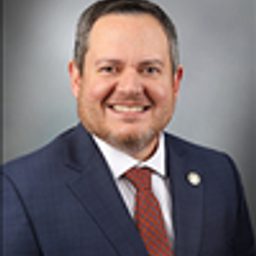
A state legislator serves in a state's own legislature — separate from the U.S. Congress. Learn more →
Contact
CivicGate will email Brad Hudson on your behalf (replies go to your account email). Edit your message first — it goes in your own words.
Sponsored bills (121)
Bills this legislator primary-sponsored. Data from OpenStates.
- SB 999 SS#2/SB 999 - This act modifies several provisions relating to vulnerable persons. ASSISTANCE FROM THE ATTORNEY GENERAL (Section 27.117) Under this act, a prosecuting attorney may request assistance from the Attorney General for the prosecution of the certain sexual offenses. This provision is identical to a provision in CCS/SS/SCS/HCS/HBs 2637 & 3155 (2026) and substantially similar to a provision in the truly agreed to and finally passed SS/SCS/HCS/HBs 2273 et al (2026). "BORN-ALIVE ABORTION SURVIVORS PROTECTION ACT (Section 188.035) This act creates the "Born-Alive Abortion Survivors Protection Act". Under this act, a child born alive during or after an abortion or attempted abortion shall have the same rights, privileges, and immunities as any other person, citizen, and resident of Missouri, including any other live-born child. Any licensed, registered, or certified health care provider present in the provider's professional capacity at the time a child is born alive during or after an abortion or attempted abortion shall exercise the same degree of professional skill, care, and diligence to preserve the life, health, and comfort of the child as a reasonably diligent and conscientious provider would render to any other child born alive at the same gestational age. Any person who knowingly performs or attempts to perform an overt act that kills a child born alive shall be guilty of first-degree murder. A person shall have the right to bring a cause of action for wrongful death or improper health care, as described in this act. This provision is similar to HCS/HBs 195 & 1119 (2025), SB 702 (2025), SCS/SB 753 (2022), provisions in SCS/HCS/HB 2012 (2022), HCS/HBs 1593 & 1959 (2022), SB 168 (2021), SB 665 (2020), and SB 388 (2019). PREGNANCY-ASSOCIATED MORTALITY REVIEW BOARD (Section 192.990) This act modifies the "Pregnancy-Associated Mortality Review Board" within the Department of Health and Senior Services. Under this act, board membership shall include at least one member from each congressional district with demographically diverse membership. Board members are increased from no more than 18 members to no more than 22 members. Additionally, the board shall, in its study and review of maternal deaths, consider the level and timing of prenatal and postnatal care, the presence or absence of maternity care deserts, approaches taken in this state and other states to reduce or eliminate racial inequities in maternal deaths, and the adequacy of data collected by the board. Data reported by the board shall be disaggregated by race, ethnicity, language, nationality, age, zip code, and level and timing of prenatal and postnatal care. This provision is substantially similar to SCS/SB 871 (2026), SB 39 (2025), SCS/SBs 1357 & 888 (2024), and SCS/SBs 579 & 595 (2023). RELEASE FROM JAIL (Section 544.667) Currently, a person can be released from jail upon recognizance or bond. This act provides that a person that has been released under such circumstances that fails to comply with the conditions of such release that imposes no contact with the victim shall be guilty of a class A misdemeanor and shall forfeit any security that was pledged for their release. This provision is identical to a provision in CCS/SS/SCS/HCS/HBs 2637 & 3155 (2026) and SCS/SB 928 (2026). CRIMINAL OFFENSES (Sections 455.050, 565.002, 565.050-565.056, 565.072-565.074, 565.090-565.091, 565.225-565.227, 565.400-565.405, 573.570, 573.575, and Section C) This act modifies the offenses of assault in the first, second, third, and fourth degrees and the offenses of domestic violence in the first, second, third, and fourth degrees by removing the defined terms of "serious physical injury" and "physical injury" and providing for the following harms: • Great bodily harm: Bodily injury which creates a high probability of death, or which causes serious permanent or protracted loss or impairment of function of any bodily member or organ, or other serious bodily harm; • Substantial bodily harm: Bodily harm which involves a temporary but substantial disfigurement, or which causes temporary but substantial loss or impairment of the function of any bodily member or organ, or which causes a fracture of any bodily member; and • Bodily harm: Physical pain or injury, illness, or any impairment of physical condition. Under current law, the first offense of harassment in the first degree is a class E felony. This act provides that a second or subsequent conviction of harassment in the first degree shall be a class D felony where the individual has previously been found guilty of harassment in the first or second degree. Currently, a first offense of harassment in the second degree is a class A misdemeanor. Under this act, provisions relating to a second or subsequent conviction of harassment in the second degree are modified to include a conviction of harassment in the first degree as a previous conviction in which case it is a class E felony. This act modifies the offense of stalking in the first degree by repealing the elements of such offense and providing that a person commits the offense of stalking in the first degree when the person knowingly, through a course of conduct that is directed at another person or through technological abuse, as defined in the act, engages in conduct that would cause a reasonable person under similar circumstances to: • Fear death or bodily injury, as defined in this act; • Fear that an offense will be committed against a member of the person's family, household members, or an individual with whom the person has a dating relationship; • Fear that an offense will be committed against the person's property; or • Feel harassed, terrified, or intimidated. This act modifies the offense of stalking in the second degree by repealing the elements of such offense and providing that a person commits the offense of stalking in the second degree when the person knowingly, through a course of conduct that is directed at another person or through technological abuse, as defined in the act, engages in conduct that would cause a reasonable person under similar circumstances to feel harassed, terrified, or intimidated. This act creates the offense of cyberharassment. A person commits this offense if he or she purposely or knowingly engages in a threatening, aggressive, or otherwise fear-inducing, course of conduct by using digital technology, internet service providers, electronic service providers or other electronic communications and devices cause reasonable fear, alarm, anxiety, undo stress, or terror to others by repeated contact with no legitimate purpose. This offense shall be a class B misdemeanor upon a first offense and a class A misdemeanor for second or subsequent offenses. A person commits the offense of cyberstalking if such person purposely or knowingly engages in a threatening, aggressive, or otherwise fear-inducing, course of conduct by using digital technology, internet service providers, electronic service providers or other electronic communications and devices to enhance the ability to intimidate, track, follow or cause reasonable fear, alarm, anxiety, undo stress, or terror to another person. A first offense shall be a class A misdemeanor and a second or subsequent offense shall be a class E felony. These provisions are identical to provisions in CCS/SS/SCS/HCS/HBs 2637 & 3155 (2026) and SCS/SB 928 (2026). This act creates the offense of disclosure of an intimate digital depiction. A person shall be guilty of such offense if he or she discloses or threatens to disclose an intimate digital depiction with the intent to harass or threaten another person. A violation of such offense is a class D felony if the person discloses an intimate digital depiction and a class E felony if the person threatens to disclose an intimate digital depiction. Any second or subsequent violation of such offense is a class C felony. Additionally, it shall be a class C felony if the disclosure interferes with a government proceeding or causes violence. This act creates the offense of sadistic online exploitation. A person commits this offense where he or she uses the internet to coerce a victim into committing certain acts. This offense shall be a class E felony. These provisions are identical to provision in the truly agreed to and finally passed SS/SCS/HCS/HBs 2273 et al (2026), CCS/SS/SCS/HCS/HBs 2637 & 3155 (2026), and SCS/SB 928 (2026). Provisions of this act have an effective date of July 1, 2027. This act has a non-severability provision for the act. SARAH HASKINS · Became Law · Jul 13, 2026
- SB 1000 SS/SB 1000 - Current law establishes the Division of Tourism Supplemental Revenue Fund, and provides for appropriations to the fund from certain tourism-related taxes. This act repeals such language and provides that the fund shall consist of any moneys appropriated by the General Assembly and any gifts, contributions, grants, or bequests from federal, private, or other sources. This act is identical to SB 555 (2025) and SB 1456 (2024), and to a provision in HCS/HB 967 (2025) and SCS/HB 2719 (2024), and is substantially similar to HB 1671 (2026). JOSH NORBERG · Became Law · Jul 9, 2026
- SJR 111 SS/SCS/SJR 111 - Current constitutional provisions require taxing jurisdictions to reduce property tax levies when the total assessed value of property in the taxing jurisdiction increases by more than the percent increase in inflation, with an exception made for levies imposed for the payment of principal and interest on bonds or other indebtedness. This constitutional amendment, if approved by the voters, removes the exemption for debt service levies. The amendment also provides that, beginning January 1 following the effective date of the amendment, taxing jurisdictions shall calculate levies for each subclass of real property, and shall reduce the levy for any such class if the assessed valuation for such class increases over the previous year, as provided in the amendment. Additionally, this amendment requires the value of new construction and improvements to be included in the calculation of total assessed valuation for the purpose of calculating property tax levies. (Section 22) This amendment is substantially similar to HJR 148 (2026). JOSH NORBERG · May 15, 2026
- SB 1442 SS/SCS/SB 1442 - This act modifies provisions relating to literacy of elementary school students. EDUCATOR PREPARATION PROGRAMS (Section 161.097) The act requires educator preparation programs to instruct teacher candidates on the selection and use of "high-quality" reading curricula and instructional materials that do not include the three-cueing system, as such term is defined in current law, as a primary instructional strategy. The act prohibits educator preparation programs from including instruction in, or endorsement of, the three-cueing system as an instructional strategy for decoding. Beginning July 1, 2027, the Department of Elementary and Secondary Education (DESE) shall annually review and publicly report on the compliance of educator preparation programs with literacy and reading instruction requirements of current law and those established in the act. The review shall evaluate whether instruction is grounded in the components of evidence-based reading instruction and whether prohibited practices, such as the three-cueing system, are excluded from coursework. Educator preparation programs not in compliance with these requirements shall not be approved to certify new teachers. STATE AID FOR READING INSTRUCTION (Section 161.241) The act provides that the current Evidence-Based Reading Instruction Program Fund may be used for initiatives that provide training and materials to teachers regarding structured literacy and dyslexia-informed practices. Such fund may also be used for reading tutoring programs inside regular school hours, rather than only outside regular school hours. IDENTIFICATION OF READING DEFICIENCIES (Sections 167.268, 167.340, and 167.645) The act requires school districts and charter schools to provide suggestions for parent-guided home reading to all parents of students identified as having a reading deficiency, in addition to parents of students with a substantial reading deficiency. (Section 167.268) The act modifies the "Read to be Ready Program" by authorizing districts to include certain students in grades 1-3, rather than kindergarten to grade 3, for additional average daily attendance for state school aid during reading instruction time that occurs outside normal school hours. (Section 167.340) The act establishes the "Missouri Reading Screener", a literacy-based reading assessment administered to students in grades 1-3 three times per year in every school district and charter school in the state. Any screener approved by DESE that meets the criteria set forth in the act shall be deemed a reading screener. Any reading screener approved by DESE shall score each student in one of the following categories and provide a numerical value relative to the student's grade level: "at risk", "approaching expectations", "meets expectations", and "exceeds expectations". Proficiency benchmarks "below basic", "basic", "grade-level", "proficient", or "advanced" associated with these categories shall be determined by DESE. School districts and charter schools shall assess all students on the reading screener once at the end of kindergarten and in grades 1-3 during three annual administration windows established by DESE, as provided in the act. DESE shall provide the screener to school districts and charter schools at no cost. The screener shall be appropriate for students in grades 1-3 and shall be used to comply with dyslexia screening requirements established in current law. Additionally, the reading screener shall screen for characteristics of dyslexia and reading deficiency and assess certain skills as developmentally appropriate. Student results on the reading screener shall not be used to make decisions concerning the accreditation of a public school or school district. A student who scores "approaching expectations" on the Missouri Reading Screener shall be identified as having a reading deficiency. A student who scores "at risk" on the screener shall be identified as having a substantial reading deficiency. Any student entering the school district or charter school after the start of the school year shall be assessed within 20 days and be provided a reading success plan if the student is identified as having a reading deficiency or substantial reading deficiency. The district or charter school shall notify the parent of any student in grades 1-3 who exhibits a reading deficiency or substantial reading deficiency of certain requirements set forth in current law. In addition to such current requirements, the notification shall state that if the child has a substantial reading deficiency by the end of grade three, as determined by the student's performance on the reading screener, the child shall not be promoted to grade four unless the child qualifies for a good cause exemption, as provided in the act. If the district or charter school provides a summer reading program, the parent of a student with a reading deficiency or substantial reading deficiency shall be notified that the student is required to attend the summer reading program. If a child has a reading deficiency or substantial reading deficiency at the end of grade two, the student's parent shall meet with school staff to discuss the deficiency and sign documentation stating that the parent has been informed of certain information set forth in the act, including a statement that retention of a third-grade student with a substantial reading deficiency is mandatory unless the unless the child qualifies for a good cause exemption or scores "approaching expectations" or higher on a retest opportunity, as provided in the act. The parent shall agree to participate in parent training workshops or regular parent-guided home reading activities, or both, that are aligned to scientifically based reading research. A parent's refusal to meet, sign, or agree as required under the act shall not prevent that student from receiving additional interventions or from being retained by the school district. A good cause exemption may be granted to students who are English language learners or who have individualized education plans or 504 plans developed under federal law. A student who has already been retained at least once in kindergarten to third grade shall not be retained and shall not require a good cause exemption. To request a good cause exemption, a student's teacher shall submit documentation to the school principal recommending the student's promotion, including the type of exemption being requested and the child's existing reading improvement plan or individualized education plan, as appropriate. The school principal shall discuss the recommendation with the teacher and determine whether the student qualifies for a good cause exemption. If the school principal determines that the student qualifies for the good cause exemption, the school principal shall make such recommendation in writing to the superintendent, who shall accept or reject the school principal's recommendation in writing. The school district shall assist schools with notifying parents of students who are retained of the reasons for the retention, along with a description of the proposed interventions and supports that will be provided to the child to remedy the identified area or areas of reading deficiency in the following school year. School districts and charter schools may include in reading success plans a "read at home" plan outlined in a parental contract that includes participation in parent training workshops or regular parent-guided home reading activities, or both, that are aligned to scientifically based reading research. Reading success plans and intensive reading instruction shall be provided to each student in grades 1-3 who exhibits a reading deficiency or a substantial reading deficiency, rather than to students in grades 1-5 who exhibit a substantial reading deficiency. Intensive reading instruction provided to students exhibiting a reading deficiency or substantial reading deficiency shall not include the three-cueing system, as defined in current law, as a primary instructional strategy. Each school district shall establish an intensive acceleration class at each school for any student retained in grade three who was previously retained in kindergarten through grade two. The class shall satisfy certain criteria set forth in the act, and shall have a reduced teacher-student ratio and provide explicit, systematic, sequential, and cumulative reading instruction and intervention for the majority of student contact time each day. School districts and charter schools shall report certain reading assessment data to DESE for grades 1-3, rather than for kindergarten through grade five. By October 1 annually, each school board shall report in writing to DESE certain information regarding reading instruction, such as the board's policies regarding student retention and promotion, the number and percentage of students identified as having reading deficiencies or substantial reading deficiencies, the number and percentage of all students retained in kindergarten to third grade due to substantial reading deficiencies, and the total number and percentage of third-grade students who were promoted with good cause exemptions, as provided in the act. Each public school shall make available to the public the title and author of all reading curriculum materials adopted for each grade and the recommended reading level for such materials. (Section 167.645) THREE-CUEING SYSTEM MODEL OF READING INSTRUCTION (Section 170.014) Current law provides that visual information and strategies that improve background and experiential knowledge shall not be used to teach word reading. This act provides that such information and strategies shall not be used to teach decoding. NO ADDITIONAL COSTS FOR PUBLIC SCHOOLS (Section 1) This act shall not be construed to require public schools, charter schools, or school districts to incur additional costs in order to implement the provisions of the act. This act is similar to SCS/HCS/HB 2872 (2026), HB 2914 (2026), and provisions in SB 1628 (2026). OLIVIA SHANNON · May 15, 2026
- SB 998 SCS/SB 998 - This act creates, repeals, and modifies provisions of the Missouri Empowerment Scholarship Accounts Program. The act changes the definition of "illegal alien" to "legal resident" as set forth under federal law. The act modifies the definition of "qualified student" by removing the requirement for a qualified student to have attended a public school during the previous 12 months, as well as removing requirements relating to students' kindergarten eligibility and siblings who participate in the program. Such definition is further modified by adding dyslexia and disability diagnoses to requirements concerning individualized education plans. This provision is similar to a provision in SS/HCS/HBs 2097 & 1905 (2026). (Section 166.700) The act provides that an organization representing a group of parents of qualified students may intervene on behalf of such parents as a defendant in any action in which any provision of state law, the Missouri Constitution, or a state regulation involving the program is at issue. An organization that intervenes as provided in the act shall have the right to file such pleading necessary on behalf of such parents. (Section 166.719) Finally, except as specifically provided in state law, the act prohibits the creation or enforcement of any rule, regulation, or other requirement that conditions a qualified school's participation in the program on accreditation or compliance with any other requirement. Any rule, regulation, or other requirement that violates this provision is void and shall have no force or effect. (Section 166.720) OLIVIA SHANNON · May 15, 2026
- SB 1718 SB 1718 - This act modifies provisions relating to workers' compensation. The act provides that a construction industry employer who erects, demolishes, alters, or repairs improvements is considered an employer for purposes of workers' compensation law if they have five or more, rather than one or more, employees. Current law provides that any employer who knowingly fails to insure his liability pursuant to the workers' compensation law shall be guilty of a class A misdemeanor. This act provides that any employer who knowingly fails to insure his or her liability shall result in a written warning for the first violation and upon a second violation or any additional subsequent violations thereafter shall be guilty of a class A misdemeanor. Moreover, the act repeals a provision that stipulates that a person who has previously been found guilty of any unlawful acts with respect to the workers' compensation law, as described in the act, and who subsequently commits any such unlawful act shall be guilty of a class E felony. This act is identical to HB 3032 (2026). SCOTT SVAGERA · May 7, 2026
- SB 907 HCS/SS/SCS/SBs 907, 1154 & 1272 - This act creates the "Act Against Abusive Website or Web Content Access Litigation". The Attorney General on behalf of a class of residents of this state, the state, or a political subdivision that is subject to litigation that alleges any website or web content access violation, or any resident of this state, the state, or a political subdivision of this state that is subject to litigation that alleges any website or web content access violation, may file a civil action against the party, attorney, or law firm that initiated such litigation for a determination as to whether such litigation alleging a website or web content access violation is abusive litigation. In determining whether a civil action alleging a website or web content access claim is considered abusive, the court shall consider the totality of the circumstances to find whether the primary purpose of the litigation was to obtain payment from a defendant due to the costs of defending the action in court. The act describes the factors to be considered in making this determination. A defendant who receives notice of an alleged website or web content access violation and in good faith takes substantial steps to correct the violation within 90 days shall have a rebuttable presumption that any subsequent claim for a website or web content access violation is abusive. There shall not be a presumption if the alleged violation is not corrected within 90 days after written notice or service of the petition. Additionally, nothing in this act shall prevent a defendant from filing a motion to dismiss or from notifying the plaintiff, prior to the end of the 90-day period, that the alleged access violation has been corrected in good faith. The Attorney General may intervene or bring an action on behalf of Missouri residents that are targets of abusive website or web content access litigation. The Attorney General may also issue guidance as to when litigation practices are deemed abusive, but such guidance shall not preclude legitimate accessibility enforcement actions. The court may award attorney's fees and costs to the party defending against the abusive litigation. The court may also award punitive damages or sanctions not to exceed three times the amount of attorney's fees awarded by the court. If the U.S. Department of Justice issues standards concerning website or web content accessibility under the federal Americans with Disabilities Act, the provisions of this act shall expire with respect to any entity that has registered as a corporation with the Secretary of State's office, and the state and any political subdivision thereof. This act shall apply to litigation pending on August 28, 2026, and the 90-day correction period shall apply to any defendant in any pending litigation on August 28, 2026, that has complied with the requirements of this act prior to or within 90 days after such date. This act is similar to SB 1471 (2026), HCS/HBs 1694, 1674, 1780, 2056, 2312 & 1755 (2026), and HCS/HBs 1842 & 2150 (2026). KATIE O'BRIEN · Became Law · May 7, 2026
- SB 1785 SB 1785 - This act requires that a bonding company or an agent executing a bond must collect fifty percent of the bonding fee prior to executing a bond if the defendant is charged with certain felony offenses. The bonding agent is also required to certify to the court that they have received the required percentage from the defendant when they file the bonding paperwork. If a bonding agent fails to provide the certification, they shall be guilty of a class A misdemeanor. If an agent falsifies documentation it shall be a class E felony. Additionally, if a bonding agent fails to provide the certification, or falsifies documentation, they shall be disqualified from writing bail bonds for a period of five years. TRISTAN BENSON, JR. · May 7, 2026
- SB 1142 SCS/SB 1142 - This act modifies provisions relating to limited liability companies. A new provision is created allowing any person to apply to the Secretary of State (SOS) to furnish a certificate of good standing for a domestic limited liability company, a foreign limited liability company, a domestic limited liability company series, or a foreign limited liability company series. A certificate of good standing issued by the SOS may be relied upon as prima facie evidence that the domestic or foreign limited liability company is in existence or is authorized to transact business in this state. The act provides that, not later than January 31, 2027, each series of a limited liability company shall be individually profiled, maintained, and searchable as a business entity on the business services website of the SOS in the same manner that a non-series entity is profiled, maintained, and searchable. This act is identical to certain provisions in the truly agreed to SS/SCS/HCS/HB 2508 (2026), certain provisions in HCS/HB 1713 (2026), and certain provisions in HCS/HB 3116 (2026). SCOTT SVAGERA · Became Law · May 7, 2026
- SB 1324 SB 1324 - The act creates the "Missouri Artificial Intelligence Transparency and Accountability Act". Provisions of the act shall become effective on January 1, 2027. Under the act, any person or entity creating AI-generated content shall label the content as "AI-generated". Labeling requirements are described in the act. Any AI-generated content depicting a real individual shall include an additional disclaimer, as described in the act. Deployers, as defined in the act, shall verify the authenticity of the content before generating the content and shall obtain consent from the individual depicted in the content, except when the content is used for parody or satire. Labels and watermarks on any AI-generated content shall be accessible to individuals with disabilities pursuant to current laws and guidelines, as described in the act. Certain exceptions apply as described in the act. Developers and deployers shall maintain usage logs of all AI systems generating content distributed for public consumption. Requirements for the usage logs are described in the act. Any personal data of the usage logs shall be kept anonymous and protected under current laws, except when requested by law enforcement as described in the act. The Attorney General shall enforce provisions of the act. Any person may report violations of the act to the Attorney General. If the Attorney General finds that a violation occurred, the Attorney General shall commence a civil action. The court may grant relief and civil penalties as described in the act. The act shall not preclude an individual from bringing a private civil action for any violation of the act. Individuals and entities that demonstrate good-faith compliance with the act may raise an affirmative defense to reduce civil penalties, provided they cure any violation within 30 days after receiving notice of the civil action. Within 180 days after the effective date of the act, the Department of Commerce and Insurance may promulgate rules to enforce compliance with the act, as described in the act. The Department shall launch a public awareness campaign to educate Missouri residents about AI-generated content and the residents' rights under the act. The Department shall establish an AI Task Force, as described in the act. Nothing in the act shall preempt any political subdivision from enacting stricter or more stringent ordinances, laws, or rules provided they do not conflict with provisions of the act. The act has a severability clause. JULIA SHEVELEVA · Mar 25, 2026
- SB 1075 SB 1075 - This act creates the "Food is Medicine Act". Under this act, the Department of Social Services shall submit a waiver to the Centers for Medicare and Medicaid Services for a "Food is Medicine" program. The program shall be designed to improve health outcomes for MO HealthNet participants with nutrition-related chronic diseases through nutrition services and to reduce the need for medical care for those participants. Covered nutrition services may include case management, nutrition counseling, meals or pantry stocking, nutrition prescriptions, and grocery provisions. When feasible, the MO HealthNet Division shall prioritize the inclusion of community-based organizations and local growers to support the purchase of locally grown food in nutrition prescriptions. This act is identical to SB 1499 (2026), substantially similar to SCS/HCS/HB 2355 (2026), and similar to a provision in the truly agreed to and finally passed SS/SCS/HCS/HB 2372 (2026). SARAH HASKINS · Mar 4, 2026
- SB 1140 SB 1140 - Currently, a civil action for recovery of damages suffered as a result of childhood sexual abuse shall be brought within ten years after the victim reaches the age of twenty-one or within three years of the victim discovering that the injury or illness was caused by childhood sexual abuse, whichever is later. This act provides that a civil action for recovery of damages suffered as a result of childhood sexual abuse or tortious conduct that caused the victim to be a victim of childhood sexual abuse may be commenced at any time. This act is substantially similar to SB 589 (2025), HB 883 (2025), HB 1132 (2025), a provision in SB 1063 (2024), in SB 1092 (2024), SB 416 (2023), and is similar to HB 114 (2025), SB 747 (2025), a provision in HCS/HB 367 (2023), and in HB 1139 (2023). KATIE O'BRIEN · Feb 18, 2026
- SB 1644 SB 1644 - This act prohibits a health care provider from offering to a general contract entity or entering into a written provider network contract that includes an anti-steering, anti-tiering, gag, or most-favored-nation clause, all of which are defined by the act. Additionally, a provider shall not amend or renew an existing provider network contract so that the contract as amended or renewed adds or retains an anti-steering, anti-tiering, gag, or most-favored-nation clause. Any provision in a provider network contract that includes any of the prohibited clauses shall be void and unenforceable. The remaining provisions in the contract shall remain in effect and are enforceable. A health benefit plan issuer that encourages an enrollee to obtain a health care service from a particular provider or that introduces or modifies a tiered network plan or assigns providers into tiers has a good faith duty to the enrollee or policyholder to engage in conduct for the benefit of the enrollee or policyholder. This act is substantially similar to HB 3088 (2026). TAYLOR MIDDLETON · Feb 12, 2026
- SB 1645 SB 1645 - This act authorizes a state and local sales and use tax exemption for the rental of lots, buildings, other structures, and amenities in a campground. This act is identical to HB 2809 (2026) and to a provision in SCS/HB 1707 (2026), SCS/HCS/HB 1883 (2026), and SCS/HCS/HB 3308 (2026). JOSH NORBERG · Feb 12, 2026
- SB 1291 SCS/SB 1291 - Current law authorizes an income tax deduction for certain income received for the sale or lease of farmland to beginning farmers. This act adds a definition of "taxpayer" to such deduction. This provision is substantially similar to HB 3324 (2026), SB 682 (2025), and HB 1042 (2025), and to a provision in CCS/HCS/SB 994 (2026), HCS/SS/SB 67 (2025), HCS/HB 828 (2025), and HCS/SS/SCS/SB 466 (2025). JOSH NORBERG · Feb 12, 2026
- SB 1202 SB 1202 - This act provides that the definition of "tangible personal property" shall, for the purposes of property taxation, include machinery and equipment used to provide broadband communications service, as described in the act. (Section 137.010) This act also creates a new subclass of tangible personal property that includes machinery and equipment used to provide broadband communications service and that is placed in service on or after August 28, 2026. All such property shall be assessed at 12% of its true value in money for the 2027-2033 calendar years, and at 33.3% of its true value in money for the 2034 and all subsequent calendar years. (Sections 137.080 and 137.115) This act is substantially similar to HCS/HB 2711 (2026). JOSH NORBERG · Feb 11, 2026
- SJR 93 SJR 93 - This constitutional amendment, if approved by the voters, provides that retrospective laws may be enacted for civil claims involving sexual abuse of a child or tortious conduct that caused or contributed to cause sexual abuse to a child. This amendment is similar to SJR 51 (2025), HJR 58 (2025), and HJR 79 (2025). KATIE O'BRIEN · Feb 11, 2026
- SB 1517 SB 1517 - This act modifies provisions relating to property taxes. TAX BALLOT MEASURE LANGUAGE This act provides that a political subdivision or election authority shall not advertise or describe any proposed property tax as not increasing taxes unless failing to adopt the measure would cause an actual increase in the tax rate and adopting the measure would cause the tax rate to stay the same or decrease. (Section 67.496) This provision is identical to a provision in HCS/SS/SCS/SBs 1066 & 1088 (2026) and HCS#2/HB 2668 (2026). This act requires an election authority to label tax ballot measures numerically or alphabetically in the order in which they are submitted. (Section 115.240) This provision is substantially similar to a provision in HCS/SS/SCS/SBs 1066 & 1088 (2026), SS/SCS/SBs 1410 & 853 (2026), SB 1784 (2026), SCS/HCS/HB 1790 (2026), HCS/HB 2178 (2026), and HCS#2/HB 2668 (2026). This act modifies multiple provisions of current law to provide that any ballot measures proposing a new or increased real or personal property tax levy shall be submitted on a general election day and shall include certain information, as described in the act. (Section 115.706 and multiple other sections) This provision is substantially similar to a provision in HCS/SS/SCS/SBs 1066 & 1088 (2026), SB 1784 (2026), HCS#2/HB 2668 (2026), and HCS/HB 2925 (2026). LOCAL ELECTIONS This act provides that all general elections for local, state, and national offices and issues shall be conducted on the first Tuesday after the first Monday in November. (Section 115.123) This provision is identical to a provision in HB 1613 (2026). PROPERTY TAX ABATEMENTS This act provides that a political subdivision that adopts a tax abatement or similar economic incentive shall decrease any real property tax levy that is increased on property located in the political subdivision that does not receive an abatement. (Section 137.039) This provision is identical to a provision in HCS/SS/SCS/SBs 1066 & 1088 (2026) and HCS#2/HB 2668 (2026). PROPERTY ASSESSMENTS Current law provides that new construction and improvements shall not be included in the total assessed valuation for the purposes of calculating property tax levies. This act repeals such provisions. (Sections 137.055 and 137.073) This act requires that if the voters in a political subdivision approve an increase to the tax rate ceiling prior to the expiration of a previously approved temporary levy increase, the new tax rate ceiling shall remain in effect only until such time as the temporary levy increase expires under the terms originally approved by a vote of the people, at which time the tax rate ceiling shall be decreased by the amount of the temporary levy increase. If, prior to the expiration of a temporary levy increase, voters are asked to approve an additional permanent levy increase, voters shall be submitted ballot language that clearly indicates that if the permanent levy increase is approved, the temporary levy shall be made permanent. (Section 137.073.5(3)) This provision is identical to a provision in HCS/SS/SCS/SBs 1066 & 1088 (2026), SB 1293 (2026), SS/SCS/SBs 1410 & 853 (2026), SCS/HCS/HB 1790 (2026), HCS/HBs 2709 & 2671 (2026), HCS#2/HB 2780 (2026), HCS/HB 119 (2025), HB 660 (2025), HB 1497 (2025), HCS/HB 2058 (2024), HCS/HB 1517 (2024), HCS/HB 2140 (2024), CCS/HS/HCS/SS#2/SCS/SB 96 (2023), and HCS/SS#3/SCS/SB 131 (2023), and is substantially similar to SB 880 (2018) and SB 357 (2017). This act provides that, if the total assessed valuation in a political subdivision decreases in the tax year immediately following a tax year in which the voters approved an increase to the tax rate ceiling, such political subdivision may increase its levy such that the revenue received equals the amount that would have been received from the increased rate of levy had there been no decrease in the total assessed valuation. (Section 137.073.5(6)) This provision is identical to a provision in HCS/SS/SCS/SBs 1066 & 1088 (2026), SB 1293 (2026), SCS/HCS/HB 1790 (2026), HCS/HBs 2709 & 2671 (2026), HCS#2/HB 2780 (2026), HCS/HB 119 (2025), HB 660 (2025), HB 1497 (2025), HCS/HB 2058 (2024), HCS/HB 1517 (2024), and HCS/HB 2140 (2024), and is substantially similar to a provision in SS/SCS/SBs 1410 & 853 (2026). Current law requires an assessor to conduct a physical inspection of any residential real property prior to increasing the assessed valuation of such property by more than 15%. This act applies such requirement to all utility, industrial, commercial, railroad and other non-agricultural real property. (Section 137.115.10) This provision is identical to a provision in HCS/SS/SCS/SBs 1066 & 1088 (2026), SB 1784 (2026), HCS#2/HB 2780 (2026), and is substantially similar to a provision in SS/SCS/SBs 1410 & 853 (2026) and SCS/HCS/HB 2178 (2026). PROPERTY TAX CREDITS Current law allows counties to provide a property tax credit to certain seniors. This act requires counties to provide such credit and makes technical changes to the definitions of "eligible credit amount" and "eligible taxpayer". The act also requires the statement of tax due to include certain information about the proportional amount of the credit attributable to each taxing jurisdiction. Finally, the act provides that the credit shall apply to all property tax levies, including debt service levies. (Section 137.1050) This provision is substantially similar to a provision in HCS/SS/SCS/SBs 1066 & 1088 (2026) and is similar to a provision in SS/SCS/SBs 1410 & 853 (2026) and SCS/HCS/HB 2944 (2026). Current law also allows counties to provide a property tax credit to all other taxpayers, with certain counties able to annually increase the real property tax liability by five percent or the percent increase in inflation, whichever is greater. This act limits such increase to the lesser of the two amounts. (Section 137.1055) This provision is identical to a provision in HCS/SS/SCS/SBs 1066 & 1088 (2026). TOTALED MOTOR VEHICLE PROPERTY TAX CREDIT This act authorizes any taxing entity to provide a property tax credit to a taxpayer to reduce the total personal property tax owed on a totaled motor vehicle. The amount of the property tax credit shall be equal to the amount of property tax owed on such vehicle, prorated for the amount of months left in the tax year. In order to authorize a property tax credit pursuant to the act, the governing body of the taxing entity shall adopt an ordinance, as described in the act. (Section 139.035) This provision is identical to HCS/HB 708 (2025) and to a provision in HB 2627 (2026). PROPERTY TAX INSTALLMENTS Current law authorizes counties to provide for the payment of real and personal property taxes in installments, but excludes township counties from utilizing such payment plans. This act repeals such prohibition for township counties. (Section 139.053) This provision is identical to SB 1211 (2026) and HB 388 (2025), and is substantially similar to provisions in SS/SCS/SBs 1410 & 853 (2026) and SS/SCS/HCS/HBs 1768 & 2060 (2026). SCHOOL DISTRICT PROPERTY TAX LEVIES Current law requires school districts to impose a property tax levy for operating purposes of not less than $2.75 in order to receive the full amount of state aid. This act lowers such required levy to $1.50 beginning with the 2026-2027 school year. (Section 163.021) This provision is substantially similar to a provision in HCS/SS/SCS/SBs 1066 & 1088 (2026) and HCS#2/HB 2780 (2026). BLIND PENSION FUND Current law imposes a state property tax of $0.03 per $100 assessed valuation for the purposes of funding the Blind Pension Fund. This act eliminates such property tax upon the adoption of a constitutional amendment requiring the General Assembly to appropriate moneys to the Blind Pension Fund. (Section 209.130) SEVERABILITY This act contains a severability clause. (Section B) JOSH NORBERG · Feb 11, 2026
- SB 1455 SB 1455 - The act establishes the "Guidelines for User Age-Verification and Responsible Dialogue Act of 2026" or the "GUARD Act". The act provides that it shall be unlawful to design, develop, or make available an artificial intelligence chatbot knowing or with reckless disregard that the chatbot poses certain risks of soliciting minors to engage in sexually explicit conduct or encouraging minors to create or transmit any visual depiction of sexually explicit conduct. Any person who violates this provision shall be fined not more than $100,000 per offense. It shall be unlawful to design, develop, or make available an artificial intelligence chatbot knowing or with reckless disregard that the chatbot encourages, promotes, or coerces suicide, self-injury, or imminent physical or sexual violence. Any person who violates this provision shall be fined not more than $100,000 per offense. A covered entity, as defined in the act, shall require each individual accessing a chatbot to make a user account in order to use the chatbot. For any chatbot that exists as of August 28, 2026, a covered entity shall freeze the account, require the user to provide age data to restore the account, and using the age data classify each user as a minor or an adult. At the time an individual creates a new user account to interact with a chatbot, a covered entity shall request age data from the individual, verify the individual's age using a reasonable age verification process, and classify each user as a minor or an adult using the age data. A covered entity shall periodically review previously verified user accounts using a reasonable age verification process. A covered entity may contract with a third party to employ reasonable age verification measures as part of the age verification process, as described in the act. A covered entity shall establish reasonable measures to protect personal data as described in the act. Each artificial intelligence chatbot shall at the start of each conversation with a user at 30-minute intervals disclose to the user that the chatbot is artificial intelligence and not a human being and be programmed to ensure that the chatbot does not claim to be a human being. The chatbot shall not represent that the chatbot is a licensed professional, as described in the act, or that the chatbot provides certain professional services, as described in the act. If the age verification process determines that an individual is a minor, a covered entity shall prohibit the minor from accessing any chatbot made available by the covered entity. The Attorney General may bring a civil action for violations of the act. Relief is described in the act. The act is similar to HCS/HB 2032 (2026). JULIA SHEVELEVA · Feb 5, 2026
- SJR 108 SJR 108 - If approved by the voters, this constitutional amendment requires the Department of Social Services and the MO HealthNet Division to implement work requirements for certain individuals as a condition of participation in the MO HealthNet program. These individuals shall demonstrate compliance with work requirements for 3 consecutive months immediately preceding the month during which they apply and the Department and Division shall disenroll any individual who fails to comply with work requirements. The Department shall submit any necessary state plan amendments to implement this amendment to the Centers for Medicare and Medicaid Services no later than March 1, 2027. This constitutional amendment is similar to SJR 103 (2026), SCS/HCS/HJR 154 (2026), SCS/SJR 43 (2025), SJR 76 (2024), provisions of SJR 4 (2023) and HCS/HJR 117 (2022), SJR 60 (2020), and SJR 32 (2020). SARAH HASKINS · Feb 5, 2026
- SB 1506 SB 1506 - This act establishes the offense of generating, soliciting, or promoting or possessing with the intent to promote an altered sexual depiction, as defined in the act, of an identifiable person. A person commits such offense if the person: • Generates any altered sexual depiction of an identifiable person without the person's consent; • Solicits any altered sexual depiction of an identifiable person without the person's consent and knows or reasonable should know that the depiction is an altered sexual depiction; or • Willfully and maliciously promotes, or possesses with the intent to maliciously promote, any altered sexual depiction of an identifiable person without the person's consent and knows or reasonably should know that the depiction is an altered sexual depiction. A violation of this act is committed within Missouri if any conduct that is an element of the offense, or any harm to the depicted person resulting from the offense, occurs within Missouri. The offense shall be a class C felony. Each act shall constitute a separate offense. Furthermore, a disclaimer that a depicted individual did not consent to the generation or promotion of the material or that the depicted individual did not perform the actions portrayed shall not be a defense. This act additionally provides that an aggrieved person may bring a civil action against a person who generates or who, with knowledge that a visual depiction is an altered sexual depiction, willfully and maliciously promotes, or possesses with the intent to maliciously promote, any altered sexual depiction of a depicted individual without the person's consent. A person may be entitled to injunctive relief, attorney's fees and costs, and monetary damages of $10,000 or actual damages, whichever is greater. This act defines a covered platform as a website, online service, online application, or mobile application that serves the public and that primarily provides a forum for user-generated content or for which in the regular course of business the entity publishes, curates, hosts, or makes available nonconsensual altered sexual depictions. Covered platforms shall not include an information or telecommunications service, email, and certain online services, applications, or websites that consist primarily of content that is not user generated but preselected by the provider and for which any chat, comment, or interactive functionality is incidental to, directly related to, or dependent on the provision of the content. No later than December 31, 2026, covered platforms shall establish a process where an identifiable person or an authorized person for such identifiable person may notify the covered platform of an altered sexual depiction published on the covered platform. The identifiable person or authorized person may submit a written request, as provided in the act, that the covered platform remove such altered sexual depiction. No later than 48 hours after receiving such request, a covered platform shall remove the altered sexual depiction and make reasonable efforts to identify and remove any known identical copies of such altered sexual depiction. Additionally, covered platforms shall provide a notice of the notification and removal process. Failure to comply with the notice and removal requirements of this act shall be an unlawful practice under Missouri Merchandising Practices Act. However, a covered platform shall not be liable for any claim based on the covered platform's good faith removal of or access to the nonconsensual altered sexual depiction based on facts or circumstances from which the publishing of an altered sexual depiction is apparent. The criminal and civil liability shall not apply to the following: • Providers of an interactive computer service, information service, or communications service that provides the transmission, storage, or caching of other's electronic communications or messages; • Providers of another related telecommunications or commercial mobile radio service; • Providers of content provided by another person; • Law enforcement officers or any local, state, federal, or military law enforcement agencies engaged in the performance of duties as a law enforcement officer or the duties of the law enforcement agency; • Persons reporting unlawful activity; or • Persons participating in hearings, trials, or other legal proceedings. This act is substantially similar to HB 2361 (2026). KATIE O'BRIEN · Feb 5, 2026
- SJR 114 SJR 114 - Currently, judges of the Supreme Court of Missouri and of the Court of Appeals are selected by gubernatorial appointment following nominations from the Appellate Judicial Commission. This proposed constitutional amendment, if approved by the voters, would require the appointment by the Governor, with the advice and consent of the Senate, of all judges of the Supreme Court and of the Court of Appeals. Such judges shall be elected for terms of seven years, instead of twelve years. A judge with an existing term as of January 1, 2027, may continue to serve until the expiration of his or her term. This amendment is substantially similar to SJR 14 (2021) and is similar to HCS/HJR 24 (2021) and HJR 43 (2021). KATIE O'BRIEN · Feb 5, 2026
- SJR 112 SJR 112 - Current constitutional provisions require the General Assembly to impose a property tax of not less than $0.005 or more than $0.03 per $100 assessed valuation for the Blind Pension Fund. This constitutional amendment, if approved by the voters, repeals such requirement and instead requires the General Assembly to provide for an annual appropriation in an amount not less than the amount appropriated to such fund for the 2027 fiscal year. This amendment is identical to HJR 147 (2026). JOSH NORBERG · Feb 5, 2026
- SB 1441 SB 1441 - This act provides that the Department of Revenue shall retain vehicle odometer information for certain vehicles that are "model year 2013 or newer" rather than "ten years of age or less" with regard to the requirement of such vehicles to have motor vehicle safety inspections. This act is identical to HB 2743 (2026) and HB 2036 (2026), and substantially similar to provisions in HB 2655 (2026), SCS/HCS/HB 247 (2025), SCS/HCS/HBs 799, 334, 424 & 1069 (2025), HB 969 (2025), HCS/HB 378 (2025), and HB 424 (2025). TAYLOR MIDDLETON · Feb 5, 2026
- SB 1440 SB 1440 - Current law authorizes an income tax deduction for contributions made to the Missouri Higher Education Deposit Program, the Missouri Education Program, or to any other qualified tuition program established under 26 U.S.C. Section 529. For all tax years beginning on or after January 1, 2026, this act removes references to other federal 529 qualified tuition programs so that contributions made to such programs in other states shall not qualify for a Missouri income tax deduction. This act is substantially similar to HB 1272 (2025) and to a provision in HCS/HB 606 (2025). JOSH NORBERG · Feb 5, 2026
- SB 908 SB 908 - This act modifies provisions relating to firearms. Under current law, no political subdivision can regulate the possession of firearms, except to prohibit the use of the open carrying of firearms. This act repeals such exception. Additionally, this act provides that any political subdivision that violates the provisions of this act shall be subject to a penalty of $50,000 per occurrence. Any person injured by a violation of this act shall have standing to pursue an action for injunctive relief in the circuit court of the county in which the action allegedly occurred or in the circuit court of Cole County. The court shall hold a hearing on the motion for a temporary restraining order and preliminary injunction within 30 days of service of the petition. This provision is identical to SB 74 (2025), and similar to HB 2176 (2026), and HB 2469 (2026). This act lowers, from 19 to 18, the age at which a person may obtain a concealed carry permit, and makes a corresponding modification to a provision relating to the unlawful use of weapons. These provisions are similar to HB 2176 (2026), and SB 700 (2025). TRISTAN BENSON, JR. · Feb 2, 2026
- SB 909 SCS/SB 909 - This act renames the "Missouri Student Religious Liberties Act" the "Missouri Safeguarding Personal Expression at K-12 Schools (SPEAKS) Act". The act adds political and ideological expression to the current protections for public school students' religious expression. The act additionally prohibits discrimination against student clubs on the basis of their religious, political, or ideological viewpoints or any requirement that the members of the club adhere to the club's sincerely held beliefs, comply with the club's conduct standards, or further the club's mission, as such mission is defined by the club. This act shall not be construed to limit school districts' ability to restrict speech that is not protected by the First Amendment to the Constitution of the United States; speech that is so offensive that a student is effectively denied equal access to educational opportunities; or conduct that intentionally, materially, and substantially disrupts school operations or the expressive activity of another individual in a campus space exclusively reserved for such activity. Any person or student organization harmed by a violation of this act shall have a private cause of action against the school, as described in the act. Any person or student organization aggrieved by a violation of this act may assert such violation as a defense or counterclaim in any disciplinary action or in any civil or administrative proceeding. The state waives immunity and consents to be sued in federal court for claims arising under this act. This act is identical to a provision in SCS/HCS/HB 2682 (2026). OLIVIA SHANNON · Jan 29, 2026
- SB 1201 SB 1201 - This act repeals a law that prohibits a voter from allowing the ballot they are casting to be seen by any person with the intent of letting it be known how the voter is about to vote or has voted. This act is identical to HB 1986 (2026). SCOTT SVAGERA · Jan 27, 2026
- SB 1200 SB 1200 - Currently, a health care provider shall not knowingly prescribe or administer cross-sex hormones or puberty-blocking drugs for the purpose of a gender transition for children. This provision of law does not apply to those children who were prescribed or administered such drugs prior to August 28, 2023. This prohibition on the prescription of cross-sex hormones or puberty-blocking drugs to children shall expire on August 28, 2027. This act removes that expiration date. Additionally, the provision excluding those children already prescribed or administered the hormones or drugs prior to August 28, 2023, from the general prohibition on the prescription of cross-sex hormones or puberty-blocking drugs to children shall expire on March 1, 2027. This act is substantially similar to HCS/HBs 2033, 1608, 1672, & 1854 (2026), SB 1264 (2026), SB 861 (2026), SB 75 (2025), HCS#2/SS#2/SCS/SB 10 (2025), SB 26 (2025), SB 249 (2025), SB 493 (2025), SB 1185 (2024), SB 726 (2024), and SB 776 (2024). SARAH HASKINS · Jan 27, 2026
- SB 1251 SB 1251 - Currently, counties that have adopted an alternative form of county highway commission may only abolish it by a vote of the people. This act specifies that it may also be abolished by a vote of the county's governing body. If the alternative form of county highway commission is abolished, the act provides that the county shall adopt either the standard form of county highway commission, or a system of road districts and overseers as provided by law. This act is identical to HB 1686 (2026), SB 677 (2025), HB 1161 (2025), and provisions in HCS/SB 1363 (2024), CCS/HCS/SS/SB 222 (2023), HB 1193 (2023), HCS/SS/SCS/SB 724 (2022), HB 1545 (2022), and HCS/HB 2220 (2022). TAYLOR MIDDLETON · Jan 27, 2026
- SB 1252 SB 1252 - This act provides for motor vehicles and equipment operated by canine search and rescue teams to be treated as emergency vehicles. This act is identical to HB 3334 (2026) and HB 1228 (2023). TAYLOR MIDDLETON · Jan 27, 2026
- SB 1290 SB 1290 - This act establishes the "Missouri Healthy Schools Act" and prohibits public schools from serving, selling, or allowing a third party to sell ultraprocessed food, as such term is defined in the act, on campus during the school day. The Department of Elementary and Secondary Education shall post on its website a standardized form public schools may use to certify compliance with the provisions of the act, along with a list of each public school that has provided such certification of compliance to the Department. This act is identical to HB 2887 (2026) and SB 802 (2025). OLIVIA SHANNON · Jan 27, 2026
- SB 1292 SB 1292 - Under this act, no provider of ambulance service within Missouri shall provide a patient emergency medical transportation to an abortion facility, or otherwise be directed to provide such transportation. SARAH HASKINS · Jan 27, 2026
- SB 1323 SB 1323 - Current law requires every child support order to include an income withholding order for the person obliged to pay the child support. If the income is not withheld immediately, the obligor's income shall be subject to withholding on the date on which the obligor becomes delinquent in an amount equal to one month's total support obligation. Under this act, the obligor's income shall be subject to withholding when an amount equal to one month's child support is delinquent or after ninety days of partial child support payments, whichever is earlier. This act is identical to SB 623 (2025). SARAH HASKINS · Jan 27, 2026
- SJR 94 SJR 94 - This constitutional amendment, if approved by the voters, expands the current exemption from real property taxes for former prisoners of war with a total service-connected disability to all disabled veterans, as defined in the amendment, including surviving spouses of deceased disabled veterans. This amendment is identical to SJR 77 (2026), SJR 88 (2026), HCS/HJR 115 (2026), SS/SJR 46 (2025), SCS/SJR 14 (2025), and HJR 6 (2025), and is substantially similar to HJR 41 (2025), HJR 64 (2025), HJR 66 (2025), HJR 74 (2025), HJR 96 (2025), SJR 58 (2024), SJR 84 (2024), HCS/HJR 75 (2024), HJR 95 (2024), HJR 118 (2024), SJR 16 (2023), HCS/HJRs 7 & 11 (2023), HCS/HJR 52 (2023), HJR 57 (2023), SCS/SJR 40 (2022), HJR 72 (2022), HJR 73 (2022), HJR 86 (2022), HJR 89 (2022), HJR 115 (2022), HJR 119 (2022), HJR 140 (2022), HJR 3 (2021), HJR 32 (2021), HJR 63 (2021), SJR 23 (2018), SJR 34 (2018), HJR 63 (2018), and HJR 57 (2018). JOSH NORBERG · Jan 27, 2026
- SB 1253 SB 1253 - This act provides that the offense of assault on a law enforcement animal is a class E felony, instead of a class A misdemeanor. Additionally, this act provides that it shall be a class D felony, instead of a class E felony, if the law enforcement animal is seriously injured to the point of requiring veterinary care or treatment or a class C felony, instead of a class D felony, if the assault results in the death of such animal. TRISTAN BENSON, JR. · Jan 27, 2026
- SB 1074 SB 1074 - This act repeals provisions establishing the Sentencing and Corrections Oversight Commission, which expired on August 28, 2025. Additionally, this act repeals compliance credits for those offenders on probation, parole, or conditional release and good-time credits for those offenders incarcerated with the Department of Corrections. TRISTAN BENSON, JR. · Jan 15, 2026
- SB 1073 SB 1073 - This act designates every October 14th as Charlie Kirk Day in Missouri. JIM ERTLE · Jan 15, 2026
- SB 1141 SB 1141 - Under this act, no health care institution, health care professional, or other person shall be required to perform, assist, or participate in medical procedures, treatments, counseling, prescriptions, or surgeries related to sex reassignment or gender identity transitioning if such procedures, treatments, counseling, prescriptions, or surgeries are contrary to the established policy of, or the moral, ethical, or religious beliefs of, such institution or professional or other person. No person shall be denied or discriminated against in the receipt of any public benefit, assistance, or privilege or denied or discriminated against in the public or private employment on the grounds of refusal to perform, assist, or participate in sex reassignment or gender identity transitioning medical procedures, treatments, counseling, prescriptions, or surgeries, as described in the act. No cause of action shall accrue against an institution, professional, or other person on account of the refusal to perform, assist, or participate in such described activities. An institution, professional, or other aggrieved person may bring a civil action for a violation of the rights set forth in this act. This act is similar to HB 1519 (2024). SARAH HASKINS · Jan 15, 2026
- SB 8 Authorizes a state sales tax exemption for food · Jun 2, 2025
- SJR 1 Modifies provisions relating to constitutional amendments · Jun 2, 2025
- SJR 4 Modifies provisions relating to taxation · Jun 2, 2025
- SB 160 Establishes provisions relating to educational institutions · Passed Legislature · May 30, 2025
- SB 706 Provides liability protections for charitable organizations making good faith disclosures of sexual abuse · Apr 16, 2025
- SB 580 Designates the last Saturday of April of each year as "Emmett Kelly Day" in Missouri · Apr 15, 2025
- SB 589 Modifies provisions relating to civil actions for childhood sexual abuse, including the statute of limitations for such actions · Apr 2, 2025
- SB 590 Modifies provisions relating to childhood sexual abuse actions, including the application of nondisclosure agreements in such actions · Apr 2, 2025
- SB 785 Modifies provisions relating to catalytic converters · Mar 27, 2025
- SB 802 Establishes the "Missouri Healthy Schools Act" and prohibits public schools from serving, selling, or allowing a third party to sell ultraprocessed food during the school day · Mar 27, 2025
- SB 803 Establishes provisions relating to abortion pill awareness signs · Mar 27, 2025
- SB 761 Modifies provisions relating to commercial activity · Mar 27, 2025
- SB 678 Modifies provisions relating to appropriation allotments made to state departments · Mar 24, 2025
- SB 687 Requires the expiration of administrative rules unless promulgated again by a state agency · Mar 24, 2025
- SB 668 Repeals concurrent jurisdiction with the federal government over the "Ozark National Scenic Riverways". · Mar 24, 2025
- SB 677 Modifies provisions relating to alternative county highway commissions · Mar 24, 2025
- SB 682 Modifies provisions relating to an income tax deduction for certain farmers · Mar 24, 2025
- SB 727 Provides the venue for cases against prosecuting attorneys and the Attorney General · Mar 24, 2025
- SB 707 Prohibits the use of pesticides originating in the People's Republic of China · Mar 24, 2025
- SB 642 Requires all orientation and training programs for school board members to be approved by the State Board of Education · Mar 24, 2025
- SB 643 Requires school districts and charter schools to display the Ten Commandments in every building and classroom under their jurisdiction · Mar 24, 2025
- SB 624 Allows for post-award negotiations by the Commissioner of Administration for certain contracts · Mar 13, 2025
- SB 588 Creates new provisions relating to state contracts with certain companies · Mar 13, 2025
- SB 587 Modifies provisions relating to compensation of vehicle franchisees upon termination of a franchise · Mar 13, 2025
- SB 623 Modifies provisions relating to child support orders · Mar 13, 2025
- SB 591 Modifies provisions relating to unborn children · Mar 13, 2025
- SB 579 Modifies provisions relating to the Access Missouri Financial Assistance Program · Mar 13, 2025
- SB 547 Modifies provisions relating to law enforcement sales taxes · Mar 10, 2025
- SB 555 Modifies the Tourism Supplemental Revenue Fund · Mar 10, 2025
- SJR 51 Provides that retrospective laws may be enacted for civil childhood sexual abuse claims · Mar 3, 2025
- SJR 52 Recognizes that unborn children have equal protection of the laws · Mar 3, 2025
- SJR 32 Modifies provisions relating to taxation · Feb 19, 2025
- SB 161 Modifies provisions relating to income taxes · Feb 19, 2025
- SB 74 Modifies provisions relating to firearms · Feb 17, 2025
- SB 75 Removes the expiration date on certain provisions relating to gender transition · Feb 13, 2025
- SB 73 Modifies provisions relating to gaming · Jan 16, 2025
- HB 1522 Modifies provisions relating to the establishment of alternative county highway commissions in certain counties · May 17, 2024
- HB 1523 Changes provisions relating to student interactions in schools · May 17, 2024
- HB 2212 Modifies provisions governing the classification of counties · Introduced · May 17, 2024
- HB 2213 Adds tianeptine to the list of Schedule I controlled substances · Introduced · May 17, 2024
- HB 2198 Provides protections against ideological discrimination in postsecondary education · Introduced · May 17, 2024
- HB 1521 Establishes the "Defend the Guard Act" · May 17, 2024
- HB 2199 Modifies jurisdiction over certain Missouri land · Introduced · May 17, 2024
- HB 1520 Modifies provisions relating to gender transition procedures · May 2, 2024
- HB 2719 Modifies provisions for the division of tourism supplemental revenue fund · Passed One Chamber · Apr 25, 2024
- HB 1518 Prohibits public institutions of higher learning from discriminating against a religious student association or denying a religious student association any benefit available to any other student association · Passed One Chamber · Mar 28, 2024
- HB 2844 Creates the "Border Security Enhancement Act" relating to the offense of trespass by an illegal alien, creates an offense of trafficking an illegal alien child, and modifies provisions relating to employment verification · Introduced · Mar 11, 2024
- HB 2197 Requires a state agency to repeal two existing rules before enacting a new one · Introduced · Feb 29, 2024
- HB 2448 Prohibits state departments from spending money on diversity, equity, and inclusion initiatives · Introduced · Feb 21, 2024
- HB 1615 Changes the definition of "qualified student" for purposes of Missouri empowerment scholarship accounts · Feb 12, 2024
- HB 1519 Prohibits discrimination against health care professionals who refuse to assist in medical procedures or treatments relating to sex reassignment or gender identity transitioning · Jan 31, 2024
- HJR 76 Modifies requirements to pass a constitutional amendment · Jan 30, 2024
- HB 1238 Prohibits the state librarian from disbursing funds to libraries that offer obscene materials to children · Introduced · May 12, 2023
- HB 135 Increases the maximum upper limit for homeowners claiming the property tax credit · May 12, 2023
- HB 136 Prohibits public institutions of higher learning from discriminating against a religious student association or denying a religious student association any benefit available to any other student association · Passed One Chamber · May 10, 2023
- HB 134 Modifies provisions relating to the state tax commission, assessors, and tax assessment procedures · May 5, 2023
- HB 133 Establishes the Entertainment Industry Jobs Act · Passed One Chamber · Apr 26, 2023
- HB 1193 Modifies provisions relating to the establishment of alternative county highway commissions in certain counties · Introduced · Apr 24, 2023
- HB 945 Authorizes a sales tax exemption for boat dock rentals · Introduced · Apr 20, 2023
- HB 419 Creates provisions relating to gender transition procedures · Passed One Chamber · Apr 20, 2023
- HB 1157 Prohibits discrimination against health care professionals who refuse to assist in medical procedures or treatments relating to sex reassignment or gender identity transitioning · Introduced · Apr 5, 2023
- HB 1170 Modifies provisions relating to a child's right to counsel and a guardian ad litem · Introduced · Mar 22, 2023
- HB 723 Modifies motor vehicle inspection requirements · Introduced · Mar 9, 2023
- HB 807 Authorizes the conveyance of certain state property in Christian County · Introduced · Feb 23, 2023
- HB 137 Changes provisions relating to instruction in human sexuality in schools · Feb 15, 2023
- HB 1725 Changes the laws regarding requirements of lodging establishments · Became Law · Jun 7, 2022
- HB 2655 Modifies provisions relating to public assistance benefits · Introduced · May 13, 2022
- HB 1595 Requires that all ballots be in paper form · May 9, 2022
- HB 2694 Modifies provisions relating to motor vehicle assessment · Passed One Chamber · May 9, 2022
- HB 1553 Requires state departments to report numbers of public assistance benefits recipients in cities and counties of more than 5000 inhabitants · May 9, 2022
- HB 1724 Prohibits public institutions of higher learning from discriminating against a religious student association or denying a religious student association any benefit available to any other student association · Passed One Chamber · May 3, 2022
- HB 2685 Modifies provisions for state procurement · Introduced · Mar 30, 2022
- HB 1545 Modifies provisions relating to the establishment of alternative county highway commissions in certain counties · Mar 24, 2022
- HB 2200 Increases the maximum upper limit for homeowners claiming the property tax credit · Introduced · Feb 23, 2022
- HJR 69 Establishes a sales and use tax exemption for certain disabled veterans · Jan 27, 2022
- HB 139 Changes the laws regarding requirements of lodging establishments · Passed One Chamber · May 7, 2021
- HB 925 Pertains to elections and canidates for election · Introduced · May 6, 2021
- HB 161 Modifies provisions relating to the establishment of alternative county highway commissions in certain counties · May 6, 2021
- HB 1070 Creates a new provision relating to immunity from liability for inherent risks of camping on private campgrounds · Passed One Chamber · Apr 29, 2021
- HB 1127 Modifies provisions relating to state purchasing · Introduced · Apr 28, 2021
- HB 158 Changes the law regarding compensation for serving on a county planning commission or county board of zoning adjustment · Passed One Chamber · Apr 26, 2021
- HB 870 Establishes an alternative method to establish a county planning commission · Introduced · Feb 4, 2021
Cosponsored bills (33)
Bills this legislator coauthored or cosponsored. Data from OpenStates.
- SJR 40 Modifies provisions relating to sheriffs · Passed One Chamber · May 15, 2025
- SJR 33 Establishes provisions relating to reproductive health care · Mar 5, 2025
- HB 1651 Establishes the "Anti-Red Flag Gun Seizure Act" · May 17, 2024
- HB 2559 Modifies and establishes provisions relating to the use of self-defense · Introduced · May 17, 2024
- HJR 86 Make numerous changes to the initiative petition process and to the process of approving constitutional amendments · Passed One Chamber · May 16, 2024
- HB 1955 Modifies and creates new provisions related to the regulation and treatment of certain state financial instruments · May 16, 2024
- HCR 30 Expresses support for Israel and recognition of its special relationship with the United States · Passed One Chamber · May 9, 2024
- HB 2634 Modifies provisions relating to public funding of abortion facilities and affiliates and provisions relating to MO HealthNet providers · Became Law · May 9, 2024
- HB 2619 Prohibits state departments from spending money on diversity, equity, and inclusion initiatives · Introduced · May 8, 2024
- HB 2291 Authorizes a sales tax exemption for firearms and ammunition · Introduced · May 7, 2024
- HB 2523 Modifies and establishes provisions relating to public safety · Introduced · May 2, 2024
- HB 1563 Prohibits public funds from being expended to any abortion facility, or affiliate or associate thereof, including for MO HealthNet reimbursement, and modifies provisions relating to MO HealthNet providers · May 2, 2024
- HB 2082 Creates provisions relating to health care benefits provided by certain organizations · Passed One Chamber · Apr 25, 2024
- HB 2274 Phases out the corporate income tax · Passed One Chamber · Apr 11, 2024
- HB 1413 Modifies Missouri driver's licenses and nondriver's licenses to include a symbol that indicates that the holder of the license is a United States citizen · Passed One Chamber · Apr 11, 2024
- HB 1676 Prohibits governmental agencies from testing or requiring the use of a central bank digital currency · Mar 5, 2024
- HJR 72 Modifies provisions for initiative petitions · Feb 15, 2024
- HB 1624 Designates cashew chicken as the official dish of the state of Missouri · Jan 30, 2024
- HB 818 Modifies provisions relating to the protection of unborn children · Introduced · May 12, 2023
- HB 1692 Creates provisions relating to employer liability for injuries from required immunizations · Passed One Chamber · May 10, 2022
- HB 2009 Modifies provisions relating to immunizations · May 9, 2022
- HB 2118 Modifies and establishes provisions relating to the use of self-defense · May 9, 2022
- HB 1616 Repeals provisions relating to certificates of need · May 9, 2022
- HB 2649 Creates provisions relating to gender transition procedures · Introduced · Apr 27, 2022
- HB 2 Modifies provisions relating to health care · Passed One Chamber · Jun 30, 2021
- HB 85 Establishes the "Second Amendment Preservation Act," which creates additional protections to the right to bear arms · Became Law · Jun 12, 2021
- HB 1358 Creates provisions relating to contagious diseases · Passed One Chamber · May 13, 2021
- HR 288 Calls upon Missouri's young men to engage in the "Missouri Manhood Challenge" · Introduced · May 5, 2021
- HB 842 Requires that all ballots be in paper form · Introduced · May 3, 2021
- HB 37 Modifies provisions relating to immunizations · May 3, 2021
- HB 952 Prohibits the use of the 1619 Project initiative of the New York Times in the public schools of the state · Introduced · Apr 28, 2021
- HB 919 Establishes the Protect Young Minds Online Act, which requires internet service providers to authenticate access to obscene websites · Introduced · Apr 7, 2021
- HJR 25 Modifies provisions for amending the constitution · Feb 18, 2021
Data from OpenStates. Official / OpenStates page →