
S 5591 Re-checks Congress.gov for new actions and updates the bill's status, and fills in any sponsors, committees, or related bills that are missing. It does not re-pull sponsors/cosponsors/committees/related — those rarely change — and it skips all work if nothing has changed upstream, so it's cheap to click.
Veterans Crisis Line Support and Safety Act of 2026
To improve support for personnel of the Veterans Crisis Line and to clarify authorities relating to crisis response protocols, and for other purposes.
Summary
- Requires the Department of Veterans Affairs to provide confidential mental health services at no cost to employees and contractors who respond to Veterans Crisis Line contacts, including counseling, peer support, critical incident debriefing, and annual resiliency training.
- Makes those services available during and outside scheduled duty hours, counts that time as compensable on-duty time, and bars their use from affecting employment status, evaluations, or advancement.
- Directs VA to set policies limiting workload and shift length, requiring rest periods after high-risk interactions, and setting staffing levels, and to ensure that each responder handles only one case at a time.
- Directs VA to offer voluntary overtime during backlogs, distribute undesirable shifts equitably, use software to predict call volume, and assign specialized staff to complex or disruptive cases.
- Requires VA to create procedures for handling non-crisis or abusive contacts, with notices, call-handling restrictions, referrals, and disruptive caller intervention units, subject to safeguards that protect access for people in a bona fide crisis.
- Requires the Comptroller General to review the Act's implementation and report to the Veterans' Affairs committees within one year of enactment, without personally identifiable information.
AI-generated plain-language summary of the bill text — neutral, and may be imperfect. See the full text below for the exact wording.
Sponsor (1)
-
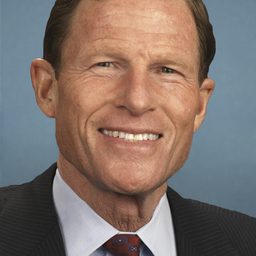 Sen. Blumenthal, Richard (D-CT)
1 cosponsor
-
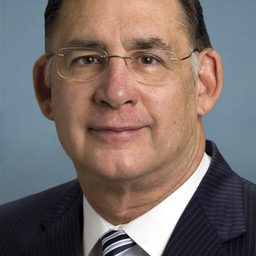 Sen. Boozman, John (R-AR)
Actions (2)
- Sep 29, 2026 Read twice and referred to the Committee on Veterans' Affairs. · senate
- Sep 29, 2026 Introduced in Senate
Full text
IN THE SENATE OF THE UNITED STATES
September 29, 2026
Mr. Blumenthal (for himself and Mr. Boozman) introduced the following bill; which was read twice and referred to the Committee on Veterans’ Affairs
A BILL
To improve support for personnel of the Veterans Crisis Line and to clarify authorities relating to crisis response protocols, and for other purposes.
Be it enacted by the Senate and House of Representatives of the United States of America in Congress assembled,
SECTION 1. SHORT TITLE.
This Act may be cited as the “Veterans Crisis Line Support and Safety Act of 2026”.
SEC. 2. SUPPORT FOR VETERANS CRISIS LINE.
(a) Mental Health and Wellness Support for Workforce.—
(1) In general.—The Secretary of Veterans Affairs shall ensure that covered personnel have access to confidential mental health services, at no cost to the covered personnel, including—
(A) access to individual counseling and mental health care services from licensed providers with demonstrated experience in post-traumatic stress disorder, trauma, secondary trauma, compassion fatigue, and vicarious trauma during compensated on-duty time;
(B) peer support programs;
(C) critical incident stress debriefing; and
(D) training on resiliency and burnout prevention, conducted not less frequently than annually.
(2) Availability.—Services under paragraph (1)—
(A) shall be available both during and outside scheduled duty hours, and such availability shall be considered compensable on-duty time; and
(B) may be furnished through providers of the Department of Veterans Affairs or through contracts with non-Department providers independent of supervisory chains.
(3) Impact on employment.—The Secretary shall ensure that the use of services under this subsection does not adversely affect the employment status, performance evaluation, or career advancement of covered personnel.
(b) Occupational Safeguards.—
(1) In general.—The Secretary shall establish and implement policies applicable to covered personnel that provide for—
(A) reasonable limitations on workload and shift duration;
(B) mandatory rest and recovery periods following high-risk, traumatic, or otherwise psychologically intensive interactions, as defined by criteria established by the Secretary, including appropriate supervisory review and approval procedures governing the use of such rest periods and related support services so long as such approvals are not conditioned on availability of staff; and
(C) staffing levels informed by workforce assessments, contact volume, response time goals, employee workload, and other operational metrics determined appropriate by the Secretary.
(2) Limitation on number of cases.—The Secretary shall ensure that all covered personnel are only required to handle one case at a given time, including digital services cases, relating to outreach to the Veterans Crisis Line for assistance.
(3) Overtime.—During periods in which contact volume or response queues exceed established operational thresholds, the Secretary shall provide opportunities for voluntary overtime for covered personnel willing to assist in reducing such backlogs.
(4) Operational scheduling.—The Secretary shall use operational scheduling practices that promote workforce sustainability, employee well-being, and quality of life, including by undertaking reasonable efforts to ensure equitable distribution of weekend, overnight, holiday, and other undesirable shifts among covered personnel, while maintaining continuity of operations and adequate staffing levels.
(5) Workforce needs.—The Secretary shall—
(A) use software to predict call patterns and assess workforce needs; and
(B) as appropriate, assign or hire additional personnel dedicated specifically to responding to cases involving complex needs or disruptive behavior in order to ensure such cases receive specialized and effective handling.
(c) Administration.—
(1) Operational authorities and safeguards.—The Secretary shall review and amend current policies and procedures governing the response to contacts received through the Veterans Crisis Line, consistent with section 1720F(h) of title 38, United States Code.
(2) Non-crisis or abusive contacts.—
(A) In general.—The Secretary shall establish procedures to identify patterns of non-crisis or abusive communications that materially interfere with the mission of the Veterans Crisis Line.
(B) Actions.—Pursuant to procedures established under subparagraph (A), the Secretary may take appropriate actions relating to non-crisis or abusive communications, including—
(i) providing verbal or written notice or warnings to the individual;
(ii) implementing reasonable call handling restrictions in cases of repeated misuse;
(iii) directing the individual to alternative appropriate resources; and
(iv) reestablishing dedicated disruptive caller intervention units, which shall include repeat caller intervention specialists who have trauma-informed behavioral management training.
(C) Safeguards and review.—The Secretary shall ensure that any action taken under this paragraph—
(i) includes safeguards to preserve access to the Veterans Crisis Line for individuals experiencing a bona fide crisis; and
(ii) is subject to supervisory review and periodic reassessment.
(d) Report.—
(1) In general.—Not later than one year after the date of the enactment of this Act, the Comptroller General of the United States shall—
(A) conduct a review of the implementation and effectiveness of this section; and
(B) submit to the Committee on Veterans’ Affairs of the Senate and the Committee on Veterans’ Affairs of the House of Representatives a report containing the findings of such review.
(2) Elements.—The review conducted under paragraph (1) shall include an assessment of—
(A) the implementation of mental health and wellness services for covered personnel under subsection (a);
(B) the effectiveness and use of occupational safeguards established under subsection (b);
(C) staffing levels, turnover, overtime usage, and workforce retention among covered personnel;
(D) whether scheduling practices for covered personnel appropriately support workforce sustainability, employee well-being, and equitable distribution of weekend, overnight, holiday, and other undesirable shifts;
(E) the operational effectiveness of workforce prediction tools, staffing assessments, and specialized response staffing used pursuant to subsection (b)(5);
(F) the extent to which covered personnel are able to access confidential mental health and wellness services without adverse employment consequences;
(G) the implementation and oversight of policies relating to non-crisis or abusive contacts under subsection (c)(2); and
(H) any recommendations to improve workforce well- being, operational effectiveness, and crisis response capabilities within the Veterans Crisis Line.
(3) Access to information.—The Secretary shall provide the Comptroller General with access to such information and personnel as the Comptroller General determines necessary to carry out the review required under paragraph (1), consistent with applicable privacy and confidentiality protections.
(4) Protection of sensitive information.—The report submitted under paragraph (1) shall not include personally identifiable information relating to covered personnel or individuals contacting the Veterans Crisis Line.
(e) Definitions.—In this section:
(1) Covered personnel.—The term “covered personnel” means any employee or contractor of the Department of Veterans Affairs who responds to contacts or participates in responding to contacts through the Veterans Crisis Line.
(2) Veterans crisis line.—The term “Veterans Crisis Line” means the toll-free hotline for veterans established under section 1720F(h) of title 38, United States Code, and the program operated by the Department of Veterans Affairs to provide crisis intervention and suicide prevention services through such hotline. <all>
Comments