
S 5289 Re-checks Congress.gov for new actions and updates the bill's status, and fills in any sponsors, committees, or related bills that are missing. It does not re-pull sponsors/cosponsors/committees/related — those rarely change — and it skips all work if nothing has changed upstream, so it's cheap to click.
To protect the right to the free exercise of religion.
Summary
- Makes it unlawful to knowingly disrupt or impede a scheduled religious service by conduct within 100 feet of a house of worship's pedestrian or vehicular entryway, during the period from one hour before to one hour after the service, and makes conspiracy to do so unlawful.
- Defines a scheduled religious service to include services that are underway or imminently beginning or ending, services communicated to the defendant by law enforcement or the house of worship or set by a court or administrative proceeding, and services on a customary recurring schedule the defendant knew about.
- Specifies that whether conduct is a disruption depends on its manner (volume, duration, pervasiveness, frequency, and impact) rather than the content of any speech, and that the Act does not require a house of worship to publish its schedule.
- Authorizes the Attorney General to assess civil fines of $2,500 for a first offense, $5,000 for a second, and $10,000 per occurrence for a third or later offense.
- Allows any aggrieved person to sue in federal district court for injunctive relief, damages, or $5,000 in statutory damages per violation, and allows the U.S. Attorney General and state attorneys general to bring similar civil actions.
AI-generated plain-language summary of the bill text — neutral, and may be imperfect. See the full text below for the exact wording.
Sponsor (1)
-
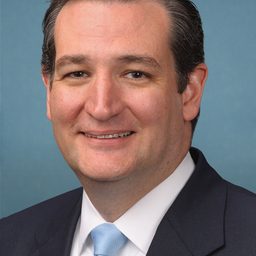 Sen. Cruz, Ted (R-TX)
1 cosponsor
-
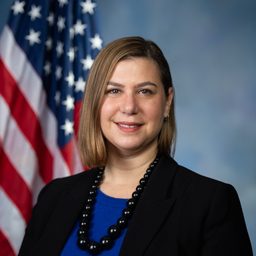 Sen. Slotkin, Elissa (D-MI)
Actions (2)
- Aug 6, 2026 Read twice and referred to the Committee on the Judiciary. · senate
- Aug 6, 2026 Introduced in Senate
Full text
IN THE SENATE OF THE UNITED STATES
August 6, 2026
Mr. Cruz (for himself and Ms. Slotkin) introduced the following bill; which was read twice and referred to the Committee on the Judiciary
A BILL
To protect the right to the free exercise of religion.
Be it enacted by the Senate and House of Representatives of the United States of America in Congress assembled,
SECTION 1. SHORT TITLE.
This Act may be cited as the “Right to Worship Act”.
SEC. 2. PROTECTING THE RIGHT TO THE FREE EXERCISE OF RELIGION.
(a) Definitions and Rules.—
(1) Definitions.—In this section:
(A) Disrupt.—The term “disrupt”, used with respect to conduct and a scheduled religious service, means conduct that meaningfully interferes with the ability of people to participate in the scheduled religious service, to the extent that the conduct causes a substantial interruption to the service’s normal operation.
(B) House of worship.—The term “house of worship” means a defined parcel of property or other space that religious adherents collectively recognize or religious leadership designates as a place to routinely or regularly gather to hold religious services.
(C) Impede.—The term “impede”, used with respect to conduct and a scheduled religious service, means conduct that unreasonably hinders or deters a person from entering a house of worship, or that threatens or intimidates a person, in a manner that prevents participation at a scheduled religious service.
(D) Knowingly.—The term “knowingly”, used with respect to a person and a disruption or impediment, means that the person is aware or reasonably should be aware that the person’s conduct will cause such disruption or impediment, respectively.
(E) Religious service.—The term “religious service” includes any collective worship or prayer service, class, or other event, at which individuals congregate to worship, study, or otherwise exercise, their religion.
(F) Scheduled religious service.—The term “scheduled religious service” includes any religious service—
(i) that is observably underway or imminently beginning or concluding, as evidenced by the gathering or dispersing of congregants at or by congregants approaching or leaving a house of worship;
(ii) the date and time of which have been communicated to the defendant by law enforcement, by a representative of the house of worship, or through a prior judicial or administrative proceeding, or of which the defendant had actual knowledge; or
(iii) follows a customary and regularly recurring schedule of which the defendant had actual knowledge.
(G) State.—The term “State” includes a State of the United States, the District of Columbia, and any commonwealth or territory.
(2) Rules.—
(A) Scheduled religious service.—Nothing in this section shall require a house of worship to publish the schedule for a scheduled religious service on any publicly accessible medium.
(B) Disruption.—For the purposes of this section, whether a person’s course of conduct is a disruption shall be determined only by the manner in which the course of conduct is carried out, including its volume, duration, pervasiveness, frequency, and impact, rather than by the content of any speech or expression involved.
(b) Prohibited Activities.—It shall be unlawful for any person—
(1) to engage in a course of conduct that substantially affects interstate commerce, within 100 feet from any pedestrian or vehicular entryway of any house of worship, during the period beginning 1 hour before the start of and ending 1 hour after the conclusion of a scheduled religious service, by knowingly disrupting the scheduled religious service or knowingly impeding people from participating at the scheduled religious service; or
(2) to conspire to engage in, or cause another person to engage in, any course of conduct made unlawful under paragraph
(1).
(c) Rules of Construction.—Nothing in this section shall be construed—
(1) to preclude a person from freely speaking on any subject so long as such speech is conducted pursuant to the time, place, and manner restrictions set forth in this section; or
(2) to preclude participation in activities for which a Federal, State, or local government entity has issued a permit.
(d) Civil Fines.—Whoever violates this section shall be assessed, by the Attorney General—
(1) in the case of a first offense, a civil fine of $2,500;
(2) in the case of a second offense, a civil fine of $5,000; and
(3) in the case of a third or subsequent offense, a civil fine of $10,000 per occurrence.
(e) Civil Remedies.—
(1) Right of action.—
(A) In general.—Any person aggrieved by reason of a violation of subsection (b) may commence a civil action for the relief set forth in subparagraph (B) in any appropriate district court of the United States.
(B) Relief.—In any action under subparagraph (A), the court may award appropriate relief, including temporary, preliminary, or permanent injunctive relief and compensatory and punitive damages, as well as the costs of suit and reasonable fees for attorneys and expert witnesses. With respect to compensatory damages, the plaintiff may elect, at any time prior to the rendering of final judgment, to recover, in lieu of actual damages, an award of statutory damages in the amount of $5,000 per violation.
(2) Action by attorney general of the united states.—
(A) In general.—If the Attorney General has reasonable cause to believe that any person (including a group of persons) is being, has been, or may be injured by conduct constituting a violation of this section, the Attorney General may commence a civil action in any appropriate district court of the United States.
(B) Relief.—In any action under subparagraph (A), the court may award appropriate relief, including temporary, preliminary or permanent injunctive relief, and compensatory damages to a person aggrieved as described in paragraph (1)(A). In the absence of actual damages, the court, to vindicate the public interest, may assess a civil penalty against each defendant in the amount of $5,000 per violation.
(3) Actions by state attorney general.—
(A) In general.—If the Attorney General of a State has reasonable cause to believe that any person (including a group of persons) is being, has been, or may be injured by conduct constituting a violation of this section, such Attorney General may commence a civil action in the name of such State, as parens patriae on behalf of natural persons residing in such State, in any appropriate district court of the United States.
(B) Relief.—In any action under subparagraph (A), the court may award the relief described in paragraph
(2)(B).
(f) Severability.—If any provision of this Act (including a sentence, phrase, or word) or the application of such provision to any person or circumstance is held to be invalid, illegal, unconstitutional, or unenforceable by a court of competent jurisdiction, the remainder of this Act and of the application of the provision to any person or circumstance, that can be enforced without the use of the offending provision or application, shall not be affected. <all>
Comments