
S 4358 Re-checks Congress.gov for new actions and updates the bill's status, and fills in any sponsors, committees, or related bills that are missing. It does not re-pull sponsors/cosponsors/committees/related — those rarely change — and it skips all work if nothing has changed upstream, so it's cheap to click.
Survival Aid For Emergencies through Medicare Act
To amend title XVIII of the Social Security Act to provide coverage of medically necessary home resiliency services under Medicare.
Summary
- Adds "home resiliency services" as a covered benefit under Medicare for individuals medically at-risk in the event of climate or manmade disasters, effective January 1, 2027.
- Defines home resiliency services as medically necessary items such as heat pumps for extreme temperature exposure, solar batteries for individuals dependent on electrical medical equipment, and energy efficient cold-storage for heat-sensitive medical supplies.
- Requires the Secretary of Health and Human Services to establish a process to determine which Medicare beneficiaries are medically at-risk based on geographic climate risks, disaster history, and reliance on medical equipment or supplies sensitive to climate hazards.
- Medicare covers 100 percent of the cost of home resiliency services up to the actual charge or a fee schedule established by the Secretary.
AI-generated plain-language summary of the bill text — neutral, and may be imperfect. See the full text below for the exact wording.
Sponsor (1)
-
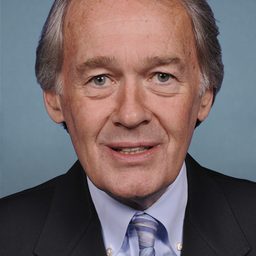 Sen. Markey, Edward J. (D-MA)
Money behind the sponsor
Top reported contributors to Edward J. Markey’s campaign committee (2024 cycle) — who funds the bill’s sponsor, not a claim about this bill. Data from FEC.
- WILMERHALE $29,800
- STANFORD UNIVERSITY $13,200
- THE WONDERFUL COMPANY $13,200
- BAD ROBOT $13,200
- GOOGLE $12,850
Organizations whose employees gave the most — itemized individual contributions grouped by the donor’s reported employer (FEC Schedule A). Full finance for Edward J. Markey → · Outside spending →
Actions (2)
- Apr 21, 2026 Read twice and referred to the Committee on Finance. · senate
- Apr 21, 2026 Introduced in Senate
Full text
IN THE SENATE OF THE UNITED STATES
April 21, 2026
Mr. Markey introduced the following bill; which was read twice and referred to the Committee on Finance
A BILL
To amend title XVIII of the Social Security Act to provide coverage of medically necessary home resiliency services under Medicare.
Be it enacted by the Senate and House of Representatives of the United States of America in Congress assembled,
SECTION 1. SHORT TITLE.
This Act may be cited as the “Survival Aid For Emergencies through Medicare Act” or the “SAFE through Medicare Act”.
SEC. 2. MEDICARE COVERAGE OF MEDICALLY NECESSARY HOME RESILIENCY SERVICES.
(a) Coverage.—Section 1861 of the Social Security Act (42 U.S.C. 1395x) is amended—
(1) in subsection (s)(2)—
(A) in subparagraph (JJ), by striking “and” at the end;
(B) in subparagraph (KK), by inserting “and” at the end; and
(C) by adding at the end the following new subparagraph:
“(LL) in the case of an individual who is medically at- risk in the event of a climate or manmade disaster (as determined by the Secretary in accordance with subsection (ooo)), home resiliency services (as defined in such subsection);”; and
(2) by adding at the end the following new subsection: “(ooo) Home Resiliency Services; Determination of Individuals Medically At-Risk.—
“(1) Home resiliency services.—The term ‘home resiliency services’ means items and services—
“(A) furnished on or after January 1, 2027, to an individual described in subsection (s)(2)(LL); and
“(B) that the Secretary determines are medically necessary for such individual in the case of a climate or manmade disaster, such as a heat pump for an individual vulnerable to extreme temperatures, solar batteries for an individual reliant on electrical medical equipment (including home mechanical ventilators), and energy efficient cold-storage for heat-sensitive medical supplies.
“(2) Determination of individuals medically at-risk.—For purposes of subsection (s)(2)(LL) and this subsection, the Secretary, in consultation with the Director of the National Institutes of Health, the Administrator of the Centers for Medicare & Medicaid Services, and the Administrator of the National Oceanic and Atmospheric Administration, shall establish a process to determine the conditions under which an individual would be determined to be medically at-risk in the event of a disaster or climate hazards, including extreme heat, extreme cold, flooding, and loss of power. Such a process shall consider—
“(A) geography-specific climate risks and regional preparedness for different climate risks;
“(B) the regional history of disaster or climate hazards and infrastructure failure in the preceding 20 years or the forward-looking predicted risk of disaster or climate hazards and infrastructure failure in the next 20 years;
“(C) medical reliance on equipment, pharmaceuticals, mobility aids, and other supplies that are sensitive to exposure to extreme temperatures, poor air quality, flooding and water damage, or dependent on electrical power; and
“(D) chronic medical conditions, disabilities, and comorbidities that increase patient vulnerability during disaster.”.
(b) Payment.—Section 1833(a)(1) of the Social Security Act (42 U.S.C. 1395l(a)(1)) is amended—
(1) by striking “and” before “(HH)”; and
(2) by inserting before the semicolon at the end the following: “and (II) with respect to home resiliency services described in section 1861(s)(2)(LL), the amount paid shall be an amount equal to 100 percent of the lesser of the actual charge for the services or the amount determined under a fee schedule established by the Secretary”. <all>
Text versions (1)
Bills are re-published as they move (Introduced → Reported → Engrossed → Enrolled …). Each stage below is a separate text; pick two to see what changed. Data from Congress.gov.
Similar bills (6)
Bills with similar text or summary — includes reintroductions across Congresses. Ranked by semantic similarity of the bill text (computed locally); a neutral discovery aid, not a claim the bills are duplicates.
Comments