
S 3370 Re-checks Congress.gov for new actions and updates the bill's status, and fills in any sponsors, committees, or related bills that are missing. It does not re-pull sponsors/cosponsors/committees/related — those rarely change — and it skips all work if nothing has changed upstream, so it's cheap to click.
Deter Obnoxious, Nefarious, and Outrageous Telephone Calls Act of 2025
To modify the penalties for violations of the Telephone Consumer Protection Act of 1993.
Summary
- Sets the short title of the bill as the "Deter Obnoxious, Nefarious, and Outrageous Telephone Calls Act of 2025" or the "DO NOT Call Act."
- Makes willful and knowing violations of the Telephone Consumer Protection Act's automated call rules a federal crime, punishable by up to one year in prison, a fine, or both.
- Raises the maximum penalty to up to three years in prison for aggravated violations, such as repeat offenses, calls exceeding set volume thresholds, calls made to further a felony, or offenses causing $5,000 or more in losses to one or more persons in a year.
- Expands the definition of a covered call to include automated calls or texts to any North American Numbering Plan number, including emergency numbers, and texts sent without prior consent or sent as emergency messages.
- Doubles the maximum civil penalty for providing inaccurate caller identification information from $10,000 to $20,000 per violation.
AI-generated plain-language summary of the bill text — neutral, and may be imperfect. See the full text below for the exact wording.
Sponsor (1)
-
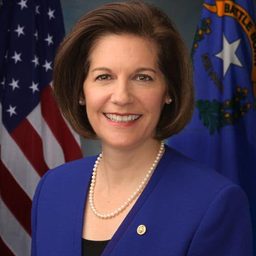 Sen. Cortez Masto, Catherine (D-NV)
3 cosponsors
-
 Sen. Gillibrand, Kirsten E. (D-NY)
-
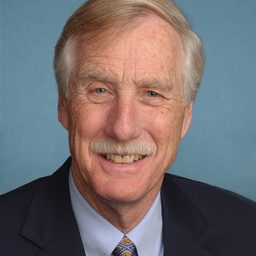 Sen. King, Angus S., Jr. (I-ME)
-
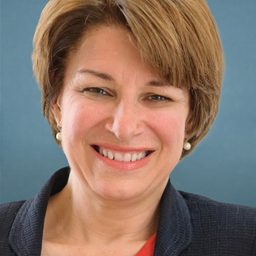 Sen. Klobuchar, Amy (D-MN)
Actions (2)
- Dec 4, 2025 Read twice and referred to the Committee on Commerce, Science, and Transportation. · senate
- Dec 4, 2025 Introduced in Senate
Full text
IN THE SENATE OF THE UNITED STATES
December 4, 2025
Ms. Cortez Masto (for herself, Ms. Klobuchar, Mrs. Gillibrand, and Mr. King) introduced the following bill; which was read twice and referred to the Committee on Commerce, Science, and Transportation
A BILL
To modify the penalties for violations of the Telephone Consumer Protection Act of 1993.
Be it enacted by the Senate and House of Representatives of the United States of America in Congress assembled,
SECTION 1. SHORT TITLE.
This Act may be cited as the “Deter Obnoxious, Nefarious, and Outrageous Telephone Calls Act of 2025” or the “DO NOT Call Act”.
SEC. 2. PENALTIES FOR VIOLATIONS OF THE TELEPHONE CONSUMER PROTECTION ACT OF 1993.
(a) Criminal Penalties.—
(1) In general.—Section 227 of the Communications Act of 1934 (47 U.S.C. 227) is amended by adding at the end the following:
“(k) Criminal Penalties.—
“(1) In general.—Except as provided in paragraph (2), any person who willfully and knowingly violates this section shall be imprisoned for not more than 1 year, fined under title 18, United States Code, or both.
“(2) Aggravated offense.—Any person who willfully and knowingly violates this section shall be imprisoned for not more than 3 years, fined under title 18, United States Code, or both if—
“(A) the person has previously been convicted under this subsection;
“(B) the offense involved initiating more than—
“(i) 100,000 calls in a 24-hour period;
“(ii) 1,000,000 calls in a 30-day period; or
“(iii) 10,000,000 calls in a 1-year period;
“(C) the person committed the offense with the intent to use the calls in furtherance of a felony or conspiracy to commit a felony; or
“(D) the offense caused loss to 1 or more persons aggregating $5,000 or more in value during any 1-year period.
“(3) Definitions.—For purposes of this subsection—
“(A) the term ‘call’ includes a message or other communication sent to any North American Numbering Plan number, including an emergency telephone number, that is—
“(i) initiated to communicate with or attempt to communicate with a person by telephone using an automatic telephone dialing system or artificial or prerecorded voice; or
“(ii) a text message sent to a mobile phone using an automatic telephone dialing system—
“(I) without the prior consent of the recipient to receive the message; or
“(II) as an emergency message; and
“(B) the term ‘initiate’, with respect to a call, includes the act of sending, making, or transmitting the call.”.
(2) Technical and conforming amendment.—Section 227(e)(5)(B) of the Communications Act of 1934 (47 U.S.C. 227(e)(5)(B)) is amended, in the second sentence, by striking “section 501” and inserting “subsection (k)”.
(b) Increased Penalties for Provision of Inaccurate Caller Identification Information.—Section 227(e)(5) of the Communications Act of 1934 (47 U.S.C. 227(e)(5)) is amended—
(1) in subparagraph (A)(i), by striking “$10,000” and inserting “$20,000”; and
(2) in subparagraph (B), in the first sentence, by striking “$10,000” and inserting “$20,000”. <all>
Text versions (1)
Bills are re-published as they move (Introduced → Reported → Engrossed → Enrolled …). Each stage below is a separate text; pick two to see what changed. Data from Congress.gov.
Similar bills (6)
Bills with similar text or summary — includes reintroductions across Congresses. Ranked by semantic similarity of the bill text (computed locally); a neutral discovery aid, not a claim the bills are duplicates.
Comments