
S 1897 Re-checks Congress.gov for new actions and updates the bill's status, and fills in any sponsors, committees, or related bills that are missing. It does not re-pull sponsors/cosponsors/committees/related — those rarely change — and it skips all work if nothing has changed upstream, so it's cheap to click.
A bill to amend the Omnibus Crime Control and Safe Streets Act of 1968 to establish the Adverse Childhood Experiences Response Team grant program, and for other purposes.
To amend the Omnibus Crime Control and Safe Streets Act of 1968 to establish the Adverse Childhood Experiences Response Team grant program, and for other purposes.
Summary
- Adds a new Part PP to Title I of the Omnibus Crime Control and Safe Streets Act of 1968, establishing the Adverse Childhood Experiences Response Team Grant Program.
- Authorizes the Attorney General, in coordination with the Secretary of Health and Human Services, to award grants to states, units of local government, Indian Tribes, and neighborhood or community-based organizations to address adverse childhood experiences linked to exposure to trauma.
- Lists permitted uses of grant funds, including establishing response team protocols, referral agreements with behavioral health and recovery providers, integrated law enforcement, mental health, and crisis responses, and trauma-informed care training for responders, child welfare workers, educators, and other partners.
- Requires applicants to submit an application in the form and with the information the Attorney General requires.
- Authorizes appropriations of $10,000,000 for each of fiscal years 2026 through 2029 to carry out the new part.
AI-generated plain-language summary of the bill text — neutral, and may be imperfect. See the full text below for the exact wording.
Sponsor (1)
-
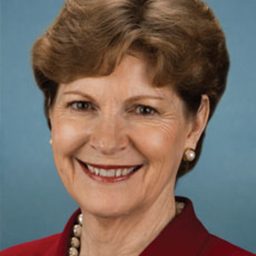 Sen. Shaheen, Jeanne (D-NH)
1 cosponsor
-
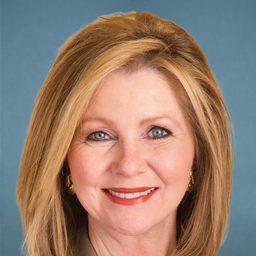 Sen. Blackburn, Marsha (R-TN)
Money behind the sponsor
Top reported contributors to Jeanne Shaheen’s campaign committee (2024 cycle) — who funds the bill’s sponsor, not a claim about this bill. Data from FEC.
- THEGROUP $16,200
- BLINK TECH INC. $13,200
- PARKER MEGGITT $7,725
- INSIGHT $7,600
- FAROS PROPERTIES $6,600
Organizations whose employees gave the most — itemized individual contributions grouped by the donor’s reported employer (FEC Schedule A). Full finance for Jeanne Shaheen → · Outside spending →
Actions (2)
- May 22, 2025 Read twice and referred to the Committee on the Judiciary. · senate
- May 22, 2025 Introduced in Senate
Full text
IN THE SENATE OF THE UNITED STATES
May 22, 2025
Mrs. Shaheen (for herself and Mrs. Blackburn) introduced the following bill; which was read twice and referred to the Committee on the Judiciary
A BILL
To amend the Omnibus Crime Control and Safe Streets Act of 1968 to establish the Adverse Childhood Experiences Response Team grant program, and for other purposes.
Be it enacted by the Senate and House of Representatives of the United States of America in Congress assembled,
SECTION 1. ADVERSE CHILDHOOD EXPERIENCES RESPONSE TEAM GRANT PROGRAM.
(a) In General.—Title I of the Omnibus Crime Control and Safe Streets Act of 1968 (34 U.S.C. 10101 et seq.) is amended by adding at the end the following:
“PART PP—ADVERSE CHILDHOOD EXPERIENCES RESPONSE TEAM GRANT PROGRAM
“SEC. 3061. GRANTS FOR ADVERSE CHILDHOOD EXPERIENCES RESPONSE TEAMS.
“(a) Grants Authorized.—From amounts made available to carry out this section, the Attorney General, in coordination with the Secretary of Health and Human Services, shall make grants to States, units of local government, Indian Tribes, and neighborhood or community-based organizations to address adverse childhood experiences associated with exposure to trauma.
“(b) Use of Funds.—Amounts received under a grant under this section may be used to establish an adverse childhood experiences response team, including by—
“(1) establishing protocols to follow when encountering a child or youth exposed to trauma to facilitate access to services;
“(2) developing referral partnership agreements with behavioral health providers, substance treatment facilities, and recovery services for family members of children exposed to trauma;
“(3) integrating law enforcement, mental health, and crisis services to respond to situations where children have been exposed to trauma;
“(4) implementing comprehensive programs and practices to support children exposed to trauma;
“(5) identifying barriers for children to access trauma- informed care in their communities;
“(6) providing training in trauma-informed care to emergency response providers, victim service providers, child protective service professionals, educational institutions, and other community partners;
“(7) supporting cross-system planning and collaboration among officers and employees who work in law enforcement, court systems, child welfare services, correctional reentry programs, emergency medical services, health care services, public health, and substance abuse treatment and recovery support; and
“(8) providing technical assistance to communities, organizations, and public agencies on how to prevent and mitigate the impact of exposure to trauma and violence.
“(c) Application.—A State, unit of local government, Indian Tribe, or neighborhood or community-based organization desiring a grant under this section shall submit to the Attorney General an application in such form, and containing such information, as the Attorney General may reasonably require.”.
(b) Authorization of Appropriations.—Section 1001(a) of title I of the Omnibus Crime Control and Safe Streets Act of 1968 (34 U.S.C. 10261(a)) is amended by adding at the end the following:
“(29) There are authorized to be appropriated to carry out part PP $10,000,000 for each of fiscal years 2026 through 2029.”. <all>
Text versions (1)
Bills are re-published as they move (Introduced → Reported → Engrossed → Enrolled …). Each stage below is a separate text; pick two to see what changed. Data from Congress.gov.
Similar bills (6)
Bills with similar text or summary — includes reintroductions across Congresses. Ranked by semantic similarity of the bill text (computed locally); a neutral discovery aid, not a claim the bills are duplicates.
Comments