
HRES 1630 Re-checks Congress.gov for new actions and updates the bill's status, and fills in any sponsors, committees, or related bills that are missing. It does not re-pull sponsors/cosponsors/committees/related — those rarely change — and it skips all work if nothing has changed upstream, so it's cheap to click.
Expressing the importance of raising awareness of opportunity youth and the necessity of investing in and supporting reconnection to education and career pathways across the United States.
Expressing the importance of raising awareness of opportunity youth and the necessity of investing in and supporting reconnection to education and career pathways across the United States.
Summary
- Expresses the House's recognition of "opportunity youth," meaning young people ages 16 to 24 who are disconnected from education and the workforce system and face barriers such as homelessness or aging out of foster care.
- Cites figures stated in its findings, including that 10.7 percent of 16- to 24-year-olds (about 4.3 million people) were opportunity youth as of 2024.
- Recognizes the need to invest in and reauthorize federal programs that connect opportunity youth to workforce development, education, and mental health services.
- Urges the Secretaries of Labor, Education, and Health and Human Services to make opportunity youth a priority in their workforce, education, and mental health grant programs.
- Is a nonbinding resolution: it creates no new program, appropriates no funds, and changes no law.
AI-generated plain-language summary of the bill text — neutral, and may be imperfect. See the full text below for the exact wording.
Sponsor (1)
-
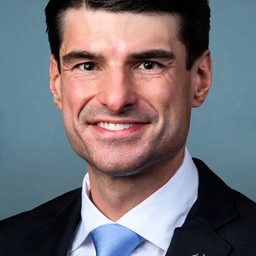 Rep. Bresnahan, Robert P. (R-PA) [#8]
1 cosponsor
-
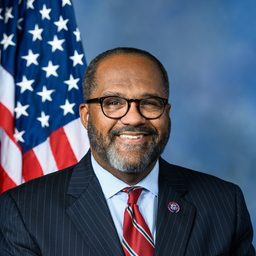 Rep. Carter, Troy A. (D-LA) [#2]
Money behind the sponsor
Top reported contributors to Robert P. Bresnahan’s campaign committee (2024 cycle) — who funds the bill’s sponsor, not a claim about this bill. Data from FEC.
- Employer not reported $255,976
- INVESTMENTS LIMITED $21,106
- STARKEY HEARING TECHNOLOGIES $13,200
- TFP LIMITED $11,022
- ENERGY TRANSFER PARTNERS $9,900
Organizations whose employees gave the most — itemized individual contributions grouped by the donor’s reported employer (FEC Schedule A). Full finance for Robert P. Bresnahan → · Outside spending →
Actions (2)
- Oct 19, 2026 Referred to the Committee on Education and Workforce, and in addition to the Committee on Energy and Commerce, for a period to be subsequently determined by the Speaker, in each case for consideration of such provisions as fall within the jurisdiction of the committee concerned. · house
- Oct 19, 2026 Submitted in House
Full text
IN THE HOUSE OF REPRESENTATIVES
October 19, 2026
Mr. Bresnahan (for himself and Mr. Carter of Louisiana) submitted the following resolution; which was referred to the Committee on Education and Workforce, and in addition to the Committee on Energy and Commerce, for a period to be subsequently determined by the Speaker, in each case for consideration of such provisions as fall within the jurisdiction of the committee concerned
RESOLUTION
Expressing the importance of raising awareness of opportunity youth and the necessity of investing in and supporting reconnection to education and career pathways across the United States.
Whereas, as of 2024, 10.7 percent of young people ages 16 to 24 in the United States, or 4,336,000 young people, are considered opportunity youth; Whereas opportunity youth are young people who are disconnected from the education and workforce development system and face significant barriers to success, such as homelessness or aging out of the foster care system; Whereas, according to youth.gov, opportunity youth come from all parts of the United States with rates in suburban communities of 11 percent, urban communities of 13 percent, and rural areas of 19 percent; Whereas the youth labor force participation rate is 9.7 percent lower than its peak in 2000, while employers report nearly 7,300,000 job openings; Whereas chronic absenteeism, defined as youth missing 10 percent or more of school, reached 28 percent of students in the 2022-2023 school year; Whereas, after 14 years, compared to young people who experienced youth disconnection, those who remained connected earn on average $31,000 more per year, are 45 percent more likely to own a home, are 42 percent more likely to be employed, and are 52 percent more likely to report good or excellent health; Whereas unemployed youth have significantly worse physical well-being and health outcomes compared to those that are employed; Whereas all young people need to be connected to financial, education, and career pathway resources, supportive mentors and relationships, and opportunities to succeed; Whereas opportunity youth need these same supports to thrive and succeed; Whereas only around 140,000 of the 4,336,000 opportunity youth across the country are served by the primary federally funded workforce development programs each year; Whereas workforce development and education programs that are most successful in employment and earnings provide clear, structured career pathways, integrate work and learning, and supportive services; Whereas the Federal Government would gain, on average, an estimated $11,900 per year in additional revenue for each young person who remains connected, or $55,000,000,000 in total; and Whereas employers benefit from having programs that intentionally hire opportunity youth and report positive experiences in working with opportunity youth: Now, therefore, be it Resolved, That the House of Representatives—
(1) recognizes the importance of focusing Federal policy on connecting to workforce development, education, and mental health programs, young people (commonly referred to as “opportunity youth”)—
(A) who are disconnected from the education and workforce development system; and
(B) who face significant barriers to success, such as homelessness or aging out of the foster care system;
(2) recognizes the need to robustly invest in, develop, and reauthorize effective Federal programs that support—
(A) the development of opportunity youth; and
(B) the connection of opportunity youth to workforce development, education, and mental health programs; and
(3) urges the heads of Federal departments and agencies, including the Secretary of Labor, the Secretary of Education, and the Secretary of Health and Human Services, to take innovative steps to ensure opportunity youth are a priority in Federal workforce development, education, and mental health grant programs. <all>
Comments