
HR 8474 Re-checks Congress.gov for new actions and updates the bill's status, and fills in any sponsors, committees, or related bills that are missing. It does not re-pull sponsors/cosponsors/committees/related — those rarely change — and it skips all work if nothing has changed upstream, so it's cheap to click.
To amend the Cooperative Forestry Assistance Act of 1978 to provide States and communities with additional assistance to plant and maintain trees, and for other purposes.
Summary
- Adds a Neighborhood Tree Fund to the Cooperative Forestry Assistance Act of 1978, from which the Secretary of Agriculture provides assistance to states, Indian Tribes, and local governments or community tree groups to increase and improve tree canopy in communities.
- Requires the Secretary, in consultation with the Secretary of Housing and Urban Development, to set requirements for receiving assistance, covering community engagement, tree canopy assessments, climate science in project design, site preparation and species selection, and monitoring and maintenance.
- Directs the Secretary to give priority to projects that prioritize tree planting in census tracts with a poverty rate of at least 20 percent or in communities with lower tree canopy and higher summer temperatures, that optimize climate mitigation and resilience for public health, or that advance community-led urban agroforestry or tree-based local food production.
- Caps the share of Fund amounts that may be used for community tree assessments at 10 percent per fiscal year.
- Authorizes appropriations for the Fund of not less than $100 million for fiscal year 2025, $200 million for 2026, $400 million for 2027, $600 million for 2028, and $700 million for 2029.
- Increases the membership of the National Urban and Community Forestry Advisory Council from 15 to 16, adding a seat for a non-governmental member with urban forestry expertise, with one of the three non-governmental members required to live in a community under 50,000 people and one in a low-income community.
AI-generated plain-language summary of the bill text — neutral, and may be imperfect. See the full text below for the exact wording.
Sponsor (1)
-
 Rep. Brown, Shontel M. (D-OH) [#11]
8 cosponsors
-
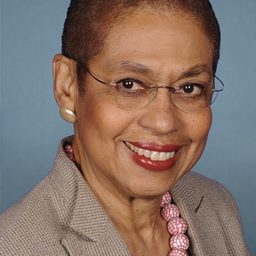 Del. Norton, Eleanor Holmes (D-DC) [At-large]
-
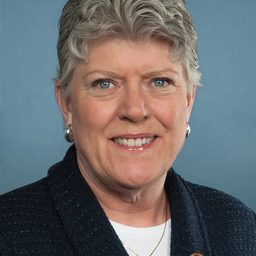 Rep. Brownley, Julia (D-CA) [#26]
-
 Rep. Matsui, Doris O. (D-CA) [#7]
-
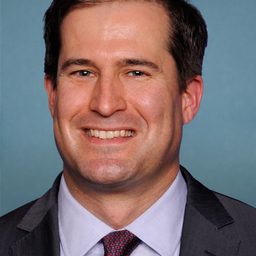 Rep. Moulton, Seth (D-MA) [#6]
-
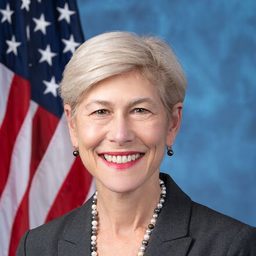 Rep. Ross, Deborah K. (D-NC) [#2]
-
 Rep. Sykes, Emilia Strong (D-OH) [#13]
-
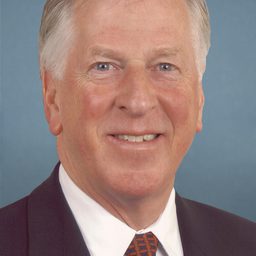 Rep. Thompson, Mike (D-CA) [#4]
-
 Rep. Titus, Dina (D-NV) [#1]
Money behind the sponsor
Top reported contributors to Shontel M. Brown’s campaign committee (2024 cycle) — who funds the bill’s sponsor, not a claim about this bill. Data from FEC.
- MINUTEMEN FAMILY OF COMPANIES $13,200
- MALLARD INVESTMENTS, INC. $6,600
- LATHAM & WATKINS $6,600
- CARNEGIE CORPORATION $6,600
- LUPA SYSTEMS LLC $6,600
Organizations whose employees gave the most — itemized individual contributions grouped by the donor’s reported employer (FEC Schedule A). Full finance for Shontel M. Brown → · Outside spending →
Actions (2)
- Apr 23, 2026 Referred to the House Committee on Agriculture. · house
- Apr 23, 2026 Introduced in House
Full text
IN THE HOUSE OF REPRESENTATIVES
April 23, 2026
Ms. Brown (for herself, Ms. Matsui, Mr. Thompson of California, Ms. Norton, Mrs. Sykes, and Ms. Titus) introduced the following bill; which was referred to the Committee on Agriculture
A BILL
To amend the Cooperative Forestry Assistance Act of 1978 to provide States and communities with additional assistance to plant and maintain trees, and for other purposes.
Be it enacted by the Senate and House of Representatives of the United States of America in Congress assembled,
SECTION 1. SHORT TITLE.
This Act may be cited as the “Neighborhood Tree Act of 2026”.
SEC. 2. FINDINGS.
Congress finds that—
(1) the presence of a healthy and well-maintained urban forest can—
(A) support—
(i) the physical and mental health of community residents;
(ii) the regulation of air quality;
(iii) the mitigation of the urban heat island effect;
(iv) the reduction of energy demand; and
(v) stormwater management; and
(B) provide other benefits;
(2) according to research of the Forest Service, the estimated value of benefits described in paragraph (1) exceeds $18,000,000,000;
(3) the maintenance and management of an urban forest offers additional opportunities relating to workforce development, job creation, and enhancement of property values;
(4) urban forest canopy cover is inequitably distributed among racial groups and income levels, exacerbating disparities in exposure, for example, to the urban heat island effect and in related health risks or financial burdens relating to cooling;
(5) the effects of historical discriminatory policies, such as redlining, continue to have effects on urban environments;
(6) a recent analysis shows that—
(A) urbanized neighborhoods with mostly people of color have 33 percent less tree canopy on average than majority white neighborhoods; and
(B) low-income neighborhoods have 41 percent less tree cover than neighborhoods with low rates of poverty;
(7) additional analyses of cities in the United States found that—
(A) communities primarily inhabited by United States-born, white populations contain more than twice the urban forest canopy cover of communities primarily inhabited by racial and ethnic minorities; and
(B) there were elevated land temperatures in formerly redlined areas compared to their nonredlined counterparts, by an average 2.6 degrees Celsius and up to 7 degrees Celsius; and
(8) to reduce disparities in the enjoyment of the social, environmental, and economic benefits of healthy and well- maintained urban forests and manage risks relating to heat exposure and other urban stressors, the Federal Government should accelerate actions to enhance the health and resilience of urban forests, with investment in priority communities.
SEC. 3. NEIGHBORHOOD TREE FUND.
Section 9 of the Cooperative Forestry Assistance Act of 1978 (16 U.S.C. 2105) is amended—
(1) by redesignating subsections (h) and (i) as subsections
(i) and (j), respectively; and
(2) by inserting after subsection (g) the following:
“(h) Neighborhood Tree Fund.—
“(1) In general.—Consistent with the purposes described in subsection (b), the Secretary shall establish the Neighborhood Tree Fund (referred to in this subsection as the ‘Fund’).
“(2) Assistance.—The Secretary shall use amounts from the Fund to provide assistance to eligible entities described in paragraph (3) to increase and improve the overall health of the tree canopy in a community.
“(3) Eligibility.—An entity that is eligible to receive assistance under paragraph (2) is—
“(A) a State;
“(B) an Indian Tribe; and
“(C) a local unit of government, approved organization, or local community tree volunteer group described in subsection (b)(4).
“(4) Requirements.—The Secretary, in consultation with the Secretary of Housing and Urban Development, shall establish requirements for the receipt of assistance under paragraph (2), including requirements with respect to—
“(A) engagement with communities and stakeholders;
“(B) the conduct of a tree canopy assessment;
“(C) the use of climate change science in the design of a project using the assistance;
“(D) the conduct of site preparation and tree species selection; and
“(E) the conduct of monitoring and maintenance to ensure the successful establishment of the tree canopy.
“(5) Priority.—The Secretary shall give priority to the provision of assistance under paragraph (2) to eligible entities that propose projects that—
“(A) include and prioritize tree planting and tree maintenance in—
“(i) a census tract with a poverty rate of not less than 20 percent, as measured by the 5- year data series available from the American Community Survey of the Bureau of the Census for the period of 2014 through 2018, including such a census tract that includes an area that was designated as ‘hazardous’ or ‘definitely declining’ in maps drawn by the Home Owners’ Loan Corporation; or
“(ii) a community or neighborhood with lower tree canopy and higher maximum daytime summer temperatures compared to surrounding communities or neighborhoods, as determined by the Secretary, based on publicly available information;
“(B) optimize outcomes for climate mitigation and resilience for the purpose of public health, as determined by the Secretary; or
“(C) advance community-led urban agroforestry or tree-based local food production to increase green infrastructure, reduce urban heat, and improve environmental and public health outcomes.
“(6) Limitations on use of amounts for community tree assessments.—Not more than 10 percent of the amount made available under paragraph (7) for a fiscal year may be used for the development of community tree assessments.
“(7) Authorization of appropriations.—There are authorized to be appropriated for deposit into the Fund, for use by the Secretary to carry out this subsection, not less than—
“(A) $100,000,000 for fiscal year 2025;
“(B) $200,000,000 for fiscal year 2026;
“(C) $400,000,000 for fiscal year 2027;
“(D) $600,000,000 for fiscal year 2028; and
“(E) $700,000,000 for fiscal year 2029.”.
SEC. 4. NATIONAL URBAN AND COMMUNITY FORESTRY ADVISORY COUNCIL COMPOSITION.
Section 9(g)(2)(A) of the Cooperative Forestry Assistance Act of 1978 (16 U.S.C. 2105(g)(2)(A)) is amended—
(1) in the matter preceding clause (i), by striking “15” and inserting “16”;
(2) in each of clauses (i) through (viii), by striking the comma at the end and inserting a period;
(3) in clause (ix), by striking “, and” at the end and inserting a period; and
(4) by striking clause (x) and inserting the following:
“(x) 3 members who are not officers or employees of any governmental body and who have expertise and have been active in urban and community forestry, of whom—
“(I) 1 is a resident of a community with a population of less than 50,000 as of the most recent census; and
“(II) 1 is a resident of a low- income community, as determined by the Secretary.”. <all>
Text versions (1)
Bills are re-published as they move (Introduced → Reported → Engrossed → Enrolled …). Each stage below is a separate text; pick two to see what changed. Data from Congress.gov.
Similar bills (6)
Bills with similar text or summary — includes reintroductions across Congresses. Ranked by semantic similarity of the bill text (computed locally); a neutral discovery aid, not a claim the bills are duplicates.
Comments