
HR 7892 Re-checks Congress.gov for new actions and updates the bill's status, and fills in any sponsors, committees, or related bills that are missing. It does not re-pull sponsors/cosponsors/committees/related — those rarely change — and it skips all work if nothing has changed upstream, so it's cheap to click.
No Aid for Ghost Students Act of 2026
Summary
- Requires the Secretary of Education to screen each federal student aid application submitted on or after October 1, 2026, with an identity fraud detection system to determine whether it presents a reasonable suspicion of identity fraud.
- Requires the Secretary to notify each applicant flagged for reasonable suspicion of identity fraud, and to send that flag and a notice to each institution the applicant listed.
- Prohibits an institution from disbursing federal student aid to a flagged applicant until it verifies the applicant's identity using an approved method, such as in-person verification, live audiovisual verification, or a method meeting NIST Identity Assurance Level 2.
- Requires the Secretary to give Congress a written description of the identity fraud detection system by November 1, 2026, and an annual effectiveness report beginning October 1, 2027.
- Requires the Secretary to establish guidelines for institutional identity verification procedures by October 1, 2026.
- Adds institutions that repeatedly disburse aid to flagged applicants without the required verification to the Department's program review priority category, unless they show compliance.
AI-generated plain-language summary of the bill text — neutral, and may be imperfect. See the full text below for the exact wording.
Sponsor (1)
-
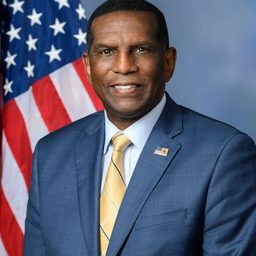 Rep. Owens, Burgess (R-UT) [#4]
4 cosponsors
-
 Rep. Foxx, Virginia (R-NC) [#5]
-
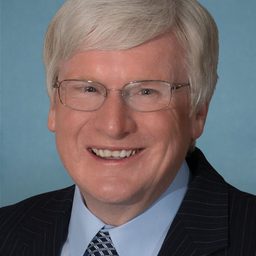 Rep. Grothman, Glenn (R-WI) [#6]
-
 Rep. Kiley, Kevin (R-CA) [#3]
-
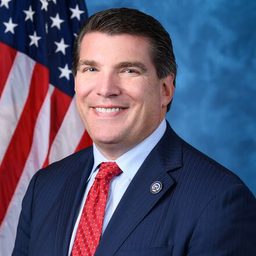 Rep. Obernolte, Jay (R-CA) [#23]
Actions (17)
- Jun 11, 2026 Received in the Senate and Read twice and referred to the Committee on Health, Education, Labor, and Pensions. · senate
- Jun 10, 2026 Motion to reconsider laid on the table Agreed to without objection. · house
- Jun 10, 2026 On passage Passed by the Yeas and Nays: 249 - 172 (Roll no. 217). · house
- Jun 10, 2026 Passed/agreed to in House: On passage Passed by the Yeas and Nays: 249 - 172 (Roll no. 217).
- Jun 10, 2026 Considered as unfinished business. (consideration: CR H4076-4077) · house
- Jun 9, 2026 POSTPONED PROCEEDINGS - At the conclusion of debate on H.R. 7892, the Chair put the question on passage of the bill and by voice vote, announced the ayes had prevailed. Mr. Scott (VA) demanded the yeas and nays and the Chair postponed further proceedings until a time to be announced. · house
- Jun 9, 2026 The previous question was ordered pursuant to the rule. · house
- Jun 9, 2026 DEBATE - The House proceeded with one hour of debate on H.R. 7892. · house
- Jun 9, 2026 Rule provides for consideration of H.R. 8646, H.R. 7726, H.R. 7892 and H.R. 8872. The resolution provides for consideration of H.R. 8646 under a structured rule and H.R. 7726, H.R. 7892, and H.R. 8872 under a closed rule, with one hour of general debate on each bill. The resolution provides for one motion to recommit on each bill. · house
- Jun 9, 2026 Considered under the provisions of rule H. Res. 1333. (consideration: CR H4037-4044; text of amendment in the nature of a substitute: CR H4037-4038) · house
- Jun 3, 2026 Rules Committee Resolution H. Res. 1333 Reported to House. Rule provides for consideration of H.R. 8646, H.R. 7726, H.R. 7892 and H.R. 8872. The resolution provides for consideration of H.R. 8646 under a structured rule and H.R. 7726, H.R. 7892, and H.R. 8872 under a closed rule, with one hour of general debate on each bill. The resolution provides for one motion to recommit on each bill. · house
- May 26, 2026 Placed on the Union Calendar, Calendar No. 583. · house
- May 26, 2026 Reported (Amended) by the Committee on Education and Workforce. H. Rept. 119-669. · house
- Mar 17, 2026 Ordered to be Reported (Amended) by the Yeas and Nays: 30 - 3. · house
- Mar 17, 2026 Committee Consideration and Mark-up Session Held · house
- Mar 12, 2026 Referred to the House Committee on Education and Workforce. · house
- Mar 12, 2026 Introduced in House
How your representatives voted
Roll-call votes (1)
How the chamber voted on this bill — the outcome, the tally by party, and every member's recorded position. A factual record.
- On PassagePassed
249 Yea · 172 Nay · 10 Not voting
- Republicans36Yea0Nay1NV
- Democrats5Yea24Nay1NV
The party tally and member list below cover the 67 of 431 positions we've recorded so far; the outcome above is the official chamber result.
See how each member voted (67)
Yea(41)
- August Pfluger
- Beth Van Duyne
- Brandon Gill
- Brendan F. Boyle
- Brian Babin
- Brian K. Fitzpatrick
- Chip Roy
- Chrissy Houlahan
- Christopher H. Smith
- Craig A. Goldman
- Dan Crenshaw
- Daniel Meuser
- Glenn Thompson
- Guy Reschenthaler
- Henry Cuellar
- Jake Ellzey
- Jefferson Van Drew
- Jodey C. Arrington
- John Joyce
- John R. Carter
- Josh Gottheimer
- Keith Self
- Lance Gooden
- Lloyd Smucker
- Michael Cloud
- Michael T. McCaul
- Mike Kelly
- Monica De La Cruz
- Morgan Luttrell
- Nathaniel Moran
- Nellie Pou
- Pat Fallon
- Pete Sessions
- Randy K. Weber Sr.
- Robert P. Bresnahan
- Roger Williams
- Ronny Jackson
- Ryan Mackenzie
- Scott Perry
- Troy E. Nehls
- Wesley Hunt
Nay(24)
- Al Green
- Analilia Mejia
- Becca Balint
- Bonnie Watson Coleman
- Christian D. Menefee
- Christopher R. Deluzio
- Donald Norcross
- Dwight Evans
- Frank Pallone
- Greg Casar
- Herbert C. Conaway
- Jasmine Crockett
- Joaquin Castro
- Julie Johnson
- LaMonica McIver
- Lizzie Fletcher
- Lloyd Doggett
- Madeleine Dean
- Marc A. Veasey
- Mary Gay Scanlon
- Robert Menendez
- Summer L. Lee
- Sylvia R. Garcia
- Veronica Escobar
Not voting(2)
Full text
AN ACT
To amend the Higher Education Act of 1965 to require to the Secretary of Education to use an identity fraud detection system to review each FAFSA to determine whether the FAFSA presents a reasonable suspicion of identity fraud.
Be it enacted by the Senate and House of Representatives of the United States of America in Congress assembled,
SECTION 1. SHORT TITLE.
This Act may be cited as the “No Aid for Ghost Students Act of 2026”.
SEC. 2. IDENTITY FRAUD DETECTION SYSTEM.
(a) Identity Fraud Detection System.—Section 483 of the Higher Education Act of 1965 (20 U.S.C. 1090) is amended by adding at the end the following:
“(e) Identity Fraud Detection System.—
“(1) In general.—In addition to, or in conjunction with, other verification processes carried out under this title, the Secretary shall—
“(A) use an identity fraud detection system to screen and assess each application submitted under this section on or after October 1, 2026, to determine whether the application presents a reasonable suspicion of identity fraud based on one or more indicators associated with suspected fraud risk; and
“(B) carry out notifications in accordance with paragraph (2).
“(2) Notification of reasonable suspicion of identity fraud.—If the Secretary determines that an application submitted under this section presents a reasonable suspicion of identity fraud, the Secretary shall—
“(A) provide the applicant with notice—
“(i) of such determination;
“(ii) that the information described in subparagraph (B) will be transmitted to each institution of higher education designated by the applicant in the application; and
“(iii) that the applicant is subject to additional identity verification requirements in accordance with section 487(a)(15)(B); and
“(B) transmit to each institution designated by the applicant in the application, a notice—
“(i) that such application presents a reasonable suspicion of identity fraud; and
“(ii) that the applicant is subject to additional identity verification requirements to be carried out by the institution in accordance with section 487(a)(15)(B), before the institution may disburse Federal financial aid under this title to such applicant.
“(3) Congressional notices and report.—
“(A) Notices.—The Secretary shall submit to the authorizing committees—
“(i) not later than November 1, 2026, a written description of the identity fraud detection system required under this subsection; and
“(ii) not later than 30 days after implementing any substantial change to such system, a written description and rationale for such change.
“(B) Annual evaluation and report.—Not later than October 1, 2027, and annually thereafter, the Secretary shall conduct an evaluation of the effectiveness of the identity fraud detection system carried out under this subsection, and submit to the authorizing committees a report on the use and effectiveness of such system.
“(4) Rule of construction.—Nothing in this subsection shall be construed to prohibit the Secretary from meeting the requirements of paragraph (1), in whole or in part, through a capability or system used by the Secretary on or before the date of enactment of the No Aid for Ghost Students Act of 2026.”.
(b) Additional Verification Requirements.—
(1) Amendments.—Section 487(a)(15) of the Higher Education Act of 1965 (20 U.S.C. 1094(a)(15)) is amended—
(A) by striking “(15) The institution acknowledges” and inserting “(15)(A) The institution acknowledges”; and
(B) by adding at the end the following new subparagraph:
“(B) Beginning on October 1, 2026, the institution will not disburse Federal financial aid under this title to an applicant with an application under section 483 that presents a reasonable suspicion of identity fraud under section 483(e), unless the institution, directly or through a contracted third- party service provider and in accordance with procedures established by the Secretary—
“(i) before the disbursement of such aid—
“(I) determines that a reasonable suspicion of identity fraud is not present by confirming the identity of such applicant using— “(aa) in-person identity verification; “(bb) live, synchronous audiovisual identity verification;
“(cc) identity verification compliant with National Institute of Standards and Technology Identity Assurance Level 2 (NIST IAL2), or an equivalent successor;
“(dd) any additional identity verification method approved by the Secretary that provides a level of identity assurance that is equal to or greater than the level of assurance provided by an identify verification method described in items (aa) through
(cc); or “(ee) a combination of two or more of the verification methods described in items (aa) through (dd); and
“(II) notifies the Secretary that the identity of the applicant has been verified; and
“(ii) maintains a record of such identity verification.”.
(2) Guidelines on institutional verification procedures.— Not later than October 1, 2026, the Secretary of Education shall establish guidelines with respect to identity verification procedures to be carried out by institutions of higher education under subparagraph (B) of section 487(a)(15) of the Higher Education Act of 1965 (20 U.S.C. 1094(a)(15)), as amended by paragraph (1).
SEC. 3. PROGRAM REVIEW PRIORITY CATEGORY.
Section 498A(a)(2) of the Higher Education Act of 1965 (20 U.S.C. 1099c-1(a)(2)) is amended—
(1) in subparagraph (E), by striking “and” at the end;
(2) by redesignating subparagraph (F) as subparagraph (G); and
(3) by inserting after subparagraph (E) the following:
“(F) institutions that have demonstrated a pattern of disbursing, on or after October 1, 2026, Federal financial aid under this title for an award year to students with an application under section 483 for such award year that presented a reasonable suspicion of identity fraud under section 483(e), except that the Secretary shall exclude any institution that demonstrates to the Secretary that the institution is in compliance with the requirements of section 487(a)(15)(B); and”.
Passed the House of Representatives June 10, 2026.
Attest:
Clerk. 119th CONGRESS
2d Session
H. R. 7892
AN ACT
To amend the Higher Education Act of 1965 to require to the Secretary of Education to use an identity fraud detection system to review each FAFSA to determine whether the FAFSA presents a reasonable suspicion of identity fraud.
Text versions (4)
Bills are re-published as they move (Introduced → Reported → Engrossed → Enrolled …). Each stage below is a separate text; pick two to see what changed. Data from Congress.gov.
More bills on these subjects (8)
Other bills that carry the most legislative subjects in common with this one (topical discovery — distinct from the procedural related bills above).
Comments