
HR 5428 Re-checks Congress.gov for new actions and updates the bill's status, and fills in any sponsors, committees, or related bills that are missing. It does not re-pull sponsors/cosponsors/committees/related — those rarely change — and it skips all work if nothing has changed upstream, so it's cheap to click.
Medical Student Education Authorization Act of 2025
To amend the Public Health Service Act to establish a grant program to award grants to accredited public institutions of higher education, and for other purposes.
Summary
- Sets the short title "Medical Student Education Authorization Act of 2025" and adds a new Section 742 to the Public Health Service Act.
- Directs the HRSA Administrator to establish a grant program for accredited public institutions of higher education in states in the top quartile of projected primary care physician shortages.
- Requires grant recipients to use funds to support training for medical students who will serve Tribal, rural, or medically underserved communities, including primary care training, faculty development, recruitment and retention, and scholarships.
- Allows grant recipients to form partnerships with entities such as federally recognized Tribes, Tribal Colleges or Universities, federally qualified health centers, rural health clinics, Indian Health Service facilities, and primary care clinics.
- Sets each grant period at no more than 5 years, with an annual award of at least $1,000,000 and a non-Federal matching requirement of up to 10 percent of Federal funds.
- Authorizes appropriations of $75,000,000 for each of fiscal years 2026 through 2028.
AI-generated plain-language summary of the bill text — neutral, and may be imperfect. See the full text below for the exact wording.
Sponsor (1)
-
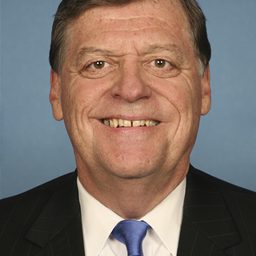 Rep. Cole, Tom (R-OK) [#4]
19 cosponsors
-
 Rep. Aderholt, Robert B. (R-AL) [#4]
-
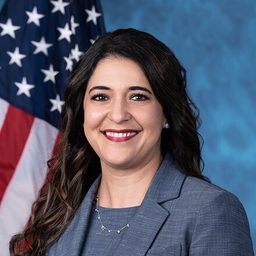 Rep. Bice, Stephanie I. (R-OK) [#5]
-
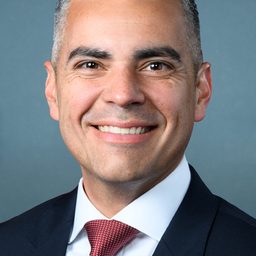 Rep. Ciscomani, Juan (R-AZ) [#6]
-
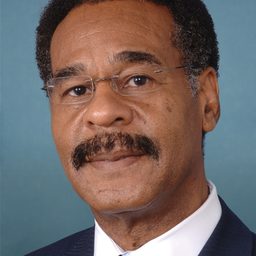 Rep. Cleaver, Emanuel (D-MO) [#5]
-
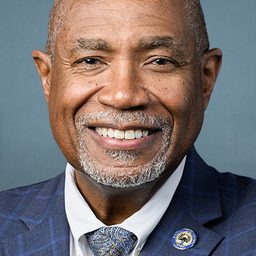 Rep. Conaway, Herbert C. (D-NJ) [#3]
-
 Rep. Davids, Sharice (D-KS) [#3]
-
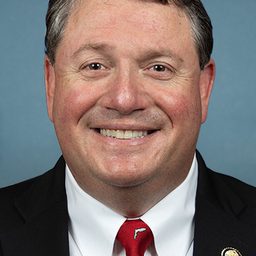 Rep. Fine, Randy (R-FL) [#6]
-
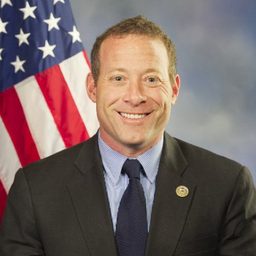 Rep. Gottheimer, Josh (D-NJ) [#5]
-
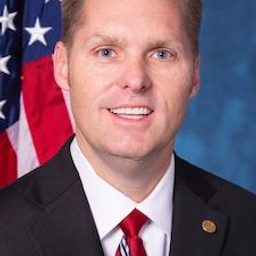 Rep. Guest, Michael (R-MS) [#3]
-
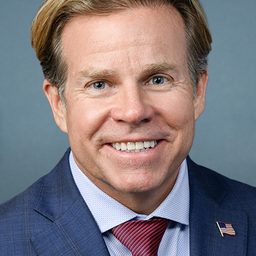 Rep. Haridopolos, Mike (R-FL) [#8]
-
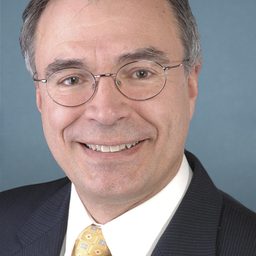 Rep. Harris, Andy (R-MD) [#1]
-
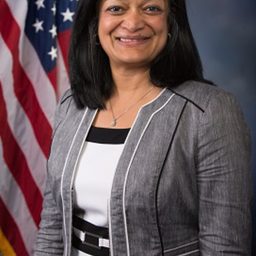 Rep. Jayapal, Pramila (D-WA) [#7]
-
 Rep. Pou, Nellie (D-NJ) [#9]
-
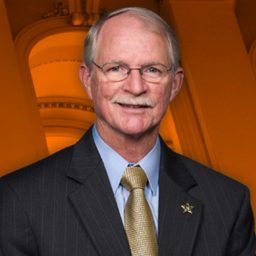 Rep. Rutherford, John H. (R-FL) [#5]
-
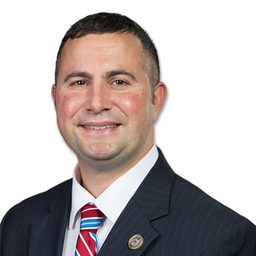 Rep. Soto, Darren (D-FL) [#9]
-
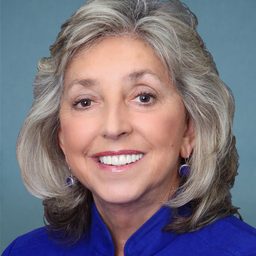 Rep. Titus, Dina (D-NV) [#1]
-
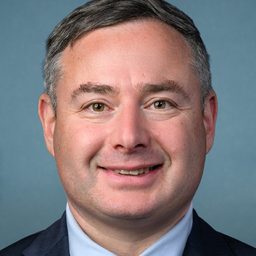 Rep. Vindman, Eugene Simon (D-VA) [#7]
-
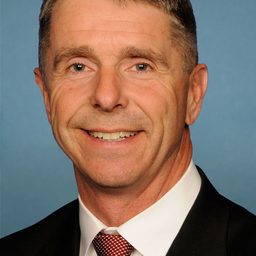 Rep. Wittman, Robert J. (R-VA) [#1]
-
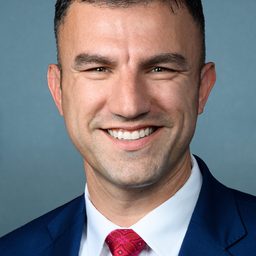 Rep. Yakym, Rudy (R-IN) [#2]
Actions (2)
- Sep 17, 2025 Referred to the House Committee on Energy and Commerce. · house
- Sep 17, 2025 Introduced in House
Full text
IN THE HOUSE OF REPRESENTATIVES
September 17, 2025
Mr. Cole (for himself and Ms. Titus) introduced the following bill; which was referred to the Committee on Energy and Commerce
A BILL
To amend the Public Health Service Act to establish a grant program to award grants to accredited public institutions of higher education, and for other purposes.
Be it enacted by the Senate and House of Representatives of the United States of America in Congress assembled,
SECTION 1. SHORT TITLE.
This Act may be cited as the “Medical Student Education Authorization Act of 2025”.
SEC. 2. EDUCATION PROGRAM TO SUPPORT PRIMARY HEALTH CARE FOR MEDICALLY UNDERSERVED COMMUNITIES.
Part B of title VII of the Public Health Service Act (42 U.S.C. 293 et seq.) is amended by adding at the end the following:
“SEC. 742. EDUCATION PROGRAM TO SUPPORT PRIMARY HEALTH CARE FOR MEDICALLY UNDERSERVED COMMUNITIES.
“(a) Establishment.—The Secretary, acting through the Administrator of the Health Resources and Services Administration (in this section referred to as the ‘Secretary’) shall establish a grant program to award grants to accredited public institutions of higher education to carry out the activities described in subsection (d) for the purposes of—
“(1) supporting education for medical students who are preparing to become physicians; and
“(2) preparing and encouraging each such student trained by a grantee to serve in a Tribal, rural, or medically underserved community as a primary care physician after completing residency training.
“(b) Eligibility.—In order to be eligible to receive a grant under this section, an accredited public institution of higher education shall—
“(1) be located in a State that is in the top quartile of States with a projected shortage of primary care physicians, as determined by the Secretary; and
“(2) submit an application to the Secretary at such time, in such manner, and containing such information as the Secretary may require, that includes—
“(A) a certification that such institution will use amounts provided to the institution through the grant to carry out the activities described in subsection (d); and
“(B) a description of how such institution will carry out such activities.
“(c) Priority.—In awarding grants under this section, the Secretary shall give priority to accredited public institutions of higher education that meet the eligibility requirements of subsection
(b) and—
“(1) are located in a State with not fewer than 2 Indian Tribes or Tribal organizations (as such terms are defined in section 4 of the Indian Self-Determination and Education Assistance Act); and
“(2) have established, or demonstrate plans to establish, a strategic partnership with entities described in subsection
(d)(4) that supports the purposes described in subsection (a).
“(d) Use of Funds.—An eligible entity that receives a grant under this section shall, as appropriate, use the funds made available under such grant to carry out the following activities:
“(1) Support community-based training for medical students who will practice in or serve Tribal, rural, or medically underserved communities.
“(2) Develop and operate programs to train medical students in the provision of primary care services, which may include developing training programs and activities that—
“(A) emphasize care for Tribal, rural, or medically underserved communities;
“(B) are applicable to primary care practice with respect to individuals from Tribal, rural, or medically underserved communities; and
“(C) promote interdisciplinary training.
“(3) Increase the capacity of faculty to develop and operate programs described in paragraph (2).
“(4) Develop strategic partnerships, such as public- private partnerships, to improve health outcomes for individuals from Tribal, rural, or medically underserved communities, which partnerships may include—
“(A) federally recognized Tribes, Tribal Colleges or Universities (as such term is defined in section 316 of the Higher Education Act of 1965), and Tribal organizations (as such term is defined in section 4 of the Indian Self-Determination and Education Assistance Act);
“(B) Federally qualified health centers;
“(C) rural health clinics;
“(D) health facilities or programs operated by or in accordance with a contract or grant with the Indian Health Service; and
“(E) primary care clinics.
“(5) Develop a plan, as appropriate, for followup with graduates, including with respect to specialties, as applicable.
“(6) Develop, implement, and evaluate methods to improve recruitment and retention of medical students from Tribal, rural, or medically underserved communities.
“(7) Train and support instructors to serve Tribal, rural, or medically underserved communities.
“(8) Prepare medical students for transition into primary care residency training and future practice.
“(9) Provide scholarships to medical students.
“(e) Grant Period.—A grant under this section shall be awarded for a period of not more than 5 years.
“(f) Grant Amount.—Each fiscal year, the amount of a grant made to an eligible entity under this section shall be not less than $1,000,000.
“(g) Matching Requirement.—The Secretary shall, as appropriate, require that an eligible entity receiving a grant under this section provide non-Federal matching funds, which may be in cash or in kind, in an amount that is not more than 10 percent of the total amount of Federal funds provided through the grant each fiscal year.
“(h) Authorization of Appropriations.—There is authorized to be appropriated to carry out this section $75,000,000 for each of fiscal years 2026 through 2028.”. <all>
Text versions (1)
Bills are re-published as they move (Introduced → Reported → Engrossed → Enrolled …). Each stage below is a separate text; pick two to see what changed. Data from Congress.gov.
Similar bills (6)
Bills with similar text or summary — includes reintroductions across Congresses. Ranked by semantic similarity of the bill text (computed locally); a neutral discovery aid, not a claim the bills are duplicates.
Comments