
HR 3755 Re-checks Congress.gov for new actions and updates the bill's status, and fills in any sponsors, committees, or related bills that are missing. It does not re-pull sponsors/cosponsors/committees/related — those rarely change — and it skips all work if nothing has changed upstream, so it's cheap to click.
To amend the Federal Fire Prevention and Control Act of 1974 to update the fire prevention and control guidelines to require the mandatory installation of carbon monoxide alarms in all places of public accommodation, and for other purposes.
Summary
- Requires mandatory installation of compliant carbon monoxide alarms in all sleeping or dwelling units in places of public accommodation.
- Requires owners and operators of public accommodations to provide written notice to guests upon check-in certifying compliance with carbon monoxide alarm requirements.
- Defines "compliant carbon monoxide alarm" based on standards in the International Fire Code and National Fire Protection Association Standard 72.
- Requires states to update their fire prevention and control guidelines lists to reflect the new carbon monoxide alarm installation requirements.
- Makes violations of the notice requirement enforceable by the Federal Trade Commission as unfair or deceptive acts.
AI-generated plain-language summary of the bill text — neutral, and may be imperfect. See the full text below for the exact wording.
Sponsor (1)
-
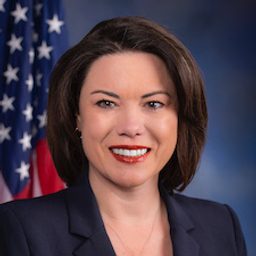 Rep. Craig, Angie (D-MN) [#2]
Money behind the sponsor
Top reported contributors to Angie Craig’s campaign committee (2024 cycle) — who funds the bill’s sponsor, not a claim about this bill. Data from FEC.
- Employer not reported $26,800
- UNIVERSITY OF MINNESOTA $24,935
- MARQUIS MANAGEMENT $18,200
- CARLETON COLLEGE $14,100
- CELADON SYSTEMS $13,200
Organizations whose employees gave the most — itemized individual contributions grouped by the donor’s reported employer (FEC Schedule A). Full finance for Angie Craig → · Outside spending →
Actions (2)
- Jun 5, 2025 Referred to the Committee on Science, Space, and Technology, and in addition to the Committee on Energy and Commerce, for a period to be subsequently determined by the Speaker, in each case for consideration of such provisions as fall within the jurisdiction of the committee concerned. · house
- Jun 5, 2025 Introduced in House
Full text
IN THE HOUSE OF REPRESENTATIVES
June 5, 2025
Ms. Craig (for herself and Mr. Levin) introduced the following bill; which was referred to the Committee on Science, Space, and Technology, and in addition to the Committee on Energy and Commerce, for a period to be subsequently determined by the Speaker, in each case for consideration of such provisions as fall within the jurisdiction of the committee concerned
A BILL
To amend the Federal Fire Prevention and Control Act of 1974 to update the fire prevention and control guidelines to require the mandatory installation of carbon monoxide alarms in all places of public accommodation, and for other purposes.
Be it enacted by the Senate and House of Representatives of the United States of America in Congress assembled,
SECTION 1. SHORT TITLE.
This Act may be cited as the “Safe Stay Act”.
SEC. 2. UPDATING FIRE PREVENTION AND CONTROL GUIDELINES TO REQUIRE MANDATORY INSTALLATION OF CARBON MONOXIDE ALARMS IN PLACES OF PUBLIC ACCOMMODATION.
(a) In General.—Section 29(a) of the Federal Fire Prevention and Control Act of 1974 (15 U.S.C. 2225(a)) is amended—
(1) in paragraph (1)—
(A) by striking “Standard 74” and inserting “Standard 72”; and
(B) by striking “and” after the semicolon;
(2) in paragraph (2), by striking the period and inserting “; and”; and
(3) by adding at the end the following new paragraph:
“(3) a requirement that compliant carbon monoxide alarms shall be installed in each sleeping or dwelling unit within each place of public accommodation affecting commerce.”.
(b) Definitions.—Section 29(d) of the Federal Fire Prevention and Control Act of 1974 (15 U.S.C. 2225(d)) is amended by adding at the end the following new paragraphs:
“(4) The term ‘compliant carbon monoxide alarm’ means a carbon monoxide alarm or detection system installed in accordance with the International Fire Code or National Fire Protection Association Standard 72, and the applicable UL standards referenced therein.
“(5) The term ‘National Fire Protection Association Standard 72’ refers to the latest edition of the National Fire Alarm and Signaling Code published by the National Fire Protection Association Standard, or any successor standard relating to the proper installation of carbon monoxide alarms.
“(6) The term ‘International Fire Code’ refers to the latest edition of the International Fire Code published by the International Code Council, or any successor code relating to the proper installation of carbon monoxide alarms.”.
(c) Dissemination of Information.—Section 30 of the Federal Fire Prevention and Control Act of 1974 (15 U.S.C. 2226) is amended in the first sentence—
(1) by striking “and automatic smoke detection systems” and inserting “, automatic smoke detection systems, and compliant carbon monoxide alarms (as such term is defined in section 29)”; and
(2) by inserting before the period at the end the following: “and compliant carbon monoxide alarms”.
(d) Updating of Lists.—The Administrator of the Federal Emergency Management Agency shall take such steps as may be necessary to ensure that—
(1) each State updates the list submitted to the Administrator pursuant to subsection (a) of section 28 of the Federal Fire Prevention and Control Act of 1974 (15 U.S.C. 2224) to reflect the amendments made by this section; and
(2) the master list published under subsection (b) of such section is updated to reflect the changes to the State lists made pursuant to paragraph (1).
(e) Interpretation.—Nothing in this Act or the amendments made by this Act may be construed to prohibit the application of standards with respect to the installation of carbon monoxide alarms or detection systems in places of public accommodation that are higher than the standards under the latest edition of the International Fire Code or the National Fire Protection Association Standard 72, and the applicable UL standards referenced therein (as such terms are defined in section 29 of the Federal Fire Prevention and Control Act of 1974 (15 U.S.C. 2225), as amended by subsection (b)).
SEC. 3. NOTICE OF COMPLIANT CARBON MONOXIDE ALARMS.
(a) In General.—The owner or operator of a place of public accommodation affecting commerce (as such term is defined in section 4 of the Federal Fire Prevention and Control Act of 1974 (15 U.S.C. 2203)) shall provide to each guest of such place of public accommodation, upon check-in, written notice attesting that such place of public accommodation is in compliance with the requirement described in paragraph (3) of section 29(a) of such Act (15 U.S.C. 2225(a)), as added by subsection (a).
(b) Enforcement by Federal Trade Commission.—
(1) Unfair or deceptive acts or practices.—A violation of subsection (a) or a regulation promulgated under such subsection shall be treated as a violation of a regulation under section 18(a)(1)(B) of the Federal Trade Commission Act (15 U.S.C. 57a(a)(1)(B)) regarding unfair or deceptive acts or practices.
(2) Powers of commission.—The Federal Trade Commission shall enforce subsection (a) and the regulations promulgated under such subsection in the same manner, by the same means, and with the same jurisdiction, powers, and duties as though all applicable terms and provisions of the Federal Trade Commission Act (15 U.S.C. 41 et seq.) were incorporated into and made a part of this section. Any person who violates such subsection or a regulation promulgated under such subsection shall be subject to the penalties and entitled to the privileges and immunities provided in the Federal Trade Commission Act.
(3) Regulations.—The Federal Trade Commission may promulgate regulations under section 553 of title 5, United States Code, to carry out subsection (a).
(c) Effective Date.—This section shall take effect on the date that is one year after the date of the enactment of this Act. <all>
Text versions (1)
Bills are re-published as they move (Introduced → Reported → Engrossed → Enrolled …). Each stage below is a separate text; pick two to see what changed. Data from Congress.gov.
Similar bills (6)
Bills with similar text or summary — includes reintroductions across Congresses. Ranked by semantic similarity of the bill text (computed locally); a neutral discovery aid, not a claim the bills are duplicates.
Comments