
HR 3142 Re-checks Congress.gov for new actions and updates the bill's status, and fills in any sponsors, committees, or related bills that are missing. It does not re-pull sponsors/cosponsors/committees/related — those rarely change — and it skips all work if nothing has changed upstream, so it's cheap to click.
Secure U.S. Leadership in Space Act of 2025
To amend the Internal Revenue Code of 1986 to treat spaceports like airports for purposes of exempt facility bond rules.
Summary
- Treats spaceports the same as airports under federal tax-exempt bond financing rules, allowing spaceports to be financed through exempt facility bonds.
- Defines "spaceport" as a facility used for manufacturing or repairing spacecraft, flight control operations, providing launch and reentry services, or transferring crew and cargo to or from spacecraft.
- Clarifies that spaceport property on land leased from the federal government can still qualify for tax-exempt bond treatment if the lease requirements are met.
- Specifies that spaceports are not required to be available for general public use to qualify for tax-exempt bond financing.
- Clarifies that federal use of a spaceport, such as payment of rent or user fees, does not make the bond federally guaranteed.
- Excludes spaceport bonds from state volume caps on exempt facility bonds, allowing more spaceport bonds to be issued per state.
AI-generated plain-language summary of the bill text — neutral, and may be imperfect. See the full text below for the exact wording.
Sponsor (1)
-
 Rep. Dunn, Neal P. (R-FL) [#2]
4 cosponsors
-
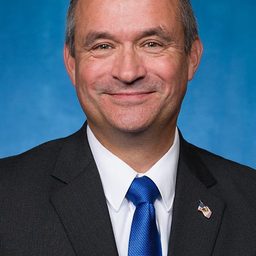 Rep. Bacon, Don (R-NE) [#2]
-
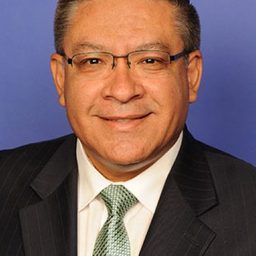 Rep. Carbajal, Salud O. (D-CA) [#24]
-
 Rep. Haridopolos, Mike (R-FL) [#8]
-
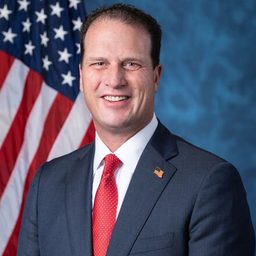 Rep. Pfluger, August (R-TX) [#11]
Actions (2)
- May 1, 2025 Referred to the House Committee on Ways and Means. · house
- May 1, 2025 Introduced in House
Full text
IN THE HOUSE OF REPRESENTATIVES
May 1, 2025
Mr. Dunn of Florida (for himself, Mr. Carbajal, and Mr. Haridopolos) introduced the following bill; which was referred to the Committee on Ways and Means
A BILL
To amend the Internal Revenue Code of 1986 to treat spaceports like airports for purposes of exempt facility bond rules.
Be it enacted by the Senate and House of Representatives of the United States of America in Congress assembled,
SECTION 1. SHORT TITLE.
This Act may be cited as the “Secure U.S. Leadership in Space Act of 2025”.
SEC. 2. SPACEPORTS ARE TREATED LIKE AIRPORTS UNDER EXEMPT FACILITY BOND RULES.
(a) In General.—Section 142(a)(1) of the Internal Revenue Code of 1986 is amended to read as follows:
“(1) airports and spaceports,”.
(b) Treatment of Ground Leases.—Section 142(b)(1) of such Code is amended by adding at the end the following new subparagraph:
“(C) Special rule for spaceport ground leases.— For purposes of subparagraph (A), spaceport property located on land leased by a governmental unit from the United States shall not fail to be treated as owned by a governmental unit if the requirements of this paragraph are met by the lease and any subleases of the property.”.
(c) Definition of Spaceport.—Section 142 of such Code is amended by adding at the end the following new subsection:
“(p) Spaceport.—
“(1) In general.—For purposes of subsection (a)(1), the term ‘spaceport’ means any facility located at or in close proximity to a launch site or reentry site used for—
“(A) manufacturing, assembling, or repairing spacecraft, space cargo, other facilities described in this paragraph, or any component of the foregoing,
“(B) flight control operations,
“(C) providing launch services and reentry services, or
“(D) transferring crew, spaceflight participants, or space cargo to or from spacecraft.
“(2) Additional terms.—For purposes of paragraph (1)—
“(A) Space cargo.—The term ‘space cargo’ includes satellites, scientific experiments, other property transported into space, and any other type of payload, whether or not such property returns from space.
“(B) Spacecraft.—The term ‘spacecraft’ means a launch vehicle or a reentry vehicle.
“(C) Other terms.—The terms ‘launch’, ‘launch site’, ‘crew’, ‘space flight participant’, ‘launch services’, ‘launch vehicle’, ‘payload’, ‘reenter’, ‘reentry services’, ‘reentry site’, a ‘reentry vehicle’ shall have the respective meanings given to such terms by section 50902 of title 51, United States Code (as in effect on the date of enactment of this subsection).
“(3) Public use requirement.—Notwithstanding any other provision of law, a facility shall not be required to be available for use by the general public to be treated as a spaceport for purposes of this section.
“(4) Manufacturing facilities and industrial parks allowed.—With respect to spaceports, subsection (c)(2)(E) shall not apply to spaceport property described in paragraph
(1)(A).”.
(d) Exception From Federally Guaranteed Bond Prohibition.—Section 149(b)(3) of such Code is amended by adding at the end the following new subparagraph:
“(F) Exception for spaceports.—A bond shall not be treated as federally guaranteed merely because of the payment of rent, user fees, or other charges by the United States (or any agency or instrumentality thereof) in exchange for the use of the spaceport by the United States (or any agency or instrumentality thereof).”.
(e) Exclusion From State Ceiling.—Section 146(g) of such Code is amended by striking “and” at the end of paragraph (5), by striking the period and inserting “, and” at the end of paragraph (6), and by inserting after paragraph (6) the following new paragraph:
“(7) any exempt facility bond issued as part of an issue 95 percent or more of the net proceeds of which are to be used to provide a spaceport (as defined in section 142).”.
(f) Conforming Amendment.—The heading for section 142(c) of such Code is amended by inserting “Spaceports,” after “Airports,”.
(g) Effective Date.—The amendments made by this section shall apply to obligations issued after the date of the enactment of this Act. <all>
Text versions (1)
Bills are re-published as they move (Introduced → Reported → Engrossed → Enrolled …). Each stage below is a separate text; pick two to see what changed. Data from Congress.gov.
Similar bills (6)
Bills with similar text or summary — includes reintroductions across Congresses. Ranked by semantic similarity of the bill text (computed locally); a neutral discovery aid, not a claim the bills are duplicates.
Comments