
HR 2746 Re-checks Congress.gov for new actions and updates the bill's status, and fills in any sponsors, committees, or related bills that are missing. It does not re-pull sponsors/cosponsors/committees/related — those rarely change — and it skips all work if nothing has changed upstream, so it's cheap to click.
To assist State and Tribal governments in assessing and remediating mold, and for other purposes.
Summary
- Directs the EPA to commission a study on when and how to properly assess and remediate indoor mold, with results to be reported to Congress within one year
- Requires the EPA to issue nonbinding national standards for assessing and remediating mold within two years
- Establishes a grant program for states and tribes to create and operate licensing programs for mold assessment and remediation professionals
- Establishes a grant program for states and tribes to assess and remediate mold in government buildings and private residential properties, prioritizing low-income households and communities
- Allows grant funds to cover temporary housing costs for up to six months for low-income residents who are severely impacted by mold and lack insurance coverage
- Authorizes $50 million annually for fiscal years 2026 through 2030 for mold licensing programs and $50 million annually for mold assessment and remediation grants
AI-generated plain-language summary of the bill text — neutral, and may be imperfect. See the full text below for the exact wording.
Sponsor (1)
-
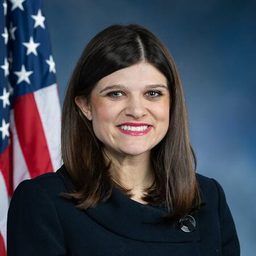 Rep. Stevens, Haley M. (D-MI) [#11]
Money behind the sponsor
Top reported contributors to Haley M. Stevens’s campaign committee (2024 cycle) — who funds the bill’s sponsor, not a claim about this bill. Data from FEC.
- Employer not reported $29,100
- GARDNER-WHITE $9,900
- MESIROW FINANCIAL $9,500
- BLACKSTONE $8,100
- DLA PIPER $7,750
Organizations whose employees gave the most — itemized individual contributions grouped by the donor’s reported employer (FEC Schedule A). Full finance for Haley M. Stevens → · Outside spending →
Actions (2)
- Apr 8, 2025 Referred to the House Committee on Energy and Commerce. · house
- Apr 8, 2025 Introduced in House
Full text
IN THE HOUSE OF REPRESENTATIVES
April 8, 2025
Ms. Stevens introduced the following bill; which was referred to the Committee on Energy and Commerce
A BILL
To assist State and Tribal governments in assessing and remediating mold, and for other purposes.
Be it enacted by the Senate and House of Representatives of the United States of America in Congress assembled,
SECTION 1. SHORT TITLE.
This Act may be cited as the “Fix Moldy Housing Act”.
SEC. 2. STUDY ON CONDITIONS IN WHICH MOLD ASSESSMENT AND REMEDIATION IS WARRANTED.
(a) In General.—The Administrator of the Environmental Protection Agency shall enter into an arrangement with the National Academies of Sciences, Engineering, and Medicine to conduct a study on—
(1) the conditions in which indoor mold assessment and remediation is warranted; and
(2) how to assess and remediate indoor mold properly and safely.
(b) Report.—Not later than 1 year after the date of enactment of this Act—
(1) the study under subsection (a) shall be completed; and
(2) the Administrator shall submit a report to the Congress on the results of such study.
SEC. 3. STANDARDS FOR ASSESSING AND REMEDIATING MOLD.
(a) In General.—Not later than 2 years after the date of enactment of this Act, the Administrator, in conjunction with the heads of appropriate Federal agencies, shall issue nonbinding national standards that—
(1) identify levels of mold that should be assessed and remediated; and
(2) outline standards for—
(A) properly and safely assessing mold; and
(B) properly and safely remediating mold.
(b) Consideration.—In issuing the standards under subsection (a), the Administrator shall take into consideration the results of the study conducted under section 2.
SEC. 4. PROGRAM TO ASSIST STATE AND TRIBAL GOVERNMENTS WITH ASSESSING AND REMEDIATING MOLD.
(a) Program.—Taking into consideration the results of the study under section 2 and the national standards under section 3, the Administrator shall carry out a program to assist State and Tribal governments in carrying out programs and activities to assess and remediate mold.
(b) Grants.—
(1) Authorization.—In carrying out the program under subsection (a), the Administrator shall award grants to State and Tribal governments to establish a licensing program for persons engaged in assessing and remediating mold.
(2) Permissible use.—A grant awarded under paragraph (1) may be used to pay the costs of operating a licensing program described in paragraph (1), including administrative costs.
(3) Preference.—In awarding grants under paragraph (1), the Administrator shall give preference to State and Tribal governments that include geographic areas that are highly susceptible to indoor mold contamination based on—
(A) the national standards established under section 3;
(B) outdoor environmental conditions, such as humidity; or
(C) other factors identified by the Administrator.
(c) Technical Assistance.—In carrying out the program under subsection (a), the Administrator shall provide technical assistance to State and Tribal programs to assess and remediate mold.
(d) Training Program.—In carrying out the program under subsection
(a), the Administrator shall administer training seminars on assessing and remediating mold.
(e) Authorization of Appropriations.—To carry out this section, there is authorized to be appropriated $50,000,000 for each of fiscal years 2026 through 2030.
SEC. 5. GRANTS FOR ASSESSMENT AND REMEDIATION OF MOLD IN PUBLIC BUILDINGS AND SEVERELY IMPACTED HOMES.
(a) In General.—The Administrator shall award grants to State and Tribal governments to cover the costs associated with assessing and remediating mold in—
(1) buildings owned or leased by such governments, including schools and housing; and
(2) private residential properties, including single family and multifamily properties.
(b) Additional Permissible Uses of Funds.—In addition to uses allowed under subsection (a), a grant awarded under this section may also be used to cover the costs of temporary housing for periods not in excess of 6 months, including moving costs, for individuals who—
(1) are severely impacted by mold in their residences;
(2) are without insurance coverage for mold; and
(3) do not have sufficient financial resources to obtain alternative housing, as determined on a case-by-case basis by the State or Tribal government.
(c) Licensing Program.—As a condition on receipt of a grant awarded under this section, a State or Tribal government shall agree to implement a licensing program for persons in the relevant jurisdiction engaged in assessing and remediating mold.
(d) Not for Use for High-Income Households.—As a condition on receipt of a grant awarded under this section, a State or Tribal government shall agree to refrain from using the grant to assess or remediate mold in housing occupied by households that are, as determined by the Administrator, high-income.
(e) Prioritization.—In awarding grants under this section, the Administrator shall give priority to—
(1) applicants proposing to use a grant under this section to assess and remediate mold in—
(A) housing occupied by households that are, as determined by the Administrator, low-income; or
(B) buildings serving communities that are, as determined by the Administrator, low-income; and
(2) State and Tribal governments that include geographic areas that are highly susceptible to indoor mold contamination based on—
(A) the national standards established under section 3;
(B) outdoor environmental conditions, such as humidity; or
(C) other factors identified by the Administrator.
(f) Federal Share.—The Federal share of the cost of activities implemented with a grant under this section in any fiscal year shall not exceed 60 percent of the costs incurred by the State or Tribal government receiving the grant in implementing such activities.
(g) Allocation.—Of the funds made available to carry out this section each fiscal year—
(1) at least 20 percent shall be used pursuant to subsection (a) to cover costs associated with assessing and remediating mold in buildings owned or leased by governments; and
(2) at least 20 percent shall be used pursuant to subsection (a) to cover costs associated with assessing and remediating mold in private residential properties.
(h) Authorization of Appropriations.—To carry out this section, there is authorized to be appropriated $50,000,000 for each of fiscal years 2026 through 2030.
SEC. 6. DEFINITIONS.
In this Act:
(1) Administrator.—The term “Administrator” means the Administrator of the Environmental Protection Agency.
(2) Mold.—The term “mold” means a fungal growth that forms and spreads on various kinds of damp or decaying organic matter.
(3) State.—The term “State” includes, in addition to the several States, the District of Columbia and any territory of the United States. <all>
Text versions (1)
Bills are re-published as they move (Introduced → Reported → Engrossed → Enrolled …). Each stage below is a separate text; pick two to see what changed. Data from Congress.gov.
Similar bills (6)
Bills with similar text or summary — includes reintroductions across Congresses. Ranked by semantic similarity of the bill text (computed locally); a neutral discovery aid, not a claim the bills are duplicates.
Comments