
HR 2214 Re-checks Congress.gov for new actions and updates the bill's status, and fills in any sponsors, committees, or related bills that are missing. It does not re-pull sponsors/cosponsors/committees/related — those rarely change — and it skips all work if nothing has changed upstream, so it's cheap to click.
Delinking Revenue from Unfair Gouging Act
To improve services provided by pharmacy benefit managers.
Summary
- Beginning January 1, 2027, prohibits pharmacy benefit managers from receiving any payment from an entity for services or benefit administration related to prescription drug benefits under group health plans and group or individual health insurance coverage, with an exception for certain bona fide service fees.
- Permits a bona fide service fee only if it is a flat dollar amount set out in a written agreement, is equal to fair market value for an itemized service actually performed, and is not based on drug prices, rebates, or other remuneration tied to prescriptions.
- Requires a pharmacy benefit manager to disgorge to the plan or insurer any payment received in violation of these rules, and sets a civil penalty of $10,000 per day of violation.
- Directs the Secretaries of Health and Human Services, Labor, and the Treasury to enforce the provisions and to implement them through interim final regulations.
- Clarifies that the bill does not prohibit payments for ingredient cost reimbursement or dispensing fees, or rebates and discounts passed fully through to plans and insurers.
- Adds parallel provisions to the Public Health Service Act, ERISA, and the Internal Revenue Code, with ERISA enforcement added to section 502 and new Internal Revenue Code section 9826.
AI-generated plain-language summary of the bill text — neutral, and may be imperfect. See the full text below for the exact wording.
Sponsor (1)
-
 Rep. Miller-Meeks, Mariannette (R-IA) [#1]
6 cosponsors
-
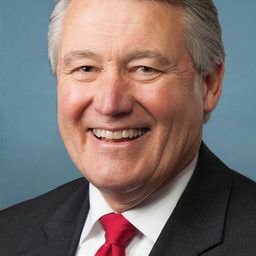 Rep. Allen, Rick W. (R-GA) [#12]
-
 Rep. Barragán, Nanette Diaz (D-CA) [#44]
-
 Rep. Malliotakis, Nicole (R-NY) [#11]
-
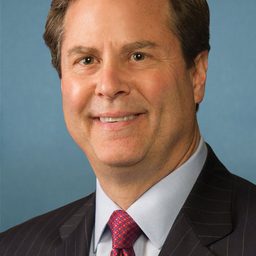 Rep. Norcross, Donald (D-NJ) [#1]
-
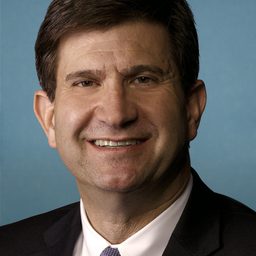 Rep. Schneider, Bradley Scott (D-IL) [#10]
-
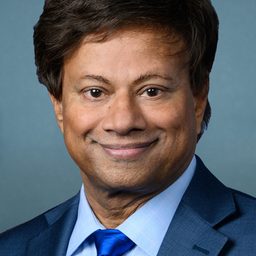 Rep. Thanedar, Shri (D-MI) [#13]
Money behind the sponsor
Top reported contributors to Mariannette Miller-Meeks’s campaign committee (2024 cycle) — who funds the bill’s sponsor, not a claim about this bill. Data from FEC.
- NYCBS $26,878
- Employer not reported $21,077
- RDV CORPORATION $16,500
- ESTES COMPANY $16,000
- DAVITA $15,500
Organizations whose employees gave the most — itemized individual contributions grouped by the donor’s reported employer (FEC Schedule A). Full finance for Mariannette Miller-Meeks → · Outside spending →
Actions (2)
- Mar 18, 2025 Referred to the Committee on Energy and Commerce, and in addition to the Committees on Ways and Means, and Education and Workforce, for a period to be subsequently determined by the Speaker, in each case for consideration of such provisions as fall within the jurisdiction of the committee concerned. · house
- Mar 18, 2025 Introduced in House
Full text
IN THE HOUSE OF REPRESENTATIVES
March 18, 2025
Mrs. Miller-Meeks (for herself, Ms. Barragan, Ms. Malliotakis, Mr. Schneider, Mr. Allen, and Mr. Norcross) introduced the following bill; which was referred to the Committee on Energy and Commerce, and in addition to the Committees on Ways and Means, and Education and Workforce, for a period to be subsequently determined by the Speaker, in each case for consideration of such provisions as fall within the jurisdiction of the committee concerned
A BILL
To improve services provided by pharmacy benefit managers.
Be it enacted by the Senate and House of Representatives of the United States of America in Congress assembled,
SECTION 1. SHORT TITLE.
This Act may be cited as the “Delinking Revenue from Unfair Gouging Act” or the “DRUG Act”.
SEC. 2. IMPROVING PHARMACY BENEFIT MANAGER SERVICES.
(a) Public Health Service Act.—Part D of title XXVII of the Public Health Service Act (42 U.S.C. 300gg-111 et seq.) is amended by adding at the end the following:
“SEC. 2799A-11. IMPROVING PHARMACY BENEFIT MANAGER SERVICES.
“(a) In General.—Beginning on January 1, 2027, except as provided in subsection (b), a pharmacy benefit manager shall derive no remuneration from any entity for services, benefit administration, or any other activities related to prescription drug benefits under a group health plan or group or individual health insurance coverage.
“(b) Exception for Bona Fide Service Fees.—
“(1) In general.—A pharmacy benefit manager may charge an entity a bona fide service fee for the provision of services to such entity only if such fee is set forth in an agreement between the pharmacy benefit manager and such entity and the amount of any bona fide service fee—
“(A) is a flat dollar amount; and
“(B) is not directly or indirectly based on, or contingent upon—
“(i) a drug price (such as wholesale acquisition cost) or drug benchmark price (such as average wholesale price);
“(ii) the amount of discounts, rebates, fees, or other direct or indirect remuneration with respect to prescription drugs prescribed to the participants, beneficiaries, or enrollees in the group health plan or health insurance coverage involved; or
“(iii) any other amounts specified by the Secretary, the Secretary of Labor, and the Secretary of the Treasury;
“(2) Definitions.—In this section—
“(A) the term ‘bona fide service fee’ means a fee that is equal to the fair market value of a bona fide, itemized service that is actually performed on behalf of an entity, that the entity would otherwise perform (or contract for) in the absence of the service arrangement, and that is not passed on in whole or in part to a client or customer, whether or not the entity takes title to the drug; and
“(B) the term ‘pharmacy benefit manager’ means any person, business, or other entity, such as a third- party administrator, regardless of whether it identifies itself as a pharmacy benefit manager, that, either directly or through an intermediary (including an affiliate, subsidiary, or agent) or an arrangement with a third-party—
“(i) acts a price negotiator for prescription drugs on behalf of a group health plan or health insurance issuer offering group or individual health insurance coverage; or
“(ii) manages or administers the prescription drug benefits provided by a group health plan or health insurance issuer offering group or individual health insurance coverage, including creating formularies, the processing and payment of claims for prescription drugs, arranging alternative access to or funding for prescription drugs, the performance of drug utilization review, the processing of drug prior authorization requests, the adjudication of appeals or grievances related to the prescription drug benefit, contracting with network pharmacies (including retail and mail pharmacies), controlling the cost of covered prescription drugs, or the provision of related services.
“(c) Enforcement.—
“(1) In general.—The Secretary, in consultation with the Secretary of Labor and the Secretary of the Treasury, shall enforce this section.
“(2) Disgorgement.—The pharmacy benefit manager shall disgorge to a group health plan or health insurance issuer offering group or individual health insurance coverage any payment, remuneration, or other amount received by the pharmacy benefit manager or an affiliate of such pharmacy benefit manager from such plan or issuer in violation of subsection (a) or, pursuant to subsection (b), the agreement entered into with such plan or issuer for bona fide service fees.
“(3) Penalties.—A pharmacy benefit manager that violates subsection (a) or (b) shall be subject to a civil monetary penalty in the amount of $10,000 for each day during which such violation continues.
“(4) Procedure.—Notwithstanding section 2723, the provisions of section 1128A of the Social Security Act, other than subsection (a) and (b) and the first sentence of subsection (c)(1) of such section, shall apply to civil monetary penalties under this subsection in the same manner as such provisions apply to a penalty or proceeding under section 1128A of the Social Security Act.
“(d) Regulations.—Notwithstanding any other provision of law, the Secretary, in consultation with the Secretary of Labor and the Secretary of the Treasury, shall implement this section through interim final regulations.
“(e) Rules of Construction.—Nothing in this section shall be construed—
“(1) as prohibiting payments related to reimbursement for ingredient costs to entities that acquire prescription drugs or pharmacy dispensing fees; and
“(2) to prohibit rebates, discounts, or other price concessions from being fully passed through to a group health plan or health insurance issuer offering group or individual health insurance coverage to lower net costs for prescription drugs.”.
(b) ERISA.—
(1) In general.—Subpart B of part 7 of subtitle B of title I of the Employee Retirement Income Security Act of 1974 (29 U.S.C. 1185 et seq.) is amended by inserting after section 725 the following:
“SEC. 726. IMPROVING PHARMACY BENEFIT MANAGER SERVICES.
“(a) General.—Beginning on January 1, 2027, except as provided in subsection (b), a pharmacy benefit manager shall derive no remuneration from any entity for services, benefit administration, or any other activities related to prescription drug benefits under a group health plan or group health insurance coverage.
“(b) Exception for Bona Fide Service Fees.—
“(1) In general.—A pharmacy benefit manager may charge an entity a bona fide service fee for the provision of services to an entity only if such fee is set forth in an agreement between the pharmacy benefit manager and such entity and the amount of any bona fide service fee—
“(A) is a flat dollar amount; and
“(B) is not directly or indirectly based on, or contingent upon—
“(i) a drug price (such as wholesale acquisition cost) or drug benchmark price (such as average wholesale price);
“(ii) the amount of discounts, rebates, fees, or other direct or indirect remuneration with respect to prescription drugs prescribed to the participants, beneficiaries, or enrollees in the group health plan or health insurance coverage involved; or
“(iii) any other amounts specified by the Secretary, the Secretary of Health and Human Services, and the Secretary of the Treasury.
“(2) Definitions.—In this section—
“(A) the term ‘bona fide service fee’ means a fee that is equal to the fair market value of a bona fide, itemized service that is actually performed on behalf of an entity, that the entity would otherwise perform (or contract for) in the absence of the service arrangement, and that is not passed on in whole or in part to a client or customer, whether or not the entity takes title to the drug; and
“(B) the term ‘pharmacy benefit manager’ means any person, business, or other entity, such as a third- party administrator, regardless of whether it identifies itself as a pharmacy benefit manager, that, either directly or through an intermediary (including an affiliate, subsidiary, or agent) or an arrangement with a third-party—
“(i) acts a price negotiator for prescription drugs on behalf of a group health plan or health insurance issuer offering group health insurance coverage; or
“(ii) manages or administers the prescription drug benefits provided by a group health plan or health insurance issuer offering group health insurance coverage, including creating formularies, the processing and payment of claims for prescription drugs, arranging alternative access to or funding for prescription drugs, the performance of drug utilization review, the processing of drug prior authorization requests, the adjudication of appeals or grievances related to the prescription drug benefit, contracting with network pharmacies (including retail and mail pharmacies), controlling the cost of covered prescription drugs, or the provision of related services.
“(c) Enforcement.—The Secretary shall enforce this section as provided for in section 502(c)(13).
“(d) Regulations.—Notwithstanding any other provision of law, the Secretary, in consultation with the Secretary of Health and Human Services and the Secretary of the Treasury, shall implement this section through interim final regulations.
“(e) Rules of Construction.—Nothing in this section shall be construed—
“(1) as prohibiting payments related to reimbursement for ingredient costs to entities that acquire prescription drugs or pharmacy dispensing fees; and
“(2) to prohibit rebates, discounts, or other price concessions from being fully passed through to a group health plan or health insurance issuer offering group health insurance coverage to lower net costs for prescription drugs.”.
(2) Enforcement.—Section 502 of the Employee Retirement Income Security Act of 1974 (29 U.S.C. 1132) is amended—
(A) in subsection (a)(6), by striking “or (9)” and inserting “(9), or (13)”; and
(B) in subsection (c), by adding at the end the following:
“(13) Secretarial Enforcement Authority Relating to Pharmacy Benefit Manager Services.—
“(A) Disgorgement.—With respect to a violation of section 726 by a pharmacy benefit manager, such pharmacy benefit manager shall disgorge to a group health plan or health insurance issuer offering group health insurance coverage any payment, remuneration, or other amount received by the pharmacy benefit manager or an affiliate of such pharmacy benefit manager from such plan or issuer in violation of subsection (a) of such section or, pursuant to subsection (b) of such section, the agreement entered into with such plan or issuer for bona fide service fees.
“(B) Penalties.—A pharmacy benefit manager that violates subsection (a) or (b) of section 726 shall be subject to a civil monetary penalty in the amount of $10,000 for each day during which such violation continues.
“(C) Procedure.—Except as provided in this paragraph, the provisions of this section shall apply to civil monetary penalties under this paragraph in the same manner as such provisions apply to other civil penalties under this section.
“(D) Rule of construction.—Nothing in this paragraph shall effect the authority of the Secretary under subsection
(a)(5).”.
(3) Clerical amendment.—The table of contents in section 1 of the Employee Retirement Income Security Act of 1974 (29 U.S.C. 1001 et seq.) is amended by inserting after the item relating to section 725 the following new item:
Sec. 726. Improving pharmacy benefit manager services.
(c) Internal Revenue Code of 1986.—
(1) In general.—Subchapter B of chapter 100 of the Internal Revenue Code of 1986 is amended by adding at the end the following:
“SEC. 9826. IMPROVING PHARMACY BENEFIT MANAGER SERVICES.
“(a) In General.—Beginning on January 1, 2027, except as provided in subsection (b), a pharmacy benefit manager shall derive no remuneration from any entity for services, benefit administration, or any other activities related to prescription drug benefits under a group health plan.
“(b) Exception for Bona Fide Service Fees.—
“(1) In general.—A pharmacy benefit manager may charge an entity a bona fide service fee for the provision of services to such entity only if such fee is set forth in an agreement between the pharmacy benefit manager and such entity and the amount of any bona fide service fee—
“(A) is a flat dollar amount; and
“(B) is not directly or indirectly based on, or contingent upon—
“(i) a drug price (such as wholesale acquisition cost) or drug benchmark price (such as average wholesale price);
“(ii) the amount of discounts, rebates, fees, or other direct or indirect remuneration with respect to prescription drugs prescribed to the participants, beneficiaries, or enrollees in the group health plan involved; or
“(iii) any other amounts specified by the Secretary, the Secretary of Health and Human Services, and the Secretary of the Labor.
“(2) Definitions.—In this section—
“(A) the term ‘bona fide service fee’ means a fee that is equal to the fair market value of a bona fide, itemized service that is actually performed on behalf of an entity, that the entity would otherwise perform (or contract for) in the absence of the service arrangement, and that is not passed on in whole or in part to a client or customer, whether or not the entity takes title to the drug; and
“(B) the term ‘pharmacy benefit manager’ means any person, business, or other entity such as a third-party administrator, regardless of whether it identifies itself as a pharmacy benefit manager, that, either directly or through an intermediary (including an affiliate, subsidiary, or agent) or an arrangement with a third-party—
“(i) acts as a price negotiator for prescription drugs on behalf of a group health plan; or
“(ii) manages or administers the prescription drug benefits provided by a group health plan, including creating formularies, the processing and payment of claims for prescription drugs, arranging alternative access to or funding for prescription drugs, the performance of drug utilization review, the processing of drug prior authorization requests, the adjudication of appeals or grievances related to the prescription drug benefit, contracting with network pharmacies, controlling the cost of covered prescription drugs, or the provision of related services.
“(c) Enforcement.—
“(1) In general.—The Secretary, in consultation with the Secretary of Health and Human Services and the Secretary of Labor, shall enforce this section.
“(2) Disgorgement.—The pharmacy benefit manager shall disgorge to a group health plan any payment, remuneration, or other amount received by the pharmacy benefit manager or an affiliate of such pharmacy benefit manager from such plan or issuer in violation of subsection (a) or, pursuant to subsection (b), the agreement entered into with such plan for bona fide service fees.
“(3) Penalties.—A pharmacy benefit manager that violates subsection (a) or (b) shall be subject to a civil monetary penalty in the amount of $10,000 for each day during which such violation continues.
“(4) Procedure.—The provisions of section 1128A of the Social Security Act, other than subsection (a) and (b) and the first sentence of subsection (c)(1) of such section, shall apply to civil monetary penalties under this subsection in the same manner as such provisions apply to a penalty or proceeding under section 1128A of the Social Security Act.
“(d) Regulations.—Notwithstanding any other provision of law, the Secretary, in consultation with the Secretary of Health and Human Services and the Secretary of Labor, shall implement this section through interim final regulations.”.
(2) Clerical amendment.—The table of sections for subchapter B of chapter 100 of the Internal Revenue Code of 1986 is amended by adding at the end the following new item:
“Sec. 9826. Improving pharmacy benefit manager services.”. <all>
Text versions (1)
Bills are re-published as they move (Introduced → Reported → Engrossed → Enrolled …). Each stage below is a separate text; pick two to see what changed. Data from Congress.gov.
Similar bills (6)
Bills with similar text or summary — includes reintroductions across Congresses. Ranked by semantic similarity of the bill text (computed locally); a neutral discovery aid, not a claim the bills are duplicates.
Comments