
HR 10867 Re-checks Congress.gov for new actions and updates the bill's status, and fills in any sponsors, committees, or related bills that are missing. It does not re-pull sponsors/cosponsors/committees/related — those rarely change — and it skips all work if nothing has changed upstream, so it's cheap to click.
Stopping Legalized Organized Trafficking and Harm to Sloths Act of 2026
To prohibit the importation of certain species of sloth, and for other purposes.
Summary
- Makes it unlawful for any person to import any individual of a covered sloth species, meaning a species of the suborder Folivora, except as allowed by the bill's exceptions.
- Allows import of a dead sloth or part of one for research, if the importer documents the research purpose to the Secretary of the Interior's satisfaction.
- Allows import of a live sloth to move it to an accredited institution (zoo, aquarium, or similar facility accredited by the Association of Zoos and Aquariums) under its breeding program, if the importer shows the sloth was not taken in the wild after enactment.
- Sets civil penalties of up to $20,000 per violation, after notice and a hearing, and criminal fines of up to $100,000 for knowing violations, with each violation treated as a separate offense.
- Requires the Secretary to cancel federal licenses, permits, or authorizations held by violators to import or export fish, wildlife, or plants or to run quarantine or rescue facilities, and makes illegally imported sloths subject to forfeiture to the United States, with violators liable for storage and care costs.
AI-generated plain-language summary of the bill text — neutral, and may be imperfect. See the full text below for the exact wording.
Sponsor (1)
-
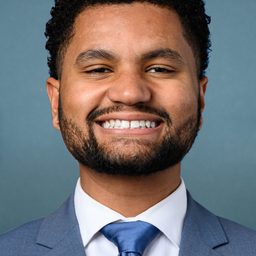 Rep. Frost, Maxwell (D-FL) [#10]
1 cosponsor
-
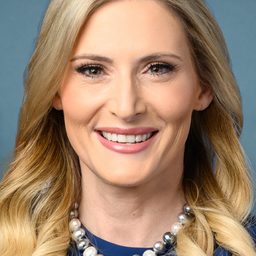 Rep. Lee, Laurel M. (R-FL) [#15]
Money behind the sponsor
Top reported contributors to Maxwell Frost’s campaign committee (2024 cycle) — who funds the bill’s sponsor, not a claim about this bill. Data from FEC.
- VLP LAW $13,200
- SMARTHINKING $13,200
- BAD ROBOT PRODUCTIONS $13,200
- AMSCOT FINANCIAL, INC. $8,500
- ADVENT HEALTH $6,750
Organizations whose employees gave the most — itemized individual contributions grouped by the donor’s reported employer (FEC Schedule A). Full finance for Maxwell Frost → · Outside spending →
Actions (2)
- Oct 22, 2026 Referred to the Committee on Ways and Means, and in addition to the Committee on Natural Resources, for a period to be subsequently determined by the Speaker, in each case for consideration of such provisions as fall within the jurisdiction of the committee concerned. · house
- Oct 22, 2026 Introduced in House
Full text
IN THE HOUSE OF REPRESENTATIVES
October 22, 2026
Mr. Frost (for himself and Ms. Lee of Florida) introduced the following bill; which was referred to the Committee on Ways and Means, and in addition to the Committee on Natural Resources, for a period to be subsequently determined by the Speaker, in each case for consideration of such provisions as fall within the jurisdiction of the committee concerned
A BILL
To prohibit the importation of certain species of sloth, and for other purposes.
Be it enacted by the Senate and House of Representatives of the United States of America in Congress assembled,
SECTION 1. SHORT TITLE.
This Act may be cited as the “Stopping Legalized Organized Trafficking and Harm to Sloths Act of 2026” or the “SLOTHS Act of 2026”.
SEC. 2. PROHIBITION ON IMPORTATION OF CERTAIN SPECIES OF SLOTH.
(a) In General.—Except as provided in subsection (b), it is unlawful for any person to import any individual of a covered sloth species.
(b) Exception.—A person may import an individual of a covered sloth species, in whole or in part, if—
(1)(A) the individual or part thereof is dead; and
(B) such importation is carried out for research purposes, as demonstrated by the person through documentation to the satisfaction of the Secretary; or
(2)(A) such importation is carried out—
(i) to move the individual to a covered institution; and
(ii) in accordance with a breeding program of a covered institution; and
(B) the person demonstrates through documentation to the satisfaction of the Secretary that the individual was not taken in the wild after the date of the enactment of this section.
(c) Penalties.—
(1) Civil penalties.—
(A) In general.—Except as provided in subparagraph
(B), any person that violates this section may be assessed a civil penalty by the Secretary of not more than $20,000 for each such violation.
(B) Notice.—No civil penalty may be assessed under subparagraph (A) unless the person accused of the violation is given notice and opportunity for a hearing with respect to the violation.
(C) Separate offenses.—Each violation shall be a separate offense and the offense shall be deemed to have been committed not only in the district where the violation first occurred, but also in any district in which a person may have taken or been in possession of the said sloth.
(2) Criminal penalties.—
(A) In general.—Whoever knowingly violates this section shall be fined not more than $100,000.
(B) Separate offenses.—Each violation shall be a separate offense and the offense shall be deemed to have been committed not only in the district where the violation first occurred, but also in any district in which the defendant may have taken or been in possession of a sloth.
(3) Cancellation of federal authorizations.—If a person is found to have violated this section, the Secretary shall cancel any Federal license, permit, or other authorization issued to the person by the Secretary that authorizes the person—
(A) to import or export fish or wildlife or plants; or
(B) to operate a quarantine station or rescue center for imported fish or wildlife or plants.
(4) Secretary not liable for certain payments.—The Secretary is not liable for the payment of any compensation, reimbursement, or damages in connection with the cancellation of any license, permit, or other authorization pursuant to this section.
(d) Forfeiture.—
(1) In general.—Any individual of a covered sloth species imported contrary to the provisions of this section or any regulation issued pursuant thereto, shall be subject to forfeiture to the United States.
(2) Application of customs laws.—
(A) In general.—All provisions of law relating to the seizure, forfeiture, and condemnation of property for violation of the customs laws, the disposition of such property or the proceeds from the sale thereof, and the remission or mitigation of such forfeiture, shall apply to the seizures and forfeitures incurred, or alleged to have been incurred, under the provisions of this section, insofar as such provisions of law are applicable and not inconsistent with the provisions of this section.
(B) Exercise of powers under customs laws.—All powers, rights, and duties conferred or imposed by the customs laws upon any officer or employee of the Treasury Department may, for the purposes of this section, also be exercised or performed by the Secretary or by such persons as the Secretary may designate.
(C) Issuance of warrants.—Any warrant for search or seizure issued pursuant to this section shall be issued in accordance with rule 41 of the Federal Rules of Criminal Procedure.
(3) Storage cost.—Any person convicted of an offense, or assessed a civil penalty, under subsection (c) shall be liable for the costs incurred in the storage, care, and maintenance of any individual of a covered sloth species seized in connection with the violation concerned.
(4) Civil forfeitures.—Civil forfeitures under this section shall be governed by the provisions of chapter 46 of title 18, United States Code.
(e) Definitions.—In this section:
(1) Covered institution.—The term “covered institution” means an institution, zoo, aquarium, or other facility accredited by the Association of Zoos and Aquariums.
(2) Covered sloth species.—The term “covered sloth species” means a species of the suborder Folivora.
(3) Fish or wildlife.—The term “fish or wildlife” has the meaning given the term in section 2 of the Lacey Act Amendments of 1981 (16 U.S.C. 3371).
(4) Import.—The term “import” has the meaning given the term in section 2 of the Lacey Act Amendments of 1981 (16 U.S.C. 3371).
(5) Person.—The term “person” includes any individual, partnership, firm, joint stock company, corporation, association, trust, estate, or other legal entity.
(6) Plant.—The term “plant” has the meaning given the term in section 2 of the Lacey Act Amendments of 1981 (16 U.S.C. 3371).
(7) Secretary.—The term “Secretary” means the Secretary of the Interior. <all>
Comments