
HR 10814 Re-checks Congress.gov for new actions and updates the bill's status, and fills in any sponsors, committees, or related bills that are missing. It does not re-pull sponsors/cosponsors/committees/related — those rarely change — and it skips all work if nothing has changed upstream, so it's cheap to click.
REAL Political Advertisements Act
To amend the Federal Election Campaign Act of 1971 to provide further transparency and accountability for the use of content that is generated by artificial intelligence (generative AI) in political advertisements by requiring such advertisements to include a statement within the contents of the advertisements if generative AI was used to generate any image or video footage in the advertisements, and for other purposes.
Summary
- Extends federal election-communication rules to cover paid political content placed or promoted on online platforms, not only broadcast, cable, or satellite communications.
- Defines "online platform" as a public website, app, or search engine that sells qualified political advertisements and has at least 50 million unique monthly U.S. visitors or users for most months of the prior year, and also covers third-party ad vendors that meet a similar audience threshold.
- Revises the news exemption so that news stories, commentary, or editorials on broadcast or online outlets are excluded, unless the outlet is owned or controlled by a political party, committee, or candidate.
- Requires political advertisements that contain AI-generated images or video to carry a clear and conspicuous statement, with size and duration rules for text, audio, and video, and directs the Federal Election Commission to issue implementing regulations within 120 days of enactment.
- Requires the Federal Election Commission to report to Congress two years after enactment and every two years after that on compliance, enforcement, and recommended changes, with the amendments applying to communications made on or after January 1, 2027.
AI-generated plain-language summary of the bill text — neutral, and may be imperfect. See the full text below for the exact wording.
Sponsor (1)
-
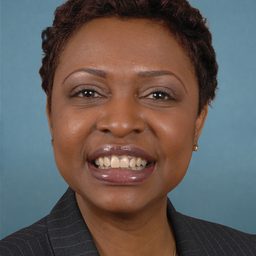 Rep. Clarke, Yvette D. (D-NY) [#9]
4 cosponsors
-
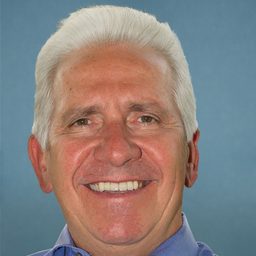 Rep. Costa, Jim (D-CA) [#21]
-
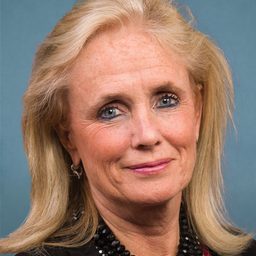 Rep. Dingell, Debbie (D-MI) [#6]
-
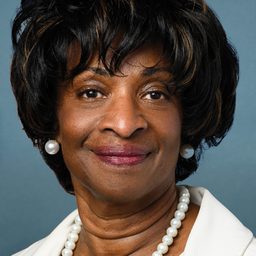 Rep. Foushee, Valerie P. (D-NC) [#4]
-
 Rep. Grijalva, Adelita S. (D-AZ) [#7]
Actions (2)
- Oct 15, 2026 Referred to the House Committee on House Administration. · house
- Oct 15, 2026 Introduced in House
Full text
IN THE HOUSE OF REPRESENTATIVES
October 15, 2026
Ms. Clarke of New York (for herself, Mrs. Dingell, Mr. Costa, Mrs. Foushee, and Mrs. Grijalva) introduced the following bill; which was referred to the Committee on House Administration
A BILL
To amend the Federal Election Campaign Act of 1971 to provide further transparency and accountability for the use of content that is generated by artificial intelligence (generative AI) in political advertisements by requiring such advertisements to include a statement within the contents of the advertisements if generative AI was used to generate any image or video footage in the advertisements, and for other purposes.
Be it enacted by the Senate and House of Representatives of the United States of America in Congress assembled,
SECTION 1. SHORT TITLE.
This Act may be cited as the “Require the Exposure of AI-Led Political Advertisements Act” or the “REAL Political Advertisements Act”.
SEC. 2. SENSE OF CONGRESS.
It is the sense of Congress that—
(1) the revolutionary innovations in generative artificial intelligence (generative AI) and the potential for their use in exacerbating and spreading misinformation and disinformation at scale and with unprecedented speed requires Congress and the Federal Election Commission to take action to protect against the use of generative AI that harms our democracy; and
(2) free and fair elections require transparency and accountability, which allow the public to make informed decisions and hold public officials accountable.
SEC. 3. EXPANSION OF DEFINITION OF ELECTIONEERING COMMUNICATION.
(a) Expansion to Online Communications.—
(1) Application to qualified internet and digital communications.—
(A) In general.—Subparagraph (A) of section 304(f)(3) of the Federal Election Campaign Act of 1971 (52 U.S.C. 30104(f)(3)(A)) is amended by striking “or satellite communication” each place it appears in clauses (i) and (ii) and inserting “satellite, or qualified internet or digital communication”.
(B) Qualified internet or digital communication.— Paragraph (3) of section 304(f) of such Act (52 U.S.C. 30104(f)) is amended by adding at the end the following new subparagraph:
“(D) Qualified internet or digital communication.—The term ‘qualified internet or digital communication’ means any communication which is placed or promoted for a fee on an online platform.”.
(2) Nonapplication of relevant electorate to online communications.—Section 304(f)(3)(A)(i)(III) of such Act (52 U.S.C. 30104(f)(3)(A)(i)(III)) is amended by inserting “any broadcast, cable, or satellite” before “communication”.
(3) News exemption.—Section 304(f)(3)(B)(i) of such Act (52 U.S.C. 30104(f)(3)(B)(i)) is amended to read as follows:
“(i) a communication appearing in a news story, commentary, or editorial distributed through the facilities of any broadcasting station or any online or digital newspaper, magazine, publication, periodical, blog, or platform, unless such broadcasting, online, or digital facilities are owned or controlled by any political party, political committee, or candidate;”.
(b) Definition of Online Platform.—Section 301 of such Act (52 U.S.C. 30101) is amended by adding at the end the following:
“(27) Online platform.—
“(A) In general.—The term ‘online platform’ means any public-facing website, web application, or digital application (including a social network, ad network, or search engine) which—
“(i)(I) sells qualified political advertisements; and
“(II) has 50,000,000 or more unique monthly United States visitors or users for a majority of months during the preceding 12 months; or
“(ii) is a third-party advertising vendor that has 50,000,000 or more unique monthly United States visitors in the aggregate on any advertisement space that it has sold or bought for a majority of months during the preceding 12 months, as measured by an independent digital ratings service accredited by the Media Ratings Council (or its successor).
“(B) Qualified political advertisement.—For purposes of this paragraph, the term ‘qualified political advertisement’ means any advertisement (including search engine marketing, display advertisements, video advertisements, native advertisements, and sponsorships) that—
“(i) is made by or on behalf of a candidate; or
“(ii) communicates a message relating to any political matter of national importance, including—
“(I) a candidate;
“(II) any election to Federal office; or
“(III) a national legislative issue of public importance.
“(C) Third-party advertising vendor defined.—For purposes of this paragraph, the term ‘third-party advertising vendor’ includes any third-party advertising vendor network, advertising agency, advertiser, or third-party advertisement serving company that buys and sells advertisement space on behalf of unaffiliated third-party websites, search engines, digital applications, or social media sites.”.
(c) Effective Date.—The amendments made by this section shall apply with respect to communications made on or after January 1, 2027, and shall take effect without regard to whether or not the Federal Election Commission has promulgated regulations to carry out such amendments.
SEC. 4. REQUIRING DISCLAIMERS ON ADVERTISEMENTS CONTAINING CONTENT GENERATED BY ARTIFICIAL INTELLIGENCE.
(a) Requirement.—Section 318 of the Federal Election Campaign Act of 1971 (52 U.S.C. 30120) is amended by adding at the end the following new subsection:
“(e) Special Disclaimer for Communications Containing Content Generated by Artificial Intelligence.—
“(1) Requirement.—If a communication described in subsection (a) contains an image or video footage which was generated in whole or in part with the use of artificial intelligence (generative AI), the communication shall include, in a clear and conspicuous manner, a statement that the communication contains such an image or footage.
“(2) Safe harbor for determining clear and conspicuous manner.—A statement required under this subsection shall be considered to be made in a clear and conspicuous manner if the statement meets the following requirements:
“(A) Text or graphic communications.—In the case of a text or graphic communication, the statement—
“(i) appears in letters at least as large as the majority of the text in the communication; and
“(ii) meets the requirements of paragraphs
(2) and (3) of subsection (c).
“(B) Audio communications.—In the case of an audio communication, the statement is spoken in a clearly audible and intelligible manner at the beginning or end of the communication and lasts at least 3 seconds.
“(C) Video communications.—In the case of a video communication which also includes audio, the statement—
“(i) is included at either the beginning or the end of the communication; and
“(ii) is made both in—
“(I) a written format that meets the requirements of subparagraph (A) and appears for at least 4 seconds; and
“(II) an audible format that meets the requirements of subparagraph (B).
“(D) Other communications.—In the case of any other type of communication, the statement is at least as clear and conspicuous as the statement specified in subparagraph (A), (B), or (C).
“(3) Regulations.—Not later than 120 days after the date of the enactment of the REAL Political Advertisements Act, the Commission shall promulgate a regulation to carry out this subsection, including—
“(A) criteria for determining whether an advertisement contains an image or video footage created through generative artificial intelligence;
“(B) requirements for the contents of the statement required under paragraph (1); and
“(C) a definition of content generated by artificial intelligence that considers current and future uses of artificial intelligence and similar technologies that have a high risk for use in creating and spreading misinformation or disinformation about candidates, elections, and issues of national concern.”.
(b) Effective Date.—The amendments made by this section shall apply with respect to communications made on or after January 1, 2027, and shall take effect without regard to whether or not the Federal Election Commission has promulgated regulations to carry out such amendments.
SEC. 5. REPORTS.
Not later than 2 years after the date of the enactment of this Act, and biannually thereafter, the Federal Election Commission shall submit a report to Congress which includes—
(1) an assessment of the compliance with and the enforcement of the requirements of section 318(e) of the Federal Election Campaign Act of 1971, as added by this Act;
(2) recommendations for any modifications to such section to assist in carrying out its purposes; and
(3) the identification of ways to bring further transparency and accountability to political advertisements. <all>
Comments