
HR 10795 Re-checks Congress.gov for new actions and updates the bill's status, and fills in any sponsors, committees, or related bills that are missing. It does not re-pull sponsors/cosponsors/committees/related — those rarely change — and it skips all work if nothing has changed upstream, so it's cheap to click.
To authorize the establishment of a United States-Sudan Agriculture and Minerals partnership, and for other purposes.
Sponsor (1)
-
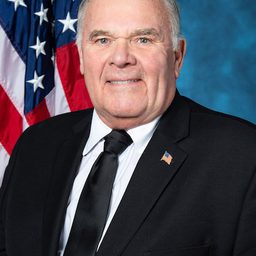 Rep. Baird, James R. (R-IN) [#4]
Money behind the sponsor
Top reported contributors to James R. Baird’s campaign committee (2024 cycle) — who funds the bill’s sponsor, not a claim about this bill. Data from FEC.
- NICOSON FARMING INC $6,600
- RELENTLESS DEALER SERVICES $3,300
- GAYLOR ELECTRIC, INC. $3,300
- SHEIN TECHNOLOGY $2,500
- ENTREPRENEUR $2,500
Organizations whose employees gave the most — itemized individual contributions grouped by the donor’s reported employer (FEC Schedule A). Full finance for James R. Baird → · Outside spending →
Actions (2)
- Oct 13, 2026 Referred to the House Committee on Foreign Affairs. · house
- Oct 13, 2026 Introduced in House
Text versions (1)
Bills are re-published as they move (Introduced → Reported → Engrossed → Enrolled …). Each stage below is a separate text; pick two to see what changed. Data from Congress.gov.
Full text
IN THE HOUSE OF REPRESENTATIVES
October 13, 2026
Mr. Baird introduced the following bill; which was referred to the Committee on Foreign Affairs
A BILL
To authorize the establishment of a United States-Sudan Agriculture and Minerals partnership, and for other purposes.
Be it enacted by the Senate and House of Representatives of the United States of America in Congress assembled,
SECTION 1. SHORT TITLE.
This Act may be cited as the “Sudan Investing in Minerals, Partnership, Agriculture, Commerce, and Trade Act” or the “Sudan IMPACT Act”.
SEC. 2. STATEMENT OF POLICY.
To the extent that a legitimate, civilian-led governing authority in Sudan demonstrates that it has substantially reduced violence against its own civilians, it shall be the policy of the United States to partner with Sudan by providing agricultural exports and equipment, as well as safer, faster, and more efficient mining technologies, in exchange for access to Sudanese critical minerals.
SEC. 3. U.S.-SUDAN AGRICULTURE AND MINERALS PARTNERSHIP.
(a) Establishment.—The Secretary of State shall seek to enter into a partnership between the United States and Sudan to expand economic engagement between the two countries. Such partnership shall be known as the “United States-Sudan Agriculture and Minerals Partnership”.
(b) Initial Improvements Threshold.—The Partnership established pursuant to subsection (a) may not be established until the Secretary of State determines that a legitimate, civilian-led governing authority in Sudan has taken sufficient steps to demonstrate measurable improvement with respect to—
(1) civilian protection;
(2) political stability; and
(3) responsible governance of the resources with respect to which activities under the partnership may be carried out.
(c) Authorities Under Partnership.—Upon making an affirmative determination under subsection (b), the Secretary of State shall, pursuant to all appropriate authorities including authorities delegated to the Secretary under the Foreign Assistance Act of 1961 (22 U.S.C. 2151 et seq.), establish a program under the Partnership through which, subject to the agreement of appropriate counterparts of a civilian-led Government of Sudan, the United States will make available to Sudan covered agricultural and mining equipment and assistance, in exchange for covered minerals mined or produced by Sudan.
(d) Definitions.—In this Act:
(1) The term “covered agricultural and mining equipment and assistance” includes farm equipment, precision agriculture and irrigation technology, agricultural processing equipment, mining equipment, geological surveying technology and assistance, mine safety technology, environmental remediation technology, and supply-chain expertise.
(2) The term “covered minerals” includes gold, uranium, crude oil, chromium, iron, copper, manganese, zinc, silver, nickel, and gum arabic. <all>
Comments