
HR 10771 Re-checks Congress.gov for new actions and updates the bill's status, and fills in any sponsors, committees, or related bills that are missing. It does not re-pull sponsors/cosponsors/committees/related — those rarely change — and it skips all work if nothing has changed upstream, so it's cheap to click.
Emergency Preparedness in Higher Education Act
To establish an emergency preparedness grant program for higher education institutions, and for other purposes.
Summary
- Directs the FEMA Administrator to establish, within 180 days of enactment, a grant program for higher education institutions to create or expand emergency management and preparedness programs.
- Sets each grant at not less than $250,000 and not more than $5,000,000, with applications evaluated against institutions of the same type.
- Permits grant funds to pay for emergency preparedness personnel, updated emergency management plans, emergency operations centers or shelter-in-place areas, and equipment and technology for interagency coordination.
- Requires applicants to describe their need, planned use of funds, and how they will support students, administrators, and faculty, including students displaced by disasters.
- Requires the FEMA Administrator to report to Congress within 3 years of enactment on the experience with and effectiveness of the grants.
- Authorizes $100,000,000 for each of fiscal years 2027 through 2031 to carry out the program.
AI-generated plain-language summary of the bill text — neutral, and may be imperfect. See the full text below for the exact wording.
Sponsor (1)
-
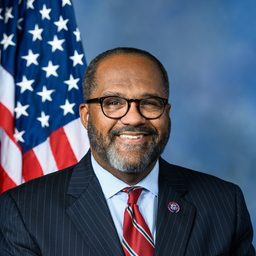 Rep. Carter, Troy A. (D-LA) [#2]
1 cosponsor
-
 Rep. Moskowitz, Jared (D-FL) [#23]
Money behind the sponsor
Top reported contributors to Troy A. Carter’s campaign committee (2024 cycle) — who funds the bill’s sponsor, not a claim about this bill. Data from FEC.
- Employer not reported $30,950
- OCHSNER HEALTH $19,350
- RIVER BIRCH, LLC $13,200
- AKD LAW $10,800
- CENTRAL MANAGEMENT $10,000
Organizations whose employees gave the most — itemized individual contributions grouped by the donor’s reported employer (FEC Schedule A). Full finance for Troy A. Carter → · Outside spending →
Actions (2)
- Oct 9, 2026 Referred to the House Committee on Transportation and Infrastructure. · house
- Oct 9, 2026 Introduced in House
Full text
IN THE HOUSE OF REPRESENTATIVES
October 9, 2026
Mr. Carter of Louisiana (for himself and Mr. Moskowitz) introduced the following bill; which was referred to the Committee on Transportation and Infrastructure
A BILL
To establish an emergency preparedness grant program for higher education institutions, and for other purposes.
Be it enacted by the Senate and House of Representatives of the United States of America in Congress assembled,
SECTION 1. SHORT TITLE.
This Act may be cited as the “Emergency Preparedness in Higher Education Act”.
SEC. 2. HIGHER EDUCATION INSTITUTION EMERGENCY PREPAREDNESS GRANT PROGRAM.
(a) In General.—Not later than 180 days after the date of enactment of this Act, the Administrator of FEMA shall establish a grant program to create or expand programs at higher education institutions that foster, promote, and increase programs, initiatives, and opportunities for higher education institutions and emergency management and preparedness among higher education institutions.
(b) Applications.—A higher education institution seeking a grant under this section shall submit to the Administrator an application that contains a description of—
(1) the need for and proposed use of grant funds to promote emergency management and preparedness among students, administrators, and faculty at such higher education institution;
(2) how the programs, initiatives, or opportunities created or expanded with the grant funds will provide support to students, administrators, and faculty at such higher education institution who seek support for established emergency management concerns or challenges; and
(3) how the higher education institution will create or expand programs, initiatives, or opportunities that—
(A) increase higher education institutions recovery efforts to disasters or emergencies;
(B) expand access to construction, replacement, renovation, and operations costs resulting from the disaster or emergency;
(C) assist enrolled students displaced from disasters and emergencies which operations were disrupted by a disaster or emergency; and
(D) assist for activities replacing instructional materials and equipment, paying educator and staff incentives, modernizing, renovating, or repairing school buildings.
(c) Selection.—In making grants under this section, the Administrator shall evaluate applications from among the same type of higher education institution.
(d) Amount of Grant.—A grant awarded under this section shall be not less than $250,000 and not greater than $5,000,000.
(e) Use of Grant Funds.—A higher education institution that receives a grant under the Program shall use grant amounts to support the creation or expansion of program initiatives, or opportunities that offer emergency preparedness resources that support students enrolled at the higher education institution, such as—
(1) personnel costs associated with expanding emergency preparedness, including the responsibilities of emergency planning and operations, coordination with local and institutional law enforcement and threat assessment teams, or equivalent organizations;
(2) creating or updating institutional comprehensive emergency management plans, all-hazards emergency plans, or similar planning documents;
(3) infrastructure and facilities construction or improvements for institutional emergency operations centers or areas of refuge for sheltering-in-place; and
(4) equipment and technology to increase interagency coordination for improved situational awareness, resource requests, and integration with institutional information systems.
(f) Report to Congress.—Not later than 3 years after the date of the enactment of this Act, the Administrator of FEMA shall submit to Congress a report on the experience with, and effectiveness of, grants awarded under this section in meeting the objectives of this section.
(g) Authorization of Appropriations.—There is authorized to be appropriated to the Administrator of FEMA $100,000,000 for each of fiscal years 2027 through 2031 to carry out this section.
(h) Definitions.—In this section:
(1) FEMA.—The term “FEMA” means the Federal Emergency Management Agency.
(2) Higher education institution.—The term “higher education institution” means any of the following types of institutions:
(A) A historically Black college or university.
(B) A Hispanic-serving institution, as that term is defined in section 502(a) of the Higher Education Act of 1965 (20 U.S.C. 1101a(a)).
(C) A Tribal College or University, as that term is defined in section 316(b) of the Higher Education Act of 1965 (20 U.S.C. 1059c(b)).
(D) An Alaska Native-serving institution, as that term is defined in section 317(b) of the Higher Education Act of 1965 (20 U.S.C. 1059d(b)).
(E) A Native Hawaiian-serving institution, as that term is defined in section 317(b) of the Higher Education Act of 1965 (20 U.S.C. 1059d(b)).
(F) A Predominantly Black Institution, as that term is defined in section 318(b) of the Higher Education Act of 1965 (20 U.S.C. 1059e(b)).
(G) A Native American-serving, nontribal institution, as that term is defined in section 319(b) of the Higher Education Act of 1965 (20 U.S.C. 1059f(b)).
(H) An Asian-American and Native American Pacific Islander-serving institution, as that term is defined in section 320(b) of the Higher Education Act of 1965 (20 U.S.C. 1059g(b)).
(I) An institution of higher education, as such term is defined in section 101(a) of the Higher Education Act of 1965 (20 U.S.C. 1001(a)).
(J) A vocational-technical college or university.
(K) A career college or university. <all>
Comments