
HR 10752 Re-checks Congress.gov for new actions and updates the bill's status, and fills in any sponsors, committees, or related bills that are missing. It does not re-pull sponsors/cosponsors/committees/related — those rarely change — and it skips all work if nothing has changed upstream, so it's cheap to click.
CISA Securing AI Task Force Act
To establish in the Cybersecurity and Infrastructure Security Agency of the Department of Homeland Security a task force on artificial intelligence, and for other purposes.
Summary
- Requires CISA to establish, within 1 year of enactment, an internal task force that coordinates the agency's work on the safety and security of artificial intelligence.
- Directs the task force to coordinate CISA's input into interagency and other AI working groups, and to review existing CISA guidance and programs for AI-specific risks and recommend updates.
- Directs the task force to identify AI workforce gaps at CISA, promote secure AI-based software, and recommend new initiatives to the CISA Director.
- Requires the task force to check that CISA's AI efforts meet privacy, civil rights, and civil liberties standards, and to support the accuracy of CISA's AI use inventory.
- Requires the task force to brief the House Homeland Security Committee and the Senate Homeland Security and Governmental Affairs Committee every six months.
- Sunsets the Act 5 years after enactment.
AI-generated plain-language summary of the bill text — neutral, and may be imperfect. See the full text below for the exact wording.
Sponsor (1)
-
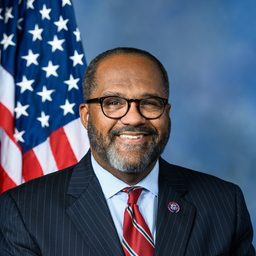 Rep. Carter, Troy A. (D-LA) [#2]
1 cosponsor
-
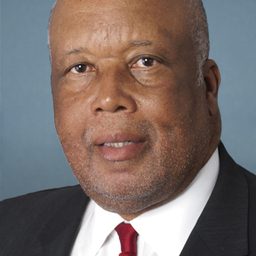 Rep. Thompson, Bennie G. (D-MS) [#2]
Money behind the sponsor
Top reported contributors to Troy A. Carter’s campaign committee (2024 cycle) — who funds the bill’s sponsor, not a claim about this bill. Data from FEC.
- Employer not reported $30,950
- OCHSNER HEALTH $19,350
- RIVER BIRCH, LLC $13,200
- AKD LAW $10,800
- CENTRAL MANAGEMENT $10,000
Organizations whose employees gave the most — itemized individual contributions grouped by the donor’s reported employer (FEC Schedule A). Full finance for Troy A. Carter → · Outside spending →
Actions (2)
- Oct 6, 2026 Referred to the House Committee on Homeland Security. · house
- Oct 6, 2026 Introduced in House
Full text
IN THE HOUSE OF REPRESENTATIVES
October 6, 2026
Mr. Carter of Louisiana (for himself and Mr. Thompson of Mississippi) introduced the following bill; which was referred to the Committee on Homeland Security
A BILL
To establish in the Cybersecurity and Infrastructure Security Agency of the Department of Homeland Security a task force on artificial intelligence, and for other purposes.
Be it enacted by the Senate and House of Representatives of the United States of America in Congress assembled,
SECTION 1. SHORT TITLE.
This Act may be cited as the “CISA Securing AI Task Force Act”.
SEC. 2. TASK FORCE ON SECURING ARTIFICIAL INTELLIGENCE.
(a) In General.—Not later than 1 year after the date of enactment of this Act, the Director of the Cybersecurity and Infrastructure Security Agency of the Department of Homeland Security shall establish within the Agency a Task Force comprised of personnel from across its offices and divisions to coordinate future Agency activities related to the safety and security of artificial intelligence, and the Agency’s contributions to Department-wide initiatives related to the safety and security of artificial intelligence. Such Task Force shall—
(1) ensure coordination, cohesion, and alignment of Agency efforts to improve the safe and secure design, development, adoption, and deployment of artificial intelligence;
(2) ensure coordination, cohesion, and alignment of Agency input into Department-led, interagency, and nongovernment working groups or collaborations related to artificial intelligence;
(3) assess and evaluate relevant Agency safety and security initiatives, guidance, and programs to ensure the unique safety and security challenges related to artificial intelligence are contemplated and addressed and recommend updates to such initiatives, guidance, and programs, as appropriate;
(4) ensure the full expertise from across the Agency is leveraged to identify how artificial intelligence can be used to defend against traditional and emerging cyber threats;
(5) ensure coordination of Agency efforts to advise stakeholders of potential cyber risks associated with the deployment of artificial intelligence-based software;
(6) identify artificial intelligence workforce gaps at the Agency and ways to address them;
(7) coordinate the Agency’s efforts to promote the adoption of secure artificial intelligence-based software;
(8) recommend to the Director new Agency initiatives to improve the safe and secure design, development, adoption, and deployment of artificial intelligence;
(9) ensure the Agency’s efforts related to artificial intelligence meet appropriate privacy, civil rights, and civil liberties standards; and
(10) support the publication of the Agency’s artificial intelligence use inventory, including developing processes to ensure the accuracy of artificial intelligence inventory submissions and the reliability of data used in artificial intelligence systems used by the Agency.
(b) Biannual Briefings.—Not later than 6 months after the date of the establishment of the Task Force under subsection (a), and every 6 months thereafter until such time as this Act ceases to be in effect in accordance with subsection (c), the Task Force shall report to the Committee on Homeland Security of the House of Representatives and the Committee on Homeland Security and Governmental Affairs of the Senate on the activities of such Task Force during the preceding 6-month period.
(c) Sunset.—This Act shall cease to be in effect on the date that is 5 years after the date of the enactment of this Act. <all>
Comments