
HR 10722 Re-checks Congress.gov for new actions and updates the bill's status, and fills in any sponsors, committees, or related bills that are missing. It does not re-pull sponsors/cosponsors/committees/related — those rarely change — and it skips all work if nothing has changed upstream, so it's cheap to click.
9–8–8 Crisis Response Workforce Act
To amend the Public Health Service Act to expand behavioral health workforce training programs, and for other purposes.
Summary
- Requires the Secretary of Health and Human Services to collect and publish in the Federal Register data comparing crisis response services and crisis-serving professionals in health professional shortage areas with those in the surrounding areas.
- Broadens the Minority Fellowship Pilot Program to cover postbaccalaureate training in crisis management services, such as crisis call centers, mobile crisis teams, and crisis receiving and stabilization facilities.
- Authorizes $25 million per year for fiscal years 2023 through 2027 for the Minority Fellowship program, and $10 million per year for fiscal years 2027 through 2031 for crisis-service fellowships.
- Adds crisis management services to the behavioral health workforce education and training grant programs under section 756 of the Public Health Service Act, including remote practicum programs and training for crisis line call, text, and chat responders.
- Authorizes $50 million per year for fiscal years 2026 through 2030 for those training grants, plus an additional $10 million per year for fiscal years 2027 through 2031 for crisis workforce development.
AI-generated plain-language summary of the bill text — neutral, and may be imperfect. See the full text below for the exact wording.
Sponsor (1)
-
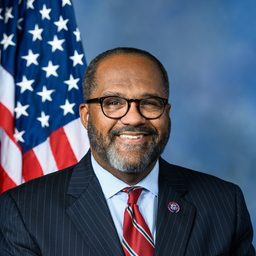 Rep. Carter, Troy A. (D-LA) [#2]
7 cosponsors
-
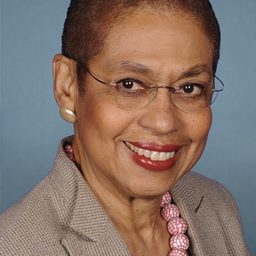 Del. Norton, Eleanor Holmes (D-DC) [At-large]
-
 Rep. Barragán, Nanette Diaz (D-CA) [#44]
-
 Rep. Matsui, Doris O. (D-CA) [#7]
-
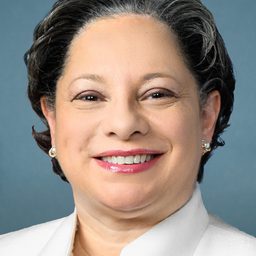 Rep. McClellan, Jennifer L. (D-VA) [#4]
-
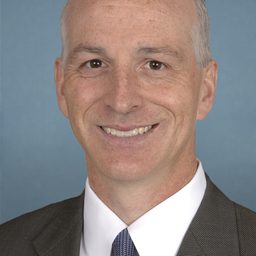 Rep. Smith, Adam (D-WA) [#9]
-
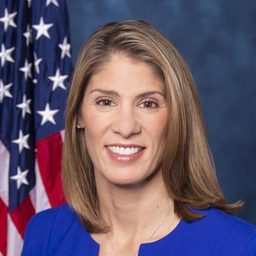 Rep. Trahan, Lori (D-MA) [#3]
-
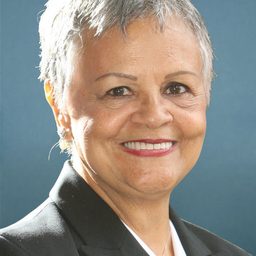 Rep. Watson Coleman, Bonnie (D-NJ) [#12]
Money behind the sponsor
Top reported contributors to Troy A. Carter’s campaign committee (2024 cycle) — who funds the bill’s sponsor, not a claim about this bill. Data from FEC.
- Employer not reported $30,950
- OCHSNER HEALTH $19,350
- RIVER BIRCH, LLC $13,200
- AKD LAW $10,800
- CENTRAL MANAGEMENT $10,000
Organizations whose employees gave the most — itemized individual contributions grouped by the donor’s reported employer (FEC Schedule A). Full finance for Troy A. Carter → · Outside spending →
Actions (2)
- Oct 5, 2026 Referred to the House Committee on Energy and Commerce. · house
- Oct 5, 2026 Introduced in House
Full text
IN THE HOUSE OF REPRESENTATIVES
October 5, 2026
Mr. Carter of Louisiana (for himself, Ms. Matsui, Mrs. Trahan, Mr. Smith of Washington, Ms. McClellan, Ms. Barragan, Mrs. Watson Coleman, and Ms. Norton) introduced the following bill; which was referred to the Committee on Energy and Commerce
A BILL
To amend the Public Health Service Act to expand behavioral health workforce training programs, and for other purposes.
Be it enacted by the Senate and House of Representatives of the United States of America in Congress assembled,
SECTION 1. SHORT TITLE.
This Act may be cited as the “9-8-8 Crisis Response Workforce Act”.
SEC. 2. EXPANDING BEHAVIORAL HEALTH WORKFORCE TRAINING PROGRAMS.
(a) National Health Service Corps.—Section 332 of the Public Health Service Act (42 U.S.C. 254e) is amended by adding at the end the following:
“(l) The Secretary shall collect and publish in the Federal Register data comparing the availability and need of crisis response services in health professional shortage areas and in areas within such health professional shortage areas, including—
“(1) the number of crisis call centers, mobile crisis response units, and crisis receiving and stabilization facilities in such areas; and
“(2) the number of behavioral and mental health professionals providing crisis management services or working in crisis response settings, including the settings described in paragraph (1).”.
(b) Minority Fellowship Pilot Program for Crisis Management Services.—Section 597 of the Public Health Service Act (42 U.S.C. 290ll) is amended—
(1) by amending subsection (b) to read as follows:
“(b) Training Covered.—The fellowships awarded under subsection
(a) shall be for postbaccalaureate training (including for master’s and doctoral degrees) for mental and substance use disorder treatment professionals, including—
“(1) in the fields of psychiatry, addiction medicine, nursing, social work, psychology, marriage and family therapy, mental health counseling, and substance use disorder and addiction counseling; and
“(2) in crisis management services (such as at a crisis call center, as part of a mobile crisis team, or at a crisis receiving and stabilization facility).”; and
(2) by amending subsection (c) to read as follows:
“(c) Authorization of Appropriations.—There are authorized to be appropriated—
“(1) for carrying out this section (except with respect to subsection (b)(2)), $25,000,000 for each of fiscal years 2023 through 2027; and
“(2) for awarding fellowships described in subsection
(b)(2), $10,000,000 for each of fiscal years 2027 through 2031.”.
(c) Behavioral Health Workforce Education and Training.—Section 756 of the Public Health Service Act (42 U.S.C. 294e-1) is amended—
(1) in subsection (a)—
(A) in paragraph (1)—
(i) by inserting “or remote programs that offer practicum hours” after “other field placement programs”;
(ii) by inserting “(which may include training or a field practicum employing call, text, or chat responders for mental health crisis lines)” after “social work”; and
(iii) by inserting “crisis management (such as at a crisis call center, as part of a mobile crisis team, or through a crisis receiving and stabilization program),” after “occupational therapy (which may include master’s and doctoral level programs),”;
(B) in paragraph (2), by inserting “and providing crisis management services (such as at a crisis call center, as part of a mobile crisis team, or through a crisis receiving and stabilization program)” after “treatment services,”;
(C) in paragraph (3), by inserting “and providing crisis management services (such as at a crisis call center, as part of a mobile crisis team, or through a crisis receiving and stabilization program)” after “behavioral health services”; and
(D) in paragraph (4), by inserting “, including for the provision of crisis management services (such as at a crisis call center, as part of a mobile crisis team, or through a crisis receiving and stabilization program),” after “paraprofessional field”; and
(2) by amending subsection (f) to read as follows:
“(f) Authorization of Appropriations.—
“(1) In general.—For each of fiscal years 2026 through 2030, there are authorized to be appropriated to carry out this section $50,000,000, to be allocated as follows:
“(A) For grants described in subsection (a)(1), $15,000,000.
“(B) For grants described in subsection (a)(2), $15,000,000.
“(C) For grants described in subsection (a)(3), $10,000,000.
“(D) For grants described in subsection (a)(4), $10,000,000.
“(2) Additional authorization for crisis workforce development.—For each of fiscal years 2027 through 2031, in addition to the amounts under paragraph (1), there are authorized to be appropriated to carry out this section with respect to crisis workforce development $10,000,000.”. <all>
Comments