
HR 10632 Re-checks Congress.gov for new actions and updates the bill's status, and fills in any sponsors, committees, or related bills that are missing. It does not re-pull sponsors/cosponsors/committees/related — those rarely change — and it skips all work if nothing has changed upstream, so it's cheap to click.
Medicaid Whistleblower Protection Act
To amend title XIX of the Social Security Act to require certain protections for whistleblowers under the Medicaid program.
Summary
- Requires states that participate in Medicaid to have, beginning January 1, 2028, laws that prohibit adverse employment actions against workers who make protected disclosures about the program.
- Requires those state laws to provide an administrative process for workers to seek relief, with judicial review if they disagree with the outcome.
- Lists available remedies: reinstatement with prior seniority, two times back pay with interest, compensation for special damages and attorneys' fees, and punitive damages where the action was taken with malice or reckless indifference.
- Defines covered individuals as state or political subdivision employees, contractors, subcontractors, or agents who administer or deliver Medicaid services.
- Defines protected disclosures as good-faith reports to supervisors, state or federal law enforcement, HHS, its Inspector General, or Congress about legal violations, fraud, waste, abuse, gross mismanagement, abuse of authority, or substantial danger to public health or safety.
AI-generated plain-language summary of the bill text — neutral, and may be imperfect. See the full text below for the exact wording.
Sponsor (1)
-
 Rep. Miller-Meeks, Mariannette (R-IA) [#1]
2 cosponsors
-
 Rep. Cammack, Kat (R-FL) [#3]
-
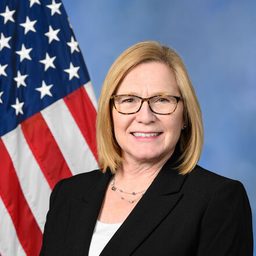 Rep. Fischbach, Michelle (R-MN) [#7]
Money behind the sponsor
Top reported contributors to Mariannette Miller-Meeks’s campaign committee (2024 cycle) — who funds the bill’s sponsor, not a claim about this bill. Data from FEC.
- NYCBS $26,878
- Employer not reported $21,077
- RDV CORPORATION $16,500
- ESTES COMPANY $16,000
- DAVITA $15,500
Organizations whose employees gave the most — itemized individual contributions grouped by the donor’s reported employer (FEC Schedule A). Full finance for Mariannette Miller-Meeks → · Outside spending →
Actions (2)
- Sep 28, 2026 Referred to the House Committee on Energy and Commerce. · house
- Sep 28, 2026 Introduced in House
Full text
IN THE HOUSE OF REPRESENTATIVES
September 28, 2026
Mrs. Miller-Meeks (for herself, Mrs. Cammack, and Mrs. Fischbach) introduced the following bill; which was referred to the Committee on Energy and Commerce
A BILL
To amend title XIX of the Social Security Act to require certain protections for whistleblowers under the Medicaid program.
Be it enacted by the Senate and House of Representatives of the United States of America in Congress assembled,
SECTION 1. SHORT TITLE.
This Act may be cited as the “Medicaid Whistleblower Protection Act”.
SEC. 2. REQUIRING PROTECTIONS FOR WHISTLEBLOWERS UNDER MEDICAID.
Section 1902 of the Social Security Act (42 U.S.C. 1396a) is amended—
(1) in subsection (a)—
(A) in paragraph (89), by striking “and” at the end;
(B) in paragraph (90), by striking the period at the end and inserting “; and”; and
(C) by inserting after paragraph (90) the following new paragraph:
“(91) provide that, beginning January 1, 2028, the State shall comply with the whistleblower protection requirements under subsection (zz).”; and
(2) by adding at the end the following new subsection: “(zz) Whistleblower Protection Requirements.—
“(1) In general.—For purposes of subsection (a)(91), the whistleblower protection requirements under this subsection are that the State shall provide assurances satisfactory to the Secretary that such State has in effect laws that—
“(A) prohibit adverse employment actions that are taken against a covered individual because such individual made a protected disclosure; and
“(B) establish procedures under which an individual who alleges that such an action was taken against such individual may seek relief, which shall include any applicable remedies described in paragraph
(2), through an administrative process and, in the case that such individual disagrees with the outcome of such administrative process, through judicial review.
“(2) Remedies described.—For purposes of paragraph (1), the remedies described in this paragraph are the following:
“(A) Reinstatement of employment at the seniority status that the covered individual would have if the adverse employment action described in paragraph (1)(A) that was taken with respect to such individual had not occurred.
“(B) 2 times back pay, including interest at a rate to be determined by the Secretary.
“(C) Compensation for special damages sustained as a result of such adverse employment action, including litigation costs and reasonable attorneys’ fees.
“(D) In the case that such adverse employment action was taken with malice or reckless indifference to the rights of such covered individual under this subsection, punitive damages.
“(3) Definitions.—In this subsection—
“(A) Adverse employment action.—The term ‘adverse employment action’ means, with respect to the terms and conditions of employment of an individual, a discharge, demotion, suspension, threat, incidence of harassment, or other act of discrimination directed at such individual.
“(B) Covered entity.—The term ‘covered entity’ means—
“(i) a supervisor;
“(ii) a State Medicaid agency;
“(iii) a State or Federal law enforcement agency;
“(iv) the Department of Health and Human Services;
“(v) the Office of the Inspector General of the Department of Health and Human Services;
“(vi) Congress; or
“(vii) any other entity designated by the Secretary.
“(C) Covered individual.—The term ‘covered individual’ means an individual who is engaged in the administration, management, oversight, or delivery of items or services under a State plan (or waiver of such plan) and is an employee, contractor, subcontractor, or agent of such State or a political subdivision of such State.
“(D) Protected disclosure.—The term ‘protected disclosure’ means a disclosure of information by a covered individual to a covered entity that such individual reasonably believes evidences, with respect to a State Medicaid program—
“(i) a violation of an applicable law, rule, or regulation;
“(ii) fraud, waste, or abuse involving Federal or State funds;
“(iii) gross mismanagement;
“(iv) an abuse of authority; or
“(v) a substantial and specific danger to public health or safety.”. <all>
Comments