
HR 10566 Re-checks Congress.gov for new actions and updates the bill's status, and fills in any sponsors, committees, or related bills that are missing. It does not re-pull sponsors/cosponsors/committees/related — those rarely change — and it skips all work if nothing has changed upstream, so it's cheap to click.
Sunlight on SuperPACs Act of 2026
To amend the Federal Election Campaign Act of 1971 to provide for additional disclosure requirements for certain communications, and for other purposes.
Summary
- Amends the Federal Election Campaign Act of 1971 by adding a subsection to section 318 that requires certain SuperPAC-funded communications that expressly advocate for or against a clearly identified candidate, or qualify as electioneering communications, to include a "Top Three Funders" disclosure.
- Defines a covered independent expenditure committee as a political committee that makes independent expenditures totaling $10,000 or more in a calendar year, or makes contributions totaling $10,000 or more to other independent expenditure committees in a calendar year.
- Requires the Top Three Funders list to name the three persons who made the largest payments of $5,000 or more to the person paying for the communication during the prior 12 months, and, where one of those persons is a political committee, the two largest payers to that committee.
- Provides that the payer selects one person when two or more persons tie for the third-largest payment (or the second-largest, for committee payers) and both would otherwise be listed.
- Applies the disclosure requirements to communications made on or after January 1, 2027.
AI-generated plain-language summary of the bill text — neutral, and may be imperfect. See the full text below for the exact wording.
Sponsor (1)
-
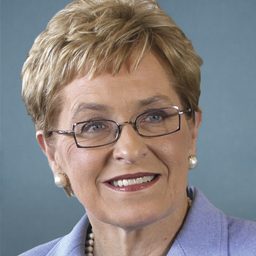 Rep. Kaptur, Marcy (D-OH) [#9]
7 cosponsors
-
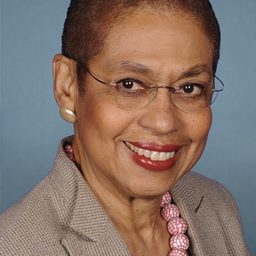 Del. Norton, Eleanor Holmes (D-DC) [At-large]
-
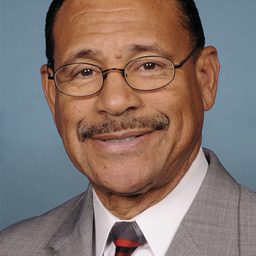 Rep. Bishop, Sanford D. (D-GA) [#2]
-
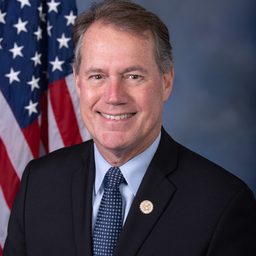 Rep. Case, Ed (D-HI) [#1]
-
 Rep. Grijalva, Adelita S. (D-AZ) [#7]
-
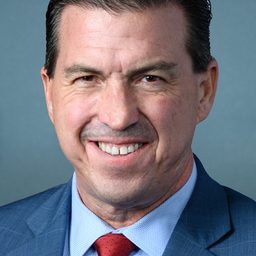 Rep. Mullin, Kevin (D-CA) [#15]
-
 Rep. Neguse, Joe (D-CO) [#2]
-
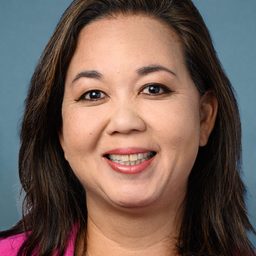 Rep. Tokuda, Jill N. (D-HI) [#2]
Actions (2)
- Sep 24, 2026 Referred to the House Committee on House Administration. · house
- Sep 24, 2026 Introduced in House
Full text
IN THE HOUSE OF REPRESENTATIVES
September 24, 2026
Ms. Kaptur (for herself, Mr. Mullin, Ms. Norton, Mr. Bishop, Ms. Tokuda, Mr. Case, and Mrs. Grijalva) introduced the following bill; which was referred to the Committee on House Administration
A BILL
To amend the Federal Election Campaign Act of 1971 to provide for additional disclosure requirements for certain communications, and for other purposes.
Be it enacted by the Senate and House of Representatives of the United States of America in Congress assembled,
SECTION 1. SHORT TITLE.
This Act may be cited as the “Sunlight on SuperPACs Act of 2026”.
SEC. 2. PURPOSE.
The purpose of this Act is to empower voters to make informed decisions by arming them with actionable information about the top funders of campaign advertisements by SuperPACs.
SEC. 3. FINDINGS.
Congress finds the following:
(1) SuperPACs are a type of political committee that arose following the July 2010 Federal court decision in a case known as SpeechNow.org v. Federal Election Commission, which was decided soon after the U.S. Supreme Court’s decision in January 2010 in a case known as Citizens United v. Federal Election Commission.
(2) Technically known as independent expenditure committees, SuperPACs have been permitted by these court decisions to raise unlimited sums of money from corporations, unions, associations and individuals, then spend unlimited sums to overtly advocate for or against political candidates. Unlike traditional PACs, SuperPACs are prohibited from donating money directly to political candidates, and their spending must not be coordinated with that of the candidates they benefit.
(3) According to OpenSecrets, as of March 2025, 2,502 entities organized as SuperPACs reported total expenditures of $2,688,997,939 in the 2023-2024 Federal election cycle.
(4) Loopholes in existing SuperPAC disclosure laws have enabled SuperPACs to spend millions of dollars funding deceptive campaign advertisements without having to reveal to voters who is paying for the advertisements until after the election is over.
(5) In order for voters to make an informed choice in the political marketplace, campaign advertisements by SuperPACs should not be allowed to deceive voters about the identity of who or what interest is trying to persuade them how to vote.
(6) Disclosing who or what interest paid for a SuperPAC campaign advertisement will help voters be able to better evaluate the arguments to which they are being subjected during political campaigns and therefore make more informed voting decisions.
(7) Over the last five years, voters in three States— voters statewide in Alaska and Arizona and local voters in San Francisco, California—approved ballot initiatives that enacted stronger campaign ad disclosure laws in order to empower and inform voters.
(8) In 2024, Federal courts, including the U.S. Supreme Court, rejected legal challenges to these State and local campaign ad disclosure laws and allowed them to stand.
(9) Congress should build upon the successful innovations of State initiatives and take action to strengthen Federal law to empower and inform voters about SuperPACs.
SEC. 4. DISCLOSURE REQUIREMENTS WITH RESPECT TO CERTAIN COMMUNICATIONS.
(a) In General.—Section 318 of the Federal Election Campaign Act of 1971 (52 U.S.C. 30120) is amended by adding at the end the following new subsection:
“(e) Expanded Disclaimer Requirements for Certain Communications Not Authorized by Candidates or Committees.—
“(1) In general.—Each covered communication shall include, in addition to any other requirements applicable under this section, the Top Three Funders list (if applicable).
“(2) Covered communication defined.—The term ‘covered communication’ means a communication described in paragraph (3) of subsection (a) that expressly advocates the election or defeat of a clearly identified candidate or that qualifies as an electioneering communication under section 304(f)(3) that is paid for in whole or in part by a covered independent expenditure committee.
“(3) Covered independent expenditure committee defined.— The term ‘covered independent expenditure committee’ means a political committee which—
“(A) makes independent expenditures aggregating $10,000 or more during a calendar year; or
“(B) makes contributions to other independent expenditure committees aggregating $10,000 more during a calendar year.
“(4) Top three funders list defined.—
“(A) In general.—The term ‘Top Three Funders list’ means, with respect to a covered communication—
“(i) a list of the 3 persons who, during the 12-month period ending on the date of the disbursement for such communication, provided the largest payments of any type in an aggregate amount equal to or exceeding $5,000 to the person who is paying for the communication and the name of and amount of the payments each such person provided; and
“(ii) in the case a person included under clause (i) is a political committee, a list of the 2 persons who, during the 12-month period ending on the date of the disbursement for such communication, provided the largest payments of any type in an aggregate amount equal to or exceeding $5,000 to such political committee and the name of and amount of the payments each such person provided.
“(B) Special rule.—If 2 or more persons provided the third largest of any such payments described in clause (i) or if 2 or more persons provided the second largest of such payments under clause (ii), the person paying for the communication shall select 1 of those persons to be included on the Top Three Funders list.”.
(b) Effective Date.—The amendments made by this Act shall apply with respect to communications made on or after January 1, 2027. <all>
Comments