
HR 10323 Re-checks Congress.gov for new actions and updates the bill's status, and fills in any sponsors, committees, or related bills that are missing. It does not re-pull sponsors/cosponsors/committees/related — those rarely change — and it skips all work if nothing has changed upstream, so it's cheap to click.
To amend the Fair Labor Standards Act of 1938 to reduce the standard workweek from 40 hours per week to 32 hours per week, and for other purposes.
Summary
- Amends the Fair Labor Standards Act so that overtime pay at one and one-half times the regular rate applies to hours worked beyond 32 in a workweek, instead of beyond 40.
- Phases in the 32-hour overtime threshold, with the threshold set at 38 hours in the first year (beginning 180 days after enactment), 36 hours in the second year, 34 hours in the third year, and 32 hours after that.
- Adds daily overtime rules: one and one-half times the regular rate for hours over 8 in a workday (up to 12 hours), and double the regular rate for hours over 12 in a workday.
- Prohibits employers from reducing total workweek compensation, the regular rate, or other employee benefits because an employee becomes covered by the new overtime threshold.
- Makes conforming changes, including replacing a 40-hour reference in section 7(l) with 32 hours and adding "or workday" alongside "workweek" in section 18(a).
AI-generated plain-language summary of the bill text — neutral, and may be imperfect. See the full text below for the exact wording.
Sponsor (1)
-
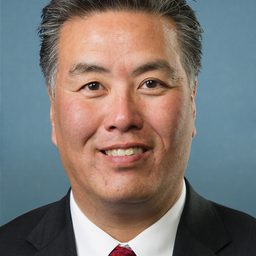 Rep. Takano, Mark (D-CA) [#39]
6 cosponsors
-
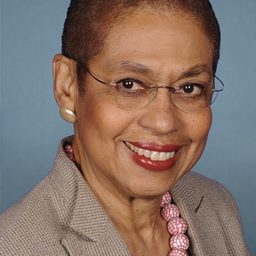 Del. Norton, Eleanor Holmes (D-DC) [At-large]
-
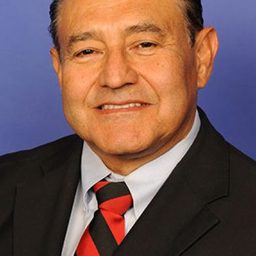 Rep. Correa, J. Luis (D-CA) [#46]
-
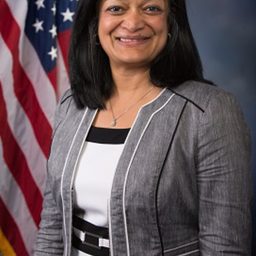 Rep. Jayapal, Pramila (D-WA) [#7]
-
 Rep. Omar, Ilhan (D-MN) [#5]
-
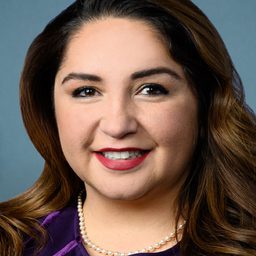 Rep. Ramirez, Delia C. (D-IL) [#3]
-
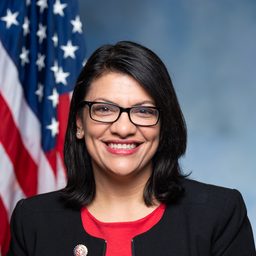 Rep. Tlaib, Rashida (D-MI) [#12]
Money behind the sponsor
Top reported contributors to Mark Takano’s campaign committee (2024 cycle) — who funds the bill’s sponsor, not a claim about this bill. Data from FEC.
- Employer not reported $20,150
- PAFCO $13,200
- VETERANS UNITED HOME LOANS $11,600
- ESRI $7,910
- THOMAS SAFRAN & ASSOCIATES $7,600
Organizations whose employees gave the most — itemized individual contributions grouped by the donor’s reported employer (FEC Schedule A). Full finance for Mark Takano → · Outside spending →
Actions (2)
- Sep 8, 2026 Referred to the House Committee on Education and Workforce. · house
- Sep 8, 2026 Introduced in House
Full text
IN THE HOUSE OF REPRESENTATIVES
September 8, 2026
Mr. Takano (for himself, Ms. Jayapal, Ms. Norton, Ms. Tlaib, Ms. Omar, Mr. Correa, and Mrs. Ramirez) introduced the following bill; which was referred to the Committee on Education and Workforce
A BILL
To amend the Fair Labor Standards Act of 1938 to reduce the standard workweek from 40 hours per week to 32 hours per week, and for other purposes.
Be it enacted by the Senate and House of Representatives of the United States of America in Congress assembled,
SECTION 1. SHORT TITLE.
This Act may be cited as the “Thirty-Two Hour Workweek Act”.
SEC. 2. FAIR LABOR STANDARDS ACT.
The Fair Labor Standards Act of 1938 (29 U.S.C. 201 et seq.) is amended—
(1) in section 7 (29 U.S.C. 207)—
(A) in subsection (a)—
(i) in paragraph (1)—
(I) by striking “commerce, for a workweek longer than forty hours” and all that follows through the period and inserting “commerce—”; and
(II) by adding at the end the following:
“(A) for a workweek longer than thirty-two hours unless such employee receives compensation for his employment in excess of such hours at a rate not less than one and one-half times the regular rate at which he is employed; or
“(B) for a workday—
“(i) longer than eight hours, but not longer than 12 hours, unless such employee receives compensation for his employment in excess of eight hours at a rate not less than one and one-half times the regular rate at which he is employed; or
“(ii) longer than twelve hours unless such employee receives compensation for his employment in excess of such hours at a rate not less than double the regular rate at which he is employed.”;
(ii) in paragraph (2)—
(I) in the matter that precedes subparagraph (A), by striking “Fair Labor Standards Amendments of 1966” and inserting “Thirty-Two Hour Workweek Act”; and
(II) by striking subparagraphs (A) through (C) and inserting the following:
“(A) for a workweek longer than thirty-eight hours during the 1-year period beginning not less than 180 days after the date of the enactment of the Thirty-Two Hour Workweek Act,
“(B) for a workweek longer than thirty-six hours during the second year after the first day of such period,
“(C) for a workweek longer than thirty-four hours during the third year after the first day of such period, or
“(D) for a workweek longer than thirty-two hours after the expiration of the third year after the first day of such period,”; and
(iii) by adding at the end the following:
“(3) With respect to any employee described in paragraph (2) who in any workweek is brought within the purview of this subsection by the amendments made to this Act by the Thirty-Two Hour Workweek Act, the employer of such employee may not reduce the total workweek compensation rate, including the regular rate at which the employee is employed, or any other employee benefit due to the employee being brought within the purview of this subsection by such amendments.”; and
(B) in subsection (l)—
(i) by striking “No” and inserting “Except as provided in subsection (a)(2), no”; and
(ii) by striking “forty” and inserting “thirty-two”; and
(2) in section 18(a) (29 U.S.C. 218(a)) by inserting “or workday” after “workweek” in each place it occurs. <all>
Comments