
HR 10245 Re-checks Congress.gov for new actions and updates the bill's status, and fills in any sponsors, committees, or related bills that are missing. It does not re-pull sponsors/cosponsors/committees/related — those rarely change — and it skips all work if nothing has changed upstream, so it's cheap to click.
9–8–8 and 9–1–1 Integration Act
To direct the Secretary of Health and Human Services to convene a panel to issue recommendations relating to the training requirements and protocols for 9-1-1 dispatchers, and for other purposes.
Summary
- Directs the Secretary of Health and Human Services, in consultation with the Attorney General, to convene a panel that will issue recommendations on training requirements and protocols for 9-1-1 dispatchers.
- Sets the purpose of the recommendations as helping 9-1-1 dispatchers respond appropriately to people in a behavioral health crisis, based on the incident and the caller's needs.
- Specifies that panel members are appointed by the Secretary to staggered 5-year terms and include psychiatrists, emergency medical services personnel, law enforcement officers, 9-1-1 and 9-8-8 dispatchers, and representatives of underserved communities and Tribes, among others.
- Directs the panel to consider connecting callers to crisis care instead of law enforcement, integrating or transferring calls to the 9-8-8 system, and using standardized assessment tools to evaluate callers' level of need.
- Directs the panel to develop data collection and reporting standards on caller outcomes, law enforcement involvement, and disparities, with privacy protections, and to coordinate with the National 911 Program and the Substance Abuse and Mental Health Services Administration.
- Requires the panel to submit a report with its findings and recommendations to Congress when they are issued and each time they are updated, at least every 5 years, and exempts the panel from the federal advisory committee termination provision in 5 U.S.C. 1013(a)(2).
AI-generated plain-language summary of the bill text — neutral, and may be imperfect. See the full text below for the exact wording.
Sponsor (1)
-
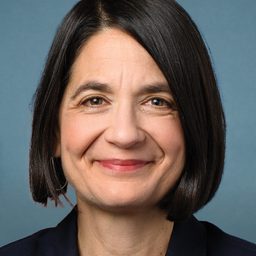 Rep. Balint, Becca (D-VT)
6 cosponsors
-
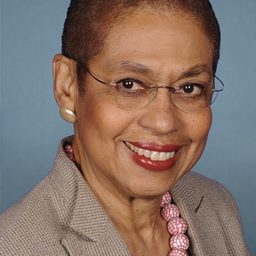 Del. Norton, Eleanor Holmes (D-DC) [At-large]
-
 Rep. Barragán, Nanette Diaz (D-CA) [#44]
-
 Rep. Matsui, Doris O. (D-CA) [#7]
-
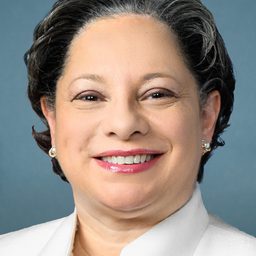 Rep. McClellan, Jennifer L. (D-VA) [#4]
-
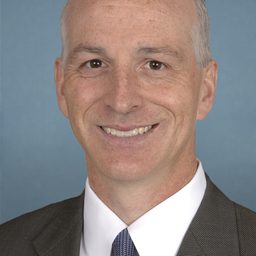 Rep. Smith, Adam (D-WA) [#9]
-
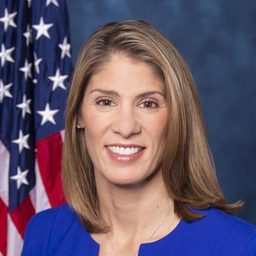 Rep. Trahan, Lori (D-MA) [#3]
Money behind the sponsor
Top reported contributors to Becca Balint’s campaign committee (2024 cycle) — who funds the bill’s sponsor, not a claim about this bill. Data from FEC.
- Employer not reported $14,775
- STATE OF VERMONT $10,516
- INVARIANT $10,400
- GRASSROOTS ANALYTICS $6,817
- BEACHWOLD $5,600
Organizations whose employees gave the most — itemized individual contributions grouped by the donor’s reported employer (FEC Schedule A). Full finance for Becca Balint → · Outside spending →
Actions (2)
- Sep 3, 2026 Referred to the House Committee on Energy and Commerce. · house
- Sep 3, 2026 Introduced in House
Full text
IN THE HOUSE OF REPRESENTATIVES
September 3, 2026
Ms. Balint (for herself, Ms. Matsui, Mrs. Trahan, Mr. Smith of Washington, Ms. McClellan, Ms. Barragan, and Ms. Norton) introduced the following bill; which was referred to the Committee on Energy and Commerce
A BILL
To direct the Secretary of Health and Human Services to convene a panel to issue recommendations relating to the training requirements and protocols for 9-1-1 dispatchers, and for other purposes.
Be it enacted by the Senate and House of Representatives of the United States of America in Congress assembled,
SECTION 1. SHORT TITLE.
This Act may be cited as the “9-8-8 and 9-1-1 Integration Act”.
SEC. 2. INCIDENT REPORTING.
(a) Establishment of Panel.—The Secretary of Health and Human Services (referred to in this section as the “Secretary”), in consultation with the Attorney General, shall convene a panel (referred to in this section as the “panel”) to issue recommendations relating to the training requirements and protocols for 9-1-1 dispatchers.
(b) Purpose of Recommendations.—The purpose of the recommendations to be issued under subsection (a) shall be to ensure that 9-1-1 dispatchers respond appropriately to individuals experiencing a behavioral health crisis based on the characteristics of the incident and the needs of the caller.
(c) Membership.—
(1) Appointment.—The panel shall be composed of members to be appointed by the Secretary and shall include—
(A) psychiatrists;
(B) paramedics and other emergency medical services personnel;
(C) law enforcement officers and 9-1-1 dispatchers;
(D) representatives from each segment of the crisis response continuum, including 9-8-8 dispatchers;
(E) members of underserved communities;
(F) representatives of Tribes or Tribal organizations;
(G) individuals with experience treating individuals with serious mental illness or post- traumatic stress disorder, including veterans and servicemembers; and
(H) such other individuals as the Secretary determines appropriate.
(2) Terms.—The Secretary shall appoint the members of the panel to serve staggered 5-year terms.
(d) Recommendations.—
(1) Considerations.—In making recommendations under subsection (a), the panel shall consider—
(A) connecting 9-1-1 callers to crisis care services instead of responding with law enforcement officers;
(B) integrating the 9-8-8 system into the 9-1-1 system, or transferring calls from the 9-1-1 system to the 9-8-8 system as appropriate;
(C) a process for—
(i) identifying 9-1-1 callers who may be experiencing psychiatric symptoms or a mental health crisis, substance use crisis, or co- occurring crisis; and
(ii) evaluating the level of need of such callers, as defined by relevant, standardized assessment tools such as the Level of Care Utilization System (LOCUS), the Child and Adolescent Level of Care Utilization System (CALOCUS), and the American Society of Addiction Medicine (ASAM) Criteria; and
(D) establishing training, staffing, and protocol requirements, including the measures described in paragraph (2), to ensure that 9-1-1 and 9-8-8 dispatch personnel are equipped to respond appropriately to the individuals referred to in subparagraphs (E) through
(H) of subsection (c)(1).
(2) Measures to meet the needs of certain 9-1-1 callers.— The measures referred to in paragraph (1)(D) include—
(A) training of dispatch personnel on cultural competency, implicit bias, and evidence-based best practices for individuals experiencing a behavioral or mental health crisis; and
(B) procedures designed to recruit, retain, or designate as dispatch personnel those individuals that have specialized training or demonstrated experience in—
(i) serving rural or medically underserved communities; or
(ii) serving individuals with serious mental illness or post-traumatic stress disorder.
(3) Coordination with samhsa.—In developing recommendations under paragraph (1), the panel shall coordinate with the Assistant Secretary for Mental Health and Substance Use for the purpose of ensuring consistency across Federal behavioral health crisis response systems, including alignment of—
(A) the training and protocol requirements for 9-1- 1 dispatchers; and
(B) the development of guidance, training standards, and best practices issued by the Substance Abuse and Mental Health Services Administration for the 9-8-8 Suicide and Crisis Lifeline.
(4) Updates.—The panel shall update recommendations issued under subsection (a) not less frequently than once every 5 years.
(e) Data Collection and Reporting Standards.—
(1) In general.—The panel shall develop data collection and reporting standards for use by the Secretary in collecting and assessing outcomes for individuals who contact 9-1-1 or 9- 8-8 systems, including—
(A) the extent to which callers are successfully connected to crisis care services;
(B) the frequency of law enforcement involvement in such responses; and
(C) any disparities in response times, referrals, or outcomes compared to the general population or between different types of populations.
(2) Privacy.—In developing the standards under paragraph
(1), the panel shall ensure that data is collected in a manner that protects caller privacy and confidentiality.
(3) Coordination.—In developing the standards under paragraph (1), the panel shall coordinate with entities participating in the National 911 Program, including—
(A) the National Highway Traffic Safety Administration;
(B) the Federal Communications Commission;
(C) the Cybersecurity and Infrastructure Security Agency;
(D) the National Telecommunications and Information Administration; and
(E) State and local agencies operating 9-1-1 call centers.
(f) Reports to Congress.—On the date of issuance of recommendations under subsection (a), and on the date of issuance of each update of such recommendations, the panel shall submit to Congress a report containing the finding and recommendations of the panel.
(g) Nonapplicability of Termination Provision.—Section 1013(a)(2) of title 5, United States Code (relating to the termination of advisory committees), shall not apply to the Commission. <all>
Comments