
HJRES 3 Re-checks Congress.gov for new actions and updates the bill's status, and fills in any sponsors, committees, or related bills that are missing. It does not re-pull sponsors/cosponsors/committees/related — those rarely change — and it skips all work if nothing has changed upstream, so it's cheap to click.
Proposing an amendment to the Constitution of the United States relative to balancing the budget.
Proposing an amendment to the Constitution of the United States relative to balancing the budget.
Summary
- Proposes a constitutional amendment that would limit federal outlays for any fiscal year to total receipts, unless two-thirds of each House approves a specific excess by rollcall vote.
- Caps total federal outlays at 18 percent of the prior calendar year's gross domestic product, with exceptions requiring a two-thirds rollcall vote for a specific amount above that cap.
- Requires the President's proposed annual budget to meet both the balanced-budget and 18-percent limits, and requires a two-thirds vote of each House for any bill that imposes a new tax or increases a tax rate or revenue.
- Requires a three-fifths rollcall vote of each House to raise the statutory debt limit, and allows Congress to waive the outlay, receipt, and debt provisions during a declared war or a specified military conflict.
- Bars courts from ordering tax increases to enforce the amendment, and provides that it takes effect beginning with the fifth fiscal year after ratification and takes effect only if ratified by three-fourths of the states.
AI-generated plain-language summary of the bill text — neutral, and may be imperfect. See the full text below for the exact wording.
Sponsor (1)
-
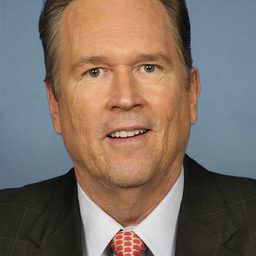 Rep. Buchanan, Vern (R-FL) [#16]
1 cosponsor
-
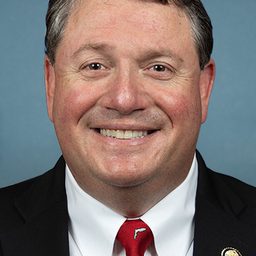 Rep. Fine, Randy (R-FL) [#6]
Actions (2)
- Jan 3, 2025 Referred to the House Committee on the Judiciary. · house
- Jan 3, 2025 Introduced in House
Full text
IN THE HOUSE OF REPRESENTATIVES
January 3, 2025
Mr. Buchanan submitted the following joint resolution; which was referred to the Committee on the Judiciary
JOINT RESOLUTION
Proposing an amendment to the Constitution of the United States relative to balancing the budget.
Resolved by the Senate and House of Representatives of the United States of America in Congress assembled (two-thirds of each House concurring therein), That the following article is proposed as an amendment to the Constitution of the United States, which shall be valid to all intents and purposes as part of the Constitution when ratified by the legislatures of three-fourths of the several States:
“Article—
“Section 1. Total outlays for any fiscal year shall not exceed total receipts for that fiscal year, unless two-thirds of the duly chosen and sworn Members of each House of Congress shall provide by law for a specific excess of outlays over receipts by a rollcall vote. “Section 2. Total outlays for any fiscal year shall not exceed 18 percent of the gross domestic product of the United States for the calendar year ending before the beginning of such fiscal year, unless two-thirds of the duly chosen and sworn Members of each House of Congress shall provide by law for a specific amount in excess of such 18 percent by a rollcall vote. “Section 3. Prior to each fiscal year, the President shall transmit to the Congress a proposed budget for the United States Government for that fiscal year in which—
“(1) total outlays do not exceed total receipts; and
“(2) total outlays do not exceed 18 percent of the gross domestic product of the United States for the calendar year ending before the beginning of such fiscal year. “Section 4. Any bill that imposes a new tax or increases the statutory rate of any tax or the aggregate amount of revenue may pass only by a two-thirds majority of the duly chosen and sworn Members of each House of Congress by a rollcall vote. For the purpose of determining any increase in revenue under this section, there shall be excluded any increase resulting from the lowering of the statutory rate of any tax. “Section 5. The limit on the debt of the United States shall not be increased, unless three-fifths of the duly chosen and sworn Members of each House of Congress shall provide for such an increase by a rollcall vote. “Section 6. The Congress may waive the provisions of sections 1, 2, 3, and 5 of this article for any fiscal year in which a declaration of war against a nation-state is in effect and in which a majority of the duly chosen and sworn Members of each House of Congress shall provide for a specific excess by a rollcall vote. “Section 7. The Congress may waive the provisions of sections 1, 2, 3, and 5 of this article in any fiscal year in which the United States is engaged in a military conflict that causes an imminent and serious military threat to national security and is so declared by three-fifths of the duly chosen and sworn Members of each House of Congress by a rollcall vote. Such suspension must identify and be limited to the specific excess of outlays for that fiscal year made necessary by the identified military conflict. “Section 8. No court of the United States or of any State shall order any increase in revenue to enforce this article. “Section 9. Total receipts shall include all receipts of the United States Government except those derived from borrowing. Total outlays shall include all outlays of the United States Government except those for repayment of debt principal. “Section 10. The Congress shall have power to enforce and implement this article by appropriate legislation, which may rely on estimates of outlays, receipts, and gross domestic product. “Section 11. This article shall take effect beginning with the fifth fiscal year beginning after its ratification.”. <all>
Text versions (1)
Bills are re-published as they move (Introduced → Reported → Engrossed → Enrolled …). Each stage below is a separate text; pick two to see what changed. Data from Congress.gov.
More bills on these subjects (8)
Other bills that carry the most legislative subjects in common with this one (topical discovery — distinct from the procedural related bills above).
Comments